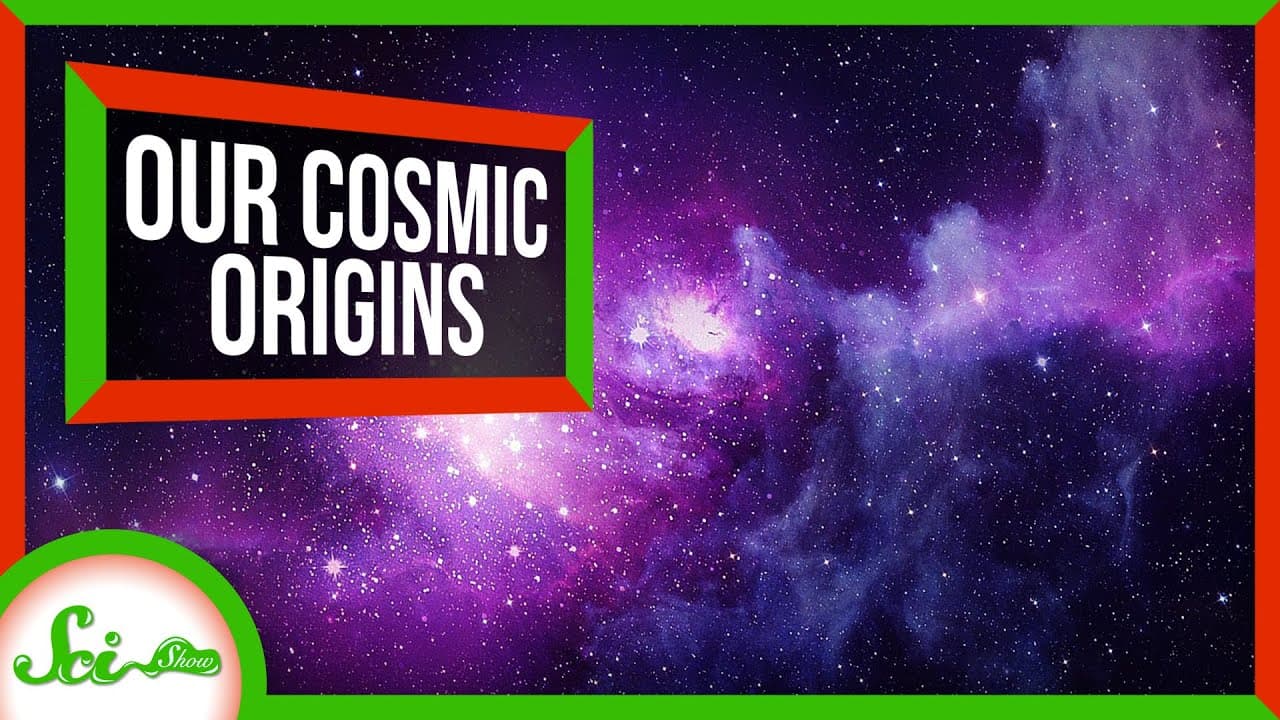
The Chemist Decoding Our Cosmic Origins | Great Minds: Ewine van Dishoeck
TL;DR
Scientist Ewine van Dishoeck explores the chemistry of interstellar space, uncovering the key roles of carbon monoxide and water in the formation of stars and planets.
Transcript
This episode was made in partnership with the Kavli Prize. The Kavli Prize honors scientists for breakthroughs in astrophysics, nanoscience and neuroscience—transforming our understanding of the very big, the very small, and the very complex. [♪ INTRO] It’s easy to be dazzled by all the shiny, sparkling stuff in space… and fair enough—stars an... Read More
Key Insights
- 👾 There are only one to a few thousand atoms per square centimeter in what we consider empty space, yet this is enough to drive the chemical reactions responsible for the creation of celestial structures.
- ⛈️ Ewine van Dishoeck used the absence of certain wavelengths of light passing through interstellar clouds to identify the composition of these clouds, contributing to the discovery of different atoms and molecules floating between stars.
- 🙂 Carbon monoxide, crucial for life as we know it, thrives in interstellar space due to protection from destructive UV light provided by other molecules and dust.
- 🤽 The presence of interstellar water, clinging to dust particles, plays a central role in star and planet formation, enabling the accumulation of matter and initiating fusion processes.
- 👨🔬 Van Dishoeck's research and theories have provided essential insights into the connections between interstellar chemistry and the origins of life, shaping our understanding of the universe's evolution.
- 🏑 Ewine van Dishoeck's scientific achievements include nearly 500 publications and peer-reviewed papers, with thousands of citations, demonstrating her significant impact in the field of astrochemistry.
- 🏆 She was awarded the prestigious Kavli Prize in Astrophysics in 2018 for her transformative discoveries and foundational contributions to the study of interstellar chemistry.
Install to Summarize YouTube Videos and Get Transcripts
Explore YouTube Video Summarizer or Get YouTube Transcript Extractor
Questions & Answers
Q: How does the study of missing wavelengths in interstellar clouds enable scientists to determine the composition of these clouds?
By observing the colors of light that do not pass through interstellar clouds, astronomers can identify the specific wavelengths absorbed by certain atoms and molecules, providing insights into the cloud's composition.
Q: Why is carbon monoxide significant in the context of interstellar chemistry and the origins of life?
Carbon monoxide, abundantly present in interstellar space, forms the basis for carbon chains necessary for life. Scientists initially found it puzzling that carbon monoxide could survive destructive UV radiation, but Ewine van Dishoeck's research revealed protective mechanisms involving other molecules and dust particles.
Q: What role does water play in star and planet formation?
Interstellar water, predominantly frozen solid, attaches to dust particles in interstellar space, making them stickier and heavier. This process initiates the accumulation of matter, leading to the formation of stars and planets.
Q: What is the significance of Ewine van Dishoeck's work in the field of astrochemistry?
Van Dishoeck's research shed light on the vital roles of carbon monoxide and water in interstellar chemistry, uncovering the processes behind the formation of stars and planets. Her comprehensive contributions have shaped our understanding of cosmic origins.
Summary & Key Takeaways
-
Most of what we perceive as empty space is actually filled with a few thousand atoms per square centimeter, enabling the chemistry necessary for the creation of galaxies, stars, and planets.
-
Ewine van Dishoeck has dedicated her career to understanding how interstellar gas and dust transform into complex structures like solar systems, conducting research and validating theoretical models against real observations.
-
Van Dishoeck's work has revealed the protective mechanisms of carbon monoxide against destructive UV light, as well as the pivotal role of interstellar water in the processes of star and planet formation.
Read in Other Languages (beta)
Share This Summary 📚
Summarize YouTube Videos and Get Video Transcripts with 1-Click
Try YouTube Summary with ChatGPT & Claude or YouTube Transcript Generator
Explore More Summaries from SciShow 📚



Summarize YouTube Videos and Get Video Transcripts with 1-Click
Try YouTube Summary with ChatGPT & Claude or YouTube Transcript Generator