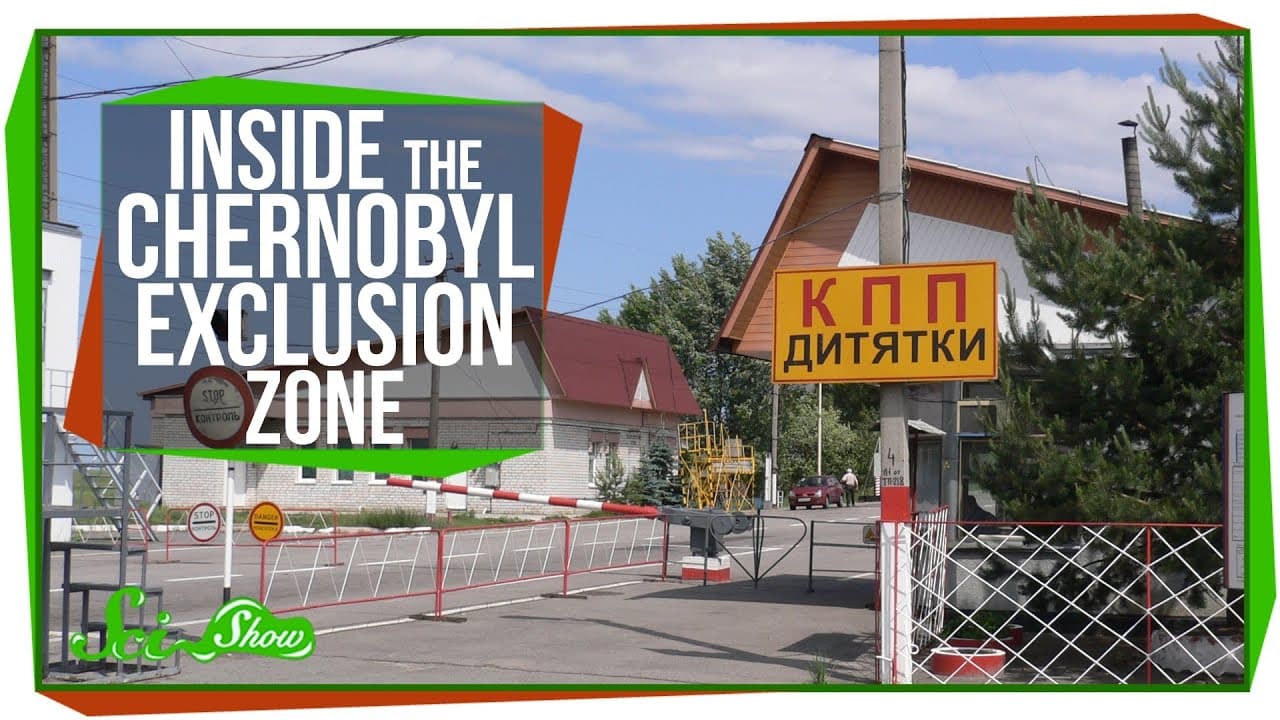
Inside the Chernobyl Exclusion Zone
TL;DR
Trees and wildlife in the Chernobyl Exclusion Zone have not decomposed or shown expected signs of decay due to the high levels of radiation, but some species are adapting and thriving.
Transcript
a tree falls in the forest and we know that with time microbes fungi insects and other organisms will Kickstart the decomposition process recycling all that organic matter come back in a year or two and that tree will look very different now imagine hundreds of dead trees that look almost exactly the way they did nearly three decades ago no Decay n... Read More
Key Insights
- ✋ The Chernobyl Exclusion Zone remains off-limits due to high radiation levels, preventing detailed long-term studies.
- 🖤 The lack of decomposition in the exclusion zone is attributed to the damaging effects of ionizing radiation on DNA strands.
- 🛀 Some species, such as certain tree varieties, wheat, and soybean plants, have shown adaptations and resistance to radiation.
- 🧑⚕️ Certain animal populations, including birds and large mammals, have been observed in the exclusion zone, but their health and long-term prospects are uncertain.
- 🛟 The exclusion zone has unintentionally become a nature reserve, potentially offering insights into wildlife's ability to adapt to extreme environments.
- 🛟 Cesium-137, a dangerous isotope, still poses a threat in the region due to its long half-life.
- 🧑🔬 The varying degrees of radiation sensitivity in different species pose a perplexing challenge for scientists studying the effects of radiation.
Install to Summarize YouTube Videos and Get Transcripts
Explore YouTube Video Summarizer or Get YouTube Transcript Extractor
Questions & Answers
Q: How has the radiation in the Chernobyl Exclusion Zone affected the decomposition of trees and small organisms?
The high radiation levels have prevented the decomposition and decay of trees and small organisms, leading to a lack of decay and an unchanged appearance of dead trees.
Q: What impact has radiation had on animal populations in the exclusion zone?
Animals exposed to radiation, such as bees, spiders, and bird populations, have experienced genetic mutations, disruptions of the nervous system, and reduced brain size.
Q: Are there any species in the exclusion zone that have adapted or thrived in the presence of radiation?
Some species, like Birch and Aspen trees, wheat seeds, and soybean plants, have shown resistance or adaptations to the radiation. Additionally, large mammal populations, including boars, bears, elk, deer, wolves, and lynx, have been observed and appear to be flourishing.
Q: What are the potential long-term effects of radiation on the surviving mammal populations in the Chernobyl Exclusion Zone?
There is still uncertainty about the long-term prospects and health of mammal populations in the exclusion zone, as they are assumed to accumulate radioactive isotopes and strontium from the food chain, but no definitive study has been conducted.
Summary & Key Takeaways
-
The Chernobyl Exclusion Zone, established after the nuclear disaster 28 years ago, remains devoid of permanent residence and is now a unique research area for studying the long-term effects of radiation on wildlife.
-
The high levels of radiation in the area have prevented the decomposition and decay of trees and small organisms, leading to an eerie landscape.
-
Animals in the exclusion zone, such as bees, spiders, and bird populations, have experienced genetic mutations, disruptions of the nervous system, and reduced brain size due to exposure to radiation.
Read in Other Languages (beta)
Share This Summary 📚
Summarize YouTube Videos and Get Video Transcripts with 1-Click
Try YouTube Summary with ChatGPT & Claude or YouTube Transcript Generator
Explore More Summaries from SciShow 📚


Summarize YouTube Videos and Get Video Transcripts with 1-Click
Try YouTube Summary with ChatGPT & Claude or YouTube Transcript Generator