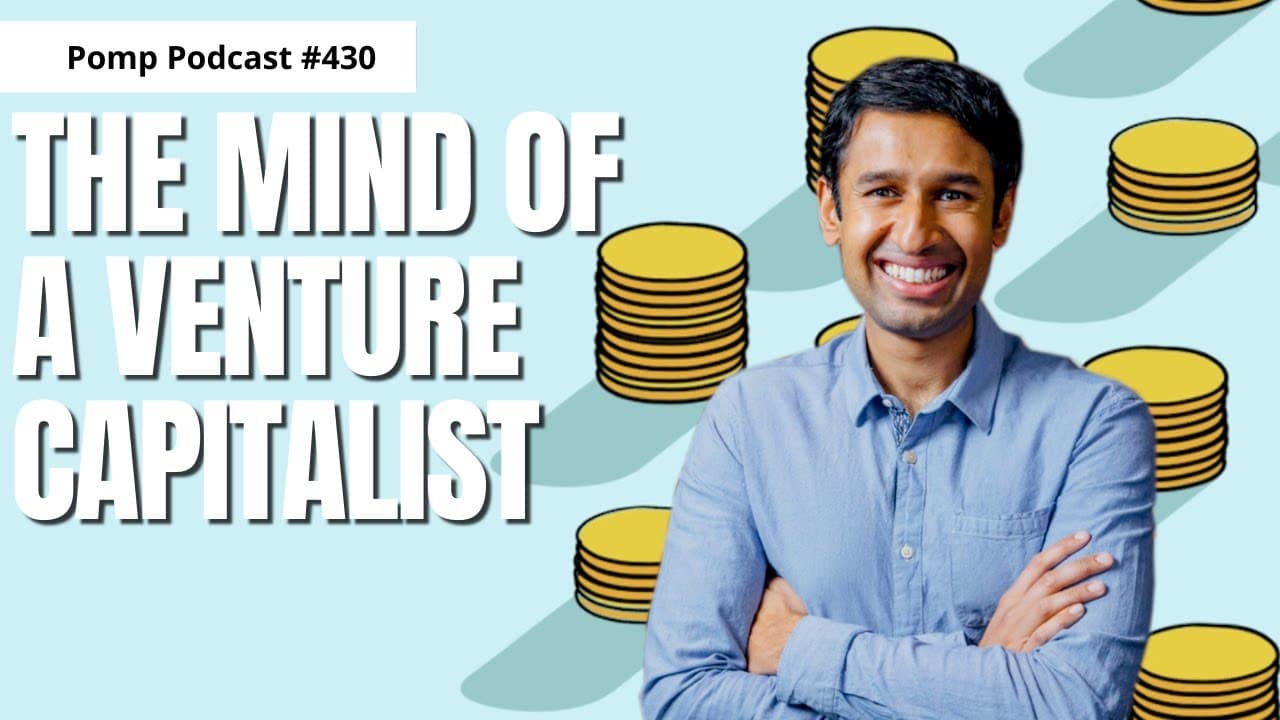
Pomp Podcast #430: Nikhil Basu Trivedi on The Mind of a Venture Capitalist
TL;DR
Nikhil shares his transition from entrepreneur to venture capitalist and insights on investing trends.
Transcript
all right guys bang bang i've got nikhil here i'm super excited about this thank you so much for joining us thanks so much for having me man absolutely let's just jump right into your background i think that you've got kind of a really interesting story kind of help us understand uh where you grew up what you did uh school and then before you becam... Read More
Key Insights
- 🛟 Nikhil's early life in England and later move to Silicon Valley significantly influenced his career trajectory and passion for startups.
- 🥺 The solo capitalist movement reflects a shift in venture capital, allowing individual investors to take the lead in early-stage funding.
- ❓ The importance of founder commitment is crucial in early-stage companies, as it determines their resilience against challenges.
- 🐕🦺 Companies that democratize access to services (like education and healthcare) yield significant market opportunities and can disrupt traditional models.
- ❓ Understanding the dynamics of early-stage investing often involves intuition, especially without initial data or traction.
- 😮 Market opportunities, such as the rise of telemedicine, have emerged from regulatory changes and evolving consumer expectations.
- 🏆 Nikhil emphasizes the potential for multiple winners in expanding markets, showcasing the importance of unique value propositions.
Install to Summarize YouTube Videos and Get Transcripts
Explore YouTube Video Summarizer or Get YouTube Transcript Extractor
Questions & Answers
Q: What sparked Nikhil's interest in venture capital?
Nikhil's transition from entrepreneurship to venture capital was inspired by the opportunity to work with talented founders and to be part of groundbreaking company journeys. His early exposure to the startup ecosystem in Silicon Valley solidified his desire to invest in promising ventures, especially in identifying the next big companies.
Q: How does Nikhil define “solo capitalists”?
Nikhil defines solo capitalists as individual investors who manage funds larger than $50 million and can lead investment rounds of $5 million and above. They represent a new wave of investors competing in the venture capital space, leveraging the trend of individualized investing rather than traditional firm-based structures.
Q: What investment thesis did Nikhil develop when investing in ClassDojo?
Nikhil's investment thesis for ClassDojo was based on three pillars: early signs of product-market fit, the potential for monetizing with parents, and the commitment of mission-driven founders. He recognized its organic growth in classrooms and believed in its long-term business model potential.
Q: In what way does Nikhil see the consumerization of healthcare evolving?
Nikhil believes that the consumerization of healthcare is driven by companies that provide better user experiences. By eliminating traditional barriers like in-person consultations and offering direct-to-consumer telemedicine solutions, these businesses have the potential to revolutionize how people access healthcare services.
Summary & Key Takeaways
-
Nikhil describes his background, moving from England to Silicon Valley, which sparked his interest in entrepreneurship and venture capital.
-
He discusses the rise of solo capitalists, their impact on the venture capital landscape, and how individual investors are becoming more prominent.
-
Nikhil highlights key investment theses around startups, emphasizing the importance of founder commitment and the democratization of access in various markets.
Read in Other Languages (beta)
Share This Summary 📚
Summarize YouTube Videos and Get Video Transcripts with 1-Click
Try YouTube Summary with ChatGPT & Claude or YouTube Transcript Generator
Explore More Summaries from Anthony Pompliano 📚

Summarize YouTube Videos and Get Video Transcripts with 1-Click
Try YouTube Summary with ChatGPT & Claude or YouTube Transcript Generator