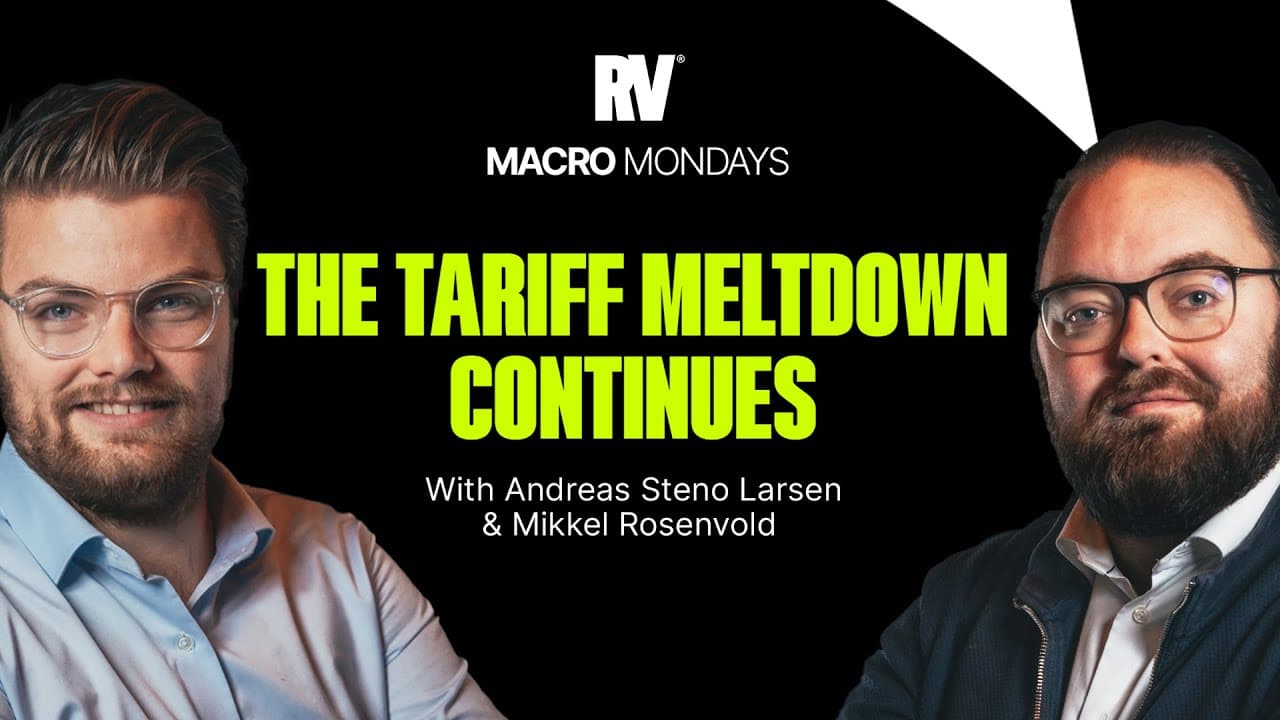
How to Navigate Market Meltdown: Insights from Experts
TL;DR
In a turbulent market environment marked by significant sell-offs, experts discuss the implications of tariffs, liquidity squeezes, and the potential for Federal Reserve intervention. The conversation highlights China's strategic commodity purchases, the impact of tariffs on inflation expectations, and the potential for a U.S. recession. Key indicators to watch include the 5-year 5-year inflation swap and the yield curve.
Transcript
hello out there and welcome to another edition of Macro Mondays and what a Monday this has been andreas obviously uh the day is far from over for all the Americans just getting in uh and opening their their terminals but uh quite the day andreas how's yours been well you know I decided to stay up uh Sunday night uh with the futures opening late Sun... Read More
Key Insights
- The current market turmoil is characterized by significant sell-offs in equities and commodities, raising concerns about a potential recession.
- China is strategically buying commodities like copper and oil at reduced prices during the market panic.
- The Federal Reserve may intervene if financial stability is threatened, but they are currently monitoring inflation expectations closely.
- The tariff strategy by the U.S. government appears to be focused on revenue generation rather than achieving reciprocal trade agreements.
- Inflation expectations are not expected to rise significantly despite tariffs, as global inflation pressures are easing.
- The U.S. economy is less dependent on trade compared to other countries, suggesting it may weather the current market conditions better.
- Tourism to the U.S. is significantly down, with forward bookings dropping by 60-70%, affecting the service sector.
- Key indicators to monitor include gold prices, the dollar's strength, and the 5-year 5-year inflation swap for signs of financial stress.
Install to Summarize YouTube Videos and Get Transcripts
Explore YouTube Video Summarizer or Get YouTube Transcript Extractor
Questions & Answers
Q: How does the current market turmoil affect global economies?
The current market turmoil, marked by significant sell-offs in equities and commodities, impacts global economies by increasing financial uncertainty and potentially leading to a recession. Countries dependent on trade are particularly vulnerable, while the U.S., with its less trade-dependent economy, may fare better. The situation is compounded by strategic actions from countries like China, which are buying commodities at reduced prices.
Q: What role does China play in the current market environment?
China is taking advantage of the current market panic by purchasing commodities such as copper and oil at lower prices, bolstering its strategic reserves. This move highlights China's long-term planning and ability to utilize market downturns to its advantage. Such actions can stabilize commodity markets and potentially influence global economic dynamics.
Q: Will the Federal Reserve intervene in the current market conditions?
The Federal Reserve is likely to intervene if financial stability is clearly threatened. Currently, they are closely monitoring inflation expectations and financial conditions. Intervention may occur if indicators such as gold prices, the dollar's strength, and inflation expectations suggest a liquidity squeeze or significant financial stress in the market.
Q: How do U.S. tariffs impact global trade and inflation?
U.S. tariffs, focused on revenue generation rather than reciprocal trade agreements, are not expected to cause a global inflation spike. Instead, they may lead to a temporary easing of global financial conditions, as seen in the recent market panic. The impact on global trade varies, with countries more dependent on trade facing greater challenges.
Q: What indicators should be monitored for signs of financial stress?
Key indicators to monitor for signs of financial stress include gold prices, the dollar's strength, and the 5-year 5-year inflation swap. These indicators can signal a liquidity squeeze or increasing financial instability. Additionally, the yield curve and inflation expectations provide insights into potential Federal Reserve actions and market sentiment.
Q: Is a U.S. recession likely in the current market environment?
While some analysts predict a recession, the U.S. economy's relative independence from trade may help it withstand the current market conditions. Domestic demand signals, such as retail sales and trucking activity, remain strong, suggesting resilience. However, the significant drop in tourism and potential global economic impacts could pose challenges.
Q: How is the U.S. service sector affected by the current market conditions?
The U.S. service sector is significantly affected by the drop in tourism, with forward bookings for flights and hotels down by 60-70%. This decline impacts prices for flights, hotels, and restaurant visits, contributing to easing inflation pressures. The domestic economy remains strong, but the service sector faces challenges due to reduced international demand.
Q: What is the outlook for commodity prices in the current market?
Commodity prices, particularly for discretionary spending items like copper and oil, are expected to come down as market conditions stabilize. The recent sell-off presents opportunities for strategic purchases, as seen with China's actions. However, ongoing market volatility and geopolitical tensions could influence future price movements.
Summary & Key Takeaways
-
The market is experiencing unprecedented sell-offs, with equities and commodities like copper and oil seeing significant declines. China's strategic purchases of these commodities highlight their long-term planning during market panics.
-
Tariffs imposed by the U.S. are not expected to lead to a global inflation spike, as financial conditions are easing. The Federal Reserve is likely to intervene only when financial stability is clearly threatened.
-
The U.S. economy's relative independence from trade may help it withstand the current market conditions, but the significant drop in tourism could impact the service sector. Key indicators to watch include the 5-year 5-year inflation swap and the yield curve.
Read in Other Languages (beta)
Share This Summary 📚
Summarize YouTube Videos and Get Video Transcripts with 1-Click
Try YouTube Summary with ChatGPT & Claude or YouTube Transcript Generator
Explore More Summaries from Real Vision 📚





Summarize YouTube Videos and Get Video Transcripts with 1-Click
Try YouTube Summary with ChatGPT & Claude or YouTube Transcript Generator