Advice for getting a PhD in robotics | Boris Sofman and Lex Fridman
TL;DR
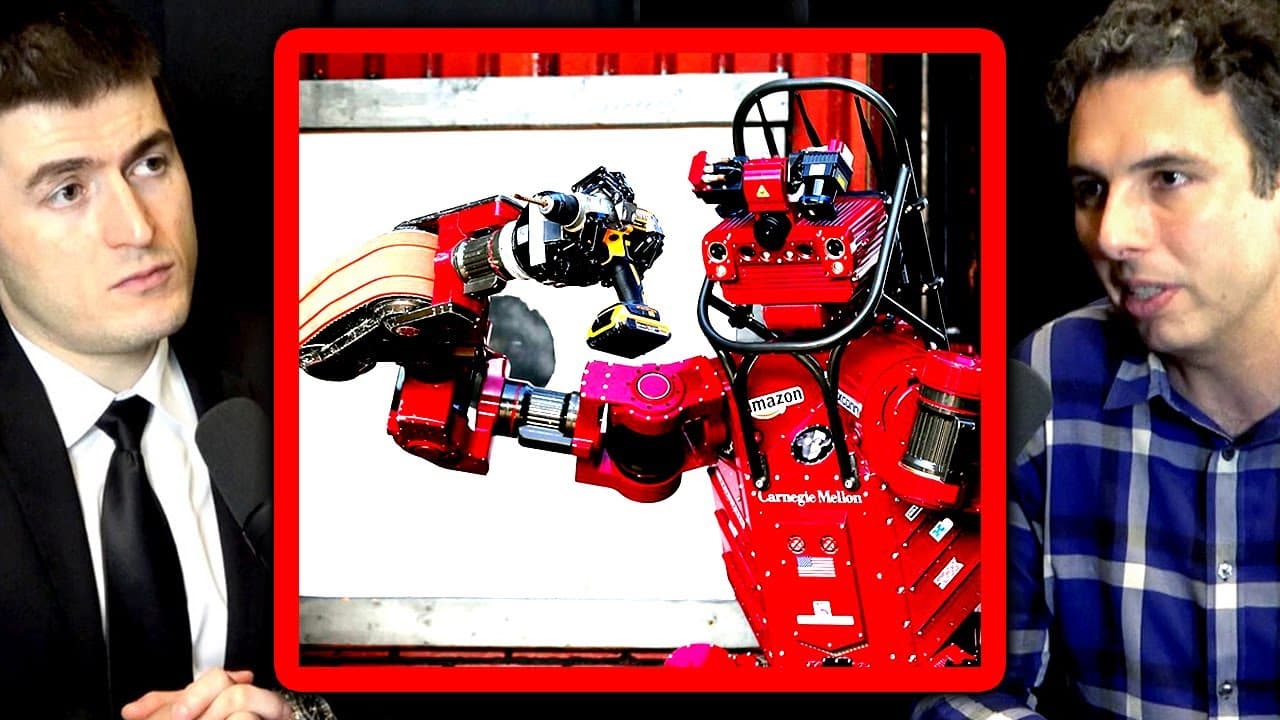
Pursuing a PhD in robotics at Carnegie Mellon University requires passion, collaboration, and a willingness to adapt to the rapidly evolving field.
Transcript
you went to the mecca of robotics which is cmu carnegie mellon university you got a phd there so maybe by way of advice and maybe by way of story and memories what does it take to get a phd in robotics at cmu and maybe you can throw in there some advice for people who are thinking about doing work in artificial intelligence and robotics and are thi... Read More
Key Insights
- 👨🔬 Robotics is a relatively young field offering vast opportunities for research and innovation.
- ❓ Pursuing a PhD in robotics at Carnegie Mellon University provides a broad foundation in various disciplines and specialization in a specific area.
- 😤 Collaboration and the ability to work in interdisciplinary teams are important traits for success in the field.
- 🏑 The robotics field is constantly evolving, requiring researchers to adapt to changing technology, constraints, and industry demands.
- 👨🔬 Autonomous driving, grasping and manipulation, and other emerging areas offer exciting research prospects in robotics.
- 🙈 Robotics research was initially driven by academia but is now seeing increased commercial investment.
- 🪡 The organizational and technical challenges in autonomous driving highlight the need for innovative approaches to scale and efficiently solve complex problems.
Install to Summarize YouTube Videos and Get Transcripts
Explore YouTube Video Summarizer or Get YouTube Transcript Extractor
Questions & Answers
Q: What does it take to get a PhD in robotics at Carnegie Mellon University?
Pursuing a PhD in robotics at CMU requires a deep passion for the subject, as well as a willingness to immerse oneself in broad areas of study like AI, computer vision, and hardware. It also necessitates collaboration with interdisciplinary teams and the ability to innovate in a rapidly evolving field.
Q: How has the landscape of robotics research shifted over time?
Initially, research in robotics, particularly in areas like autonomous driving, was heavily driven by academia. However, as the field has progressed, there has been a shift towards commercial investment in areas like autonomous driving. Other areas, such as grasping and manipulation, are currently emerging as significant research domains.
Q: What advice would you give to someone considering a PhD in robotics?
It is important to find a specific area within robotics that truly excites you and pursue it passionately. A PhD in robotics requires a long-term commitment, so it is crucial to have a deep love for the subject. Additionally, collaboration with interdisciplinary teams and the ability to adapt to evolving technology and constraints are key to success.
Q: How does robotics differ from other areas of computer science?
Unlike more narrow and specialized areas of computer science, robotics requires a broader foundation that encompasses multiple disciplines. It forces researchers to collaborate across different fields and apply physical automation to various industries, such as healthcare, factory automation, and even robotic surgery.
Summary & Key Takeaways
-
Robotics is a young field with immense opportunities for research and innovation, particularly in areas like autonomous driving and grasping and manipulation.
-
Pursuing a PhD in robotics at Carnegie Mellon University offers a broad foundation in AI, machine learning, computer vision, and hardware.
-
Collaboration with interdisciplinary teams and the ability to specialize in a specific area of robotics are crucial for success in the field.
Read in Other Languages (beta)
Share This Summary 📚
Summarize YouTube Videos and Get Video Transcripts with 1-Click
Try YouTube Summary with ChatGPT & Claude or YouTube Transcript Generator
Explore More Summaries from Lex Clips 📚




Summarize YouTube Videos and Get Video Transcripts with 1-Click
Try YouTube Summary with ChatGPT & Claude or YouTube Transcript Generator