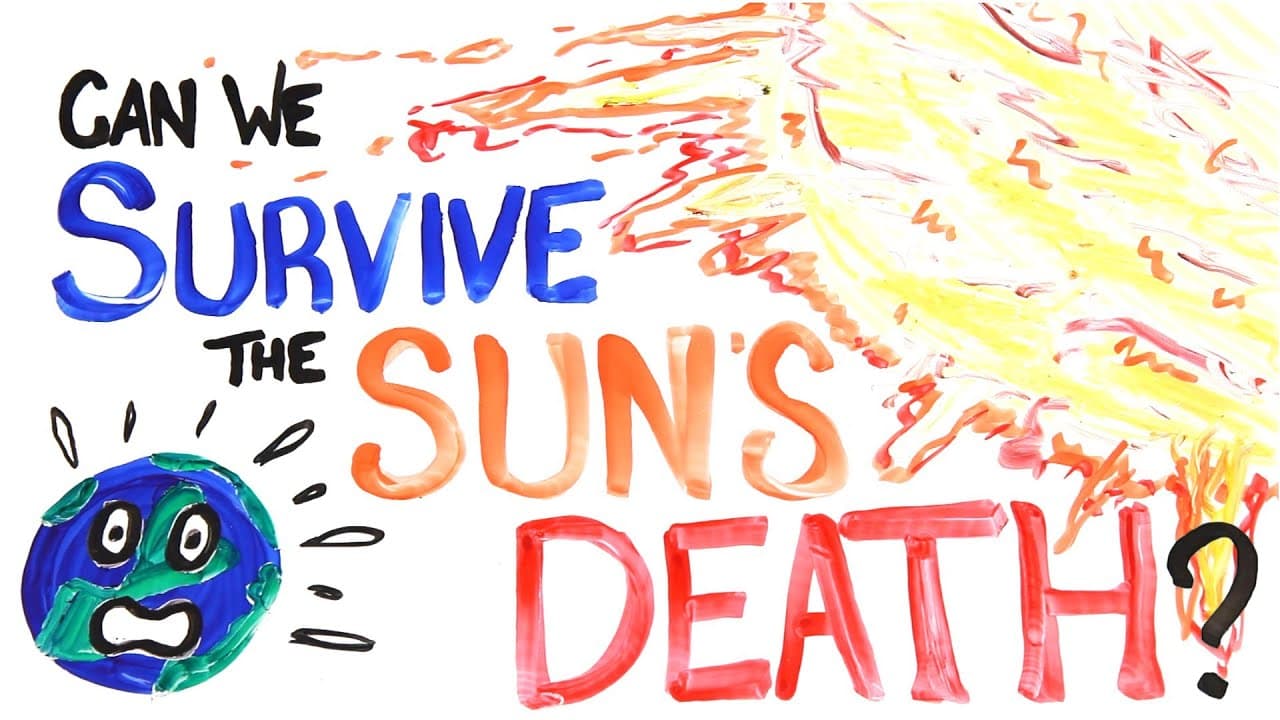
Can We Survive The Sun's Death?
TL;DR
Earth can potentially avoid the detrimental effects of the sun's aging and expansion by using the gravity assist technique to move the planet's orbit away from the sun and extend its lifespan.
Transcript
The sun is around 4.5 billion years old, and just like you and I, it's aging. In just over a billion years, the sun will have expanded so much that the heat will begin to melt the earth's surface. So, is there any way us Earthlings can avoid this detrimental event? Can we save ourselves from the suns ultimate death? Sure, none of us will be here, a... Read More
Key Insights
- 🫠 The sun's aging and expansion will lead to the melting of the Earth's surface and the extinction of all life in about 5 billion years.
- 😎 The gravity assist technique can potentially be used to move the Earth's orbit away from the sun and prolong its existence.
- 🌍 Moving the Earth's orbit using gravity assist would require encounters with massive objects like asteroids every few thousand years.
Install to Summarize YouTube Videos and Get Transcripts
Explore YouTube Video Summarizer or Get YouTube Transcript Extractor
Questions & Answers
Q: How can gravity assist be used to save Earth from the sun's death?
Gravity assist is a technique that utilizes the gravity of a planet to propel spacecraft further into space. By increasing the size of a spacecraft or using a massive object like an asteroid, we could potentially move the Earth's orbit away from the sun and extend its lifespan.
Q: What is the timeframe for moving the Earth's orbit using gravity assist?
Moving the Earth's orbit within the next billion years would require approximately 1 encounter every 6,000 years with an asteroid of mass around 10^19 kg, which is roughly the size of a 100 km-wide asteroid.
Q: Are there any risks associated with moving the Earth using gravity assist?
Yes, there are risks. The moon could be lost, resulting in extreme weather patterns. The Earth's spin may increase, making days shorter. The orbits of other planets, like Mars, could also be destabilized. Additionally, there is a risk of the asteroid accidentally colliding with Earth.
Q: Has gravity assist been used before?
Yes, gravity assist has been used in the past to launch space probes and satellites. The Juno spacecraft used gravity assist from Earth in 2013 to boost its velocity and slingshot towards Jupiter.
Summary & Key Takeaways
-
In about a billion years, the sun will expand and heat up, melting the Earth's surface and boiling away all of its water, creating an international desert.
-
In approximately 5 billion years, the expanding sun will melt mountains, causing the extinction of most if not all life on Earth.
-
Around 7.5 billion years, the sun, now a Red Giant, will engulf the Earth entirely.
Read in Other Languages (beta)
Share This Summary 📚
Summarize YouTube Videos and Get Video Transcripts with 1-Click
Try YouTube Summary with ChatGPT & Claude or YouTube Transcript Generator
Explore More Summaries from AsapSCIENCE 📚




Summarize YouTube Videos and Get Video Transcripts with 1-Click
Try YouTube Summary with ChatGPT & Claude or YouTube Transcript Generator