School avoidance: An emerging crisis from behind bedroom doors | Rob Jones | TEDxNantymoel
TL;DR
Exploring the complexities and challenges of emotionally based school avoidance in children.
Transcript
so in any given town on any sort of street we have around here in the Walsh valleys wh G too far ready so on any of these sort of towns these places and stuff like that we will always think of what could be happening in these homes years ago as a community we'd all be brought together and we would all be talking each other over the fences Etc and t... Read More
Key Insights
- 👶 Communal interactions have shifted to individual routines, impacting children's daily behavior.
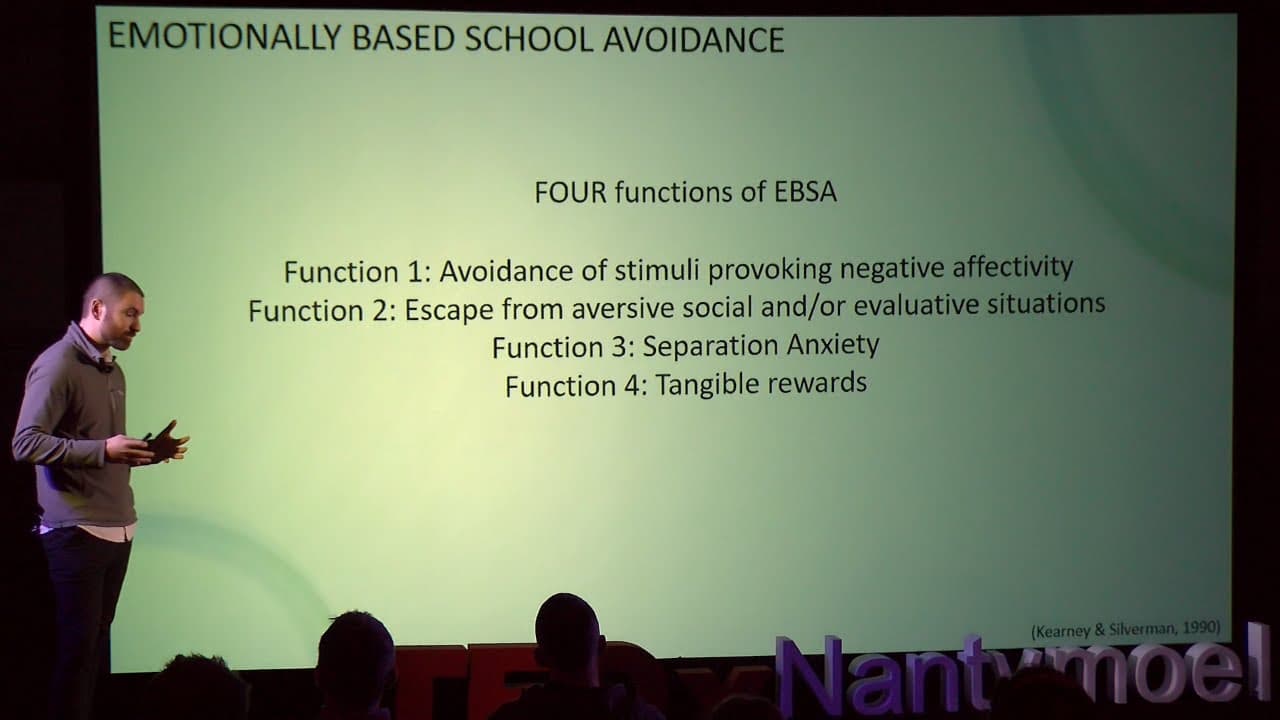
- 👨🏫 Emotionally based school avoidance is often rooted in anxiety, trauma, and coping difficulties.
- 🧠 Addressing the underlying mental processes and brain functions can inform targeted support strategies for children with emotionally based school avoidance.
- 🖤 Risk factors such as academic challenges, family dynamics, and lack of coping strategies contribute to emotionally based school avoidance.
- 🖐️ The brain's response to stress and emotional stimuli plays a crucial role in emotionally based school avoidance.
- 👨🏫 Building a supportive network involving parents, schools, and communities is essential in addressing emotionally based school avoidance.
- 👶 A child-centered, needs-led approach can help tailor interventions that support children with emotionally based school avoidance.
Install to Summarize YouTube Videos and Get Transcripts
Explore YouTube Video Summarizer or Get YouTube Transcript Extractor
Questions & Answers
Q: What are some common challenges children with emotionally based school avoidance face?
Children with emotionally based school avoidance often struggle with anxiety, trauma, and difficulties in managing their emotions, leading to challenges in attending school regularly.
Q: How can parents and schools support children with emotionally based school avoidance?
Parents and schools can provide a supportive environment, build coping strategies, and address underlying issues such as trauma to help children with emotionally based school avoidance.
Q: What are some risk factors associated with emotionally based school avoidance?
Risk factors include academic difficulties, lack of coping strategies, and family dynamics like divorce or separation that contribute to emotionally based school avoidance in children.
Q: How can understanding the brain functions of children with emotionally based school avoidance help in providing appropriate support?
Understanding how the brain processes emotions and stress can help tailor interventions that address specific dysfunctions in the brain regions responsible for emotional regulation and decision-making.
Summary & Key Takeaways
-
Communities have shifted from close interactions to individualized routines, affecting children's morning behavior.
-
Some children exhibit emotionally based school avoidance due to anxiety and trauma, impacting their ability to attend school regularly.
-
Understanding the underlying mental processes and brain functions can help in devising appropriate support for these children.
Read in Other Languages (beta)
Share This Summary 📚
Summarize YouTube Videos and Get Video Transcripts with 1-Click
Try YouTube Summary with ChatGPT & Claude or YouTube Transcript Generator
Explore More Summaries from TEDx Talks 📚






Summarize YouTube Videos and Get Video Transcripts with 1-Click
Try YouTube Summary with ChatGPT & Claude or YouTube Transcript Generator