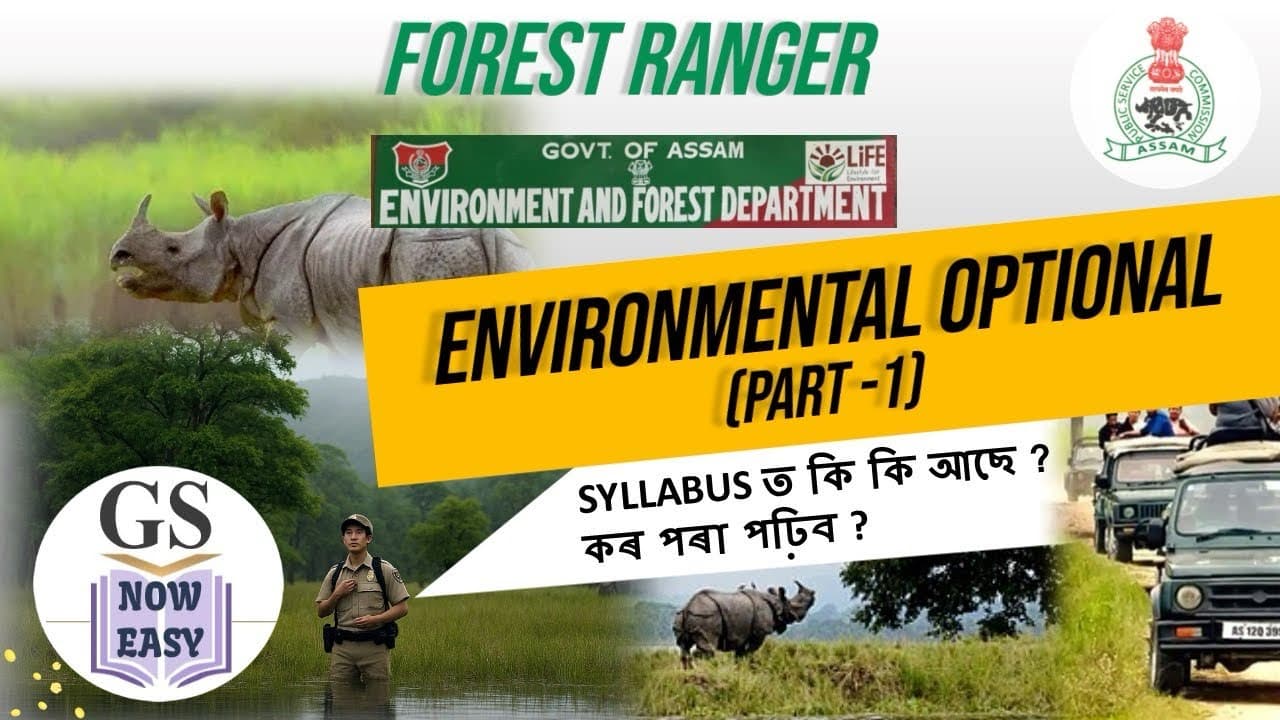
How to Ace the APSC Forest Ranger Exam Syllabus
TL;DR
The APSC Forest Ranger exam syllabus is extensive, encompassing key environmental topics such as natural resources, ecology, and biodiversity. It emphasizes understanding renewable and non-renewable resources, their management, and the importance of conservation. Mastering this syllabus is crucial for candidates aiming to contribute to sustainable environmental practices.
Transcript
aps forest ranger or environmental science or syllabus forest recruitment or notific ification subject so through this video I made a detailed discussion regarding the environmental science or syllabus because detailed exam paper and at the same but I'm of the opinion it's scoring subject it's an interesting subject and eventually so that you can c... Read More
Key Insights
- The APSC Forest Ranger exam includes 100 questions, each worth two marks, totaling 200 marks. A score between 140 to 160 is considered safe for selection.
- The syllabus covers the multidisciplinary nature of environmental studies, including topics like atmosphere, hydrosphere, biosphere, and various scientific disciplines.
- Natural resources are divided into renewable and non-renewable, with detailed discussions on solar, wind, and fossil fuels, along with their environmental impacts.
- Forest resources, deforestation, and conservation strategies are crucial components, highlighting the importance of sustainable management and the impact of industrial activities.
- Water resources are examined in terms of usage, overutilization, and environmental effects, with a focus on groundwater depletion and flood management.
- Energy resources include both renewable and non-renewable sources, with case studies on wind and hydrogen energy, emphasizing the need for sustainable energy solutions.
- Ecology and biodiversity are explored through ecosystem classification, food chains, and ecological pyramids, stressing the importance of maintaining ecological balance.
- Biodiversity threats, conservation strategies, and the significance of biodiversity in ecological and economic terms are analyzed, highlighting the need for protective measures.
Install to Summarize YouTube Videos and Get Transcripts
Explore YouTube Video Summarizer or Get YouTube Transcript Extractor
Questions & Answers
Q: What is the structure of the APSC Forest Ranger exam?
The APSC Forest Ranger exam consists of 100 questions, each carrying two marks, making a total of 200 marks. A score ranging from 140 to 160 is generally considered safe for selection. The exam covers various topics related to environmental science, requiring a comprehensive understanding of the syllabus.
Q: What topics are included in the multidisciplinary nature of environmental studies?
The multidisciplinary nature of environmental studies includes topics such as the atmosphere, hydrosphere, biosphere, and various scientific disciplines like chemistry, biology, geology, and law. It also covers social, cultural, and physical components, providing a holistic understanding of environmental issues and their interconnections.
Q: How are natural resources categorized in the syllabus?
Natural resources in the syllabus are categorized into renewable and non-renewable resources. Renewable resources include solar and wind energy, while non-renewable resources consist of fossil fuels. The syllabus discusses their environmental impacts, management strategies, and the importance of sustainable utilization.
Q: What is the significance of forest resources in the syllabus?
Forest resources are significant in the syllabus as they are crucial for ecological balance and biodiversity. Topics include the definition, origin, and conservation of forests, the impact of deforestation, and sustainable management strategies. The syllabus emphasizes the importance of forests in maintaining environmental health and supporting human life.
Q: How does the syllabus address water resource management?
The syllabus addresses water resource management by exploring the usage, overutilization, and environmental effects of water resources. It covers groundwater depletion, flood management, and sustainable water management practices. The syllabus aims to equip candidates with the knowledge to tackle water-related challenges effectively.
Q: What energy resources are discussed in the syllabus?
The syllabus discusses both renewable and non-renewable energy resources. Renewable resources include solar, wind, and biomass energy, while non-renewable resources cover petroleum, LPG, and nuclear energy. The syllabus emphasizes the need for sustainable energy solutions and includes case studies on wind and hydrogen energy.
Q: What ecological concepts are covered in the syllabus?
Ecological concepts covered in the syllabus include ecosystem classification, food chains, and ecological pyramids. It explores the structure, process, and function of ecosystems, stressing the importance of maintaining ecological balance. The syllabus also examines the impact of human activities on ecological systems and biodiversity.
Q: How does the syllabus address biodiversity conservation?
The syllabus addresses biodiversity conservation by discussing threats to biodiversity, conservation strategies, and the significance of biodiversity in ecological and economic terms. It covers topics like poaching, man-wildlife conflict, and the value of biodiversity, highlighting the need for protective measures and sustainable management practices.
Summary & Key Takeaways
-
The APSC Forest Ranger Environmental syllabus is comprehensive, covering a wide range of topics from natural resources to biodiversity. It emphasizes the importance of understanding both renewable and non-renewable resources, their management, and the impact of human activities on the environment.
-
The syllabus also delves into ecological concepts, exploring ecosystems, food chains, and biodiversity. It stresses the significance of conservation efforts and the value of biodiversity in maintaining ecological balance and supporting human life.
-
Key environmental issues such as deforestation, water resource management, and energy consumption are discussed in detail. The syllabus aims to equip candidates with the knowledge to address these challenges and contribute to sustainable environmental management.
Read in Other Languages (beta)
Share This Summary 📚
Summarize YouTube Videos and Get Video Transcripts with 1-Click
Try YouTube Summary with ChatGPT & Claude or YouTube Transcript Generator