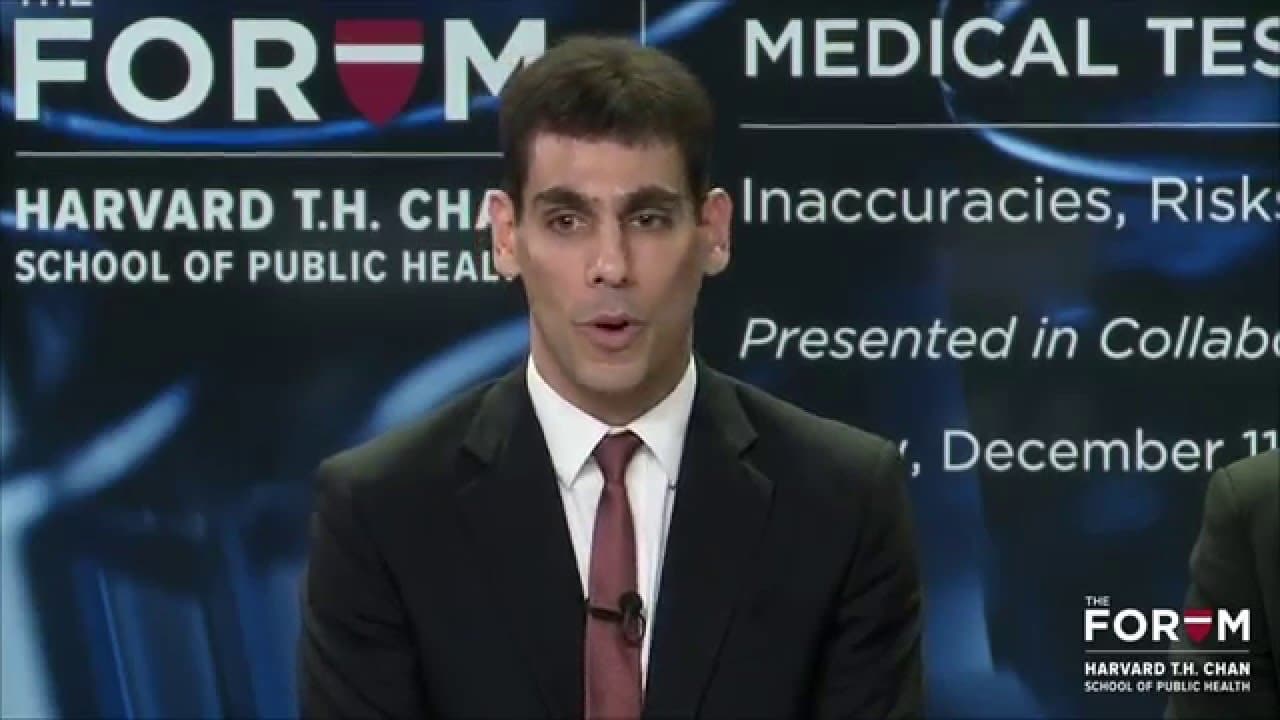
Medical Tests: Inaccuracies, Risks and the Public's Health | The Forum at HSPH
TL;DR
Diagnostic tests, such as laboratory-developed tests (LDTs), have raised concerns due to inaccuracies and safety issues. The FDA proposed a new framework to evaluate LDTs and improve patient safety.
Transcript
you welcome to the forum at Harvard th Chan School of Public Health my name is Sharon Begley I'm the senior science writer at stat and your moderator for today's event our topic today is one that should be of interest to anyone who has been a patient is a patient or will be a patient in other words everyone the topic is diagnostic tests inaccuracie... Read More
Key Insights
- 🛀 Laboratory-developed tests (LDTs) have shown great potential for innovation in diagnostics but have also been associated with safety issues.
- 👶 The FDA has proposed a new framework to evaluate and regulate LDTs based on their clinical validity and risk levels.
- 🏆 Diagnostic tests, like blood tests, have generally high accuracy but still require improvement in terms of overuse, underuse, and misinterpretation of results.
Install to Summarize YouTube Videos and Get Transcripts
Explore YouTube Video Summarizer or Get YouTube Transcript Extractor
Questions & Answers
Q: What are laboratory-developed tests (LDTs) and why are they controversial?
LDTs are tests developed by individual laboratories and are intended to be used by local clinicians. They have shown innovation but have also been associated with safety issues. Controversies arise when these tests are marketed without clinical validation.
Q: How accurate are diagnostic tests?
Diagnostic tests, like blood tests and urine tests, are generally accurate due to advanced laboratory technology. However, concerns arise from the misinterpretation of results and the underuse or overuse of tests.
Q: What is the FDA's role in regulating diagnostic tests?
The FDA has proposed a new framework to evaluate laboratory-developed tests and improve patient safety. The FDA aims to ensure that tests are clinically validated before being marketed and to provide oversight based on the risks associated with each test.
Q: How can patients ensure the accuracy of the tests ordered by their doctors?
Patients can ask their doctors to explain the positive predictive value of the tests ordered and whether those tests have been clinically validated. It is crucial for patients to have an open line of communication with their healthcare providers.
Summary & Key Takeaways
-
Laboratory-developed tests (LDTs) are tests developed by individual laboratories and are intended to be used by local clinicians. They have shown great potential for innovation in diagnostics but have also been associated with safety issues.
-
The FDA recently released a report highlighting the problems with LDTs, including tests with poor predictive value and tests marketed without clinical validation. Controversial companies like Theranos have also raised concerns about the accuracy of their tests.
-
A study on blood tests found that while they are generally accurate, there is room for improvement in terms of overuse and underuse of tests, as well as misinterpretation of results.
Read in Other Languages (beta)
Share This Summary 📚
Summarize YouTube Videos and Get Video Transcripts with 1-Click
Try YouTube Summary with ChatGPT & Claude or YouTube Transcript Generator
Explore More Summaries from Harvard University 📚






Summarize YouTube Videos and Get Video Transcripts with 1-Click
Try YouTube Summary with ChatGPT & Claude or YouTube Transcript Generator