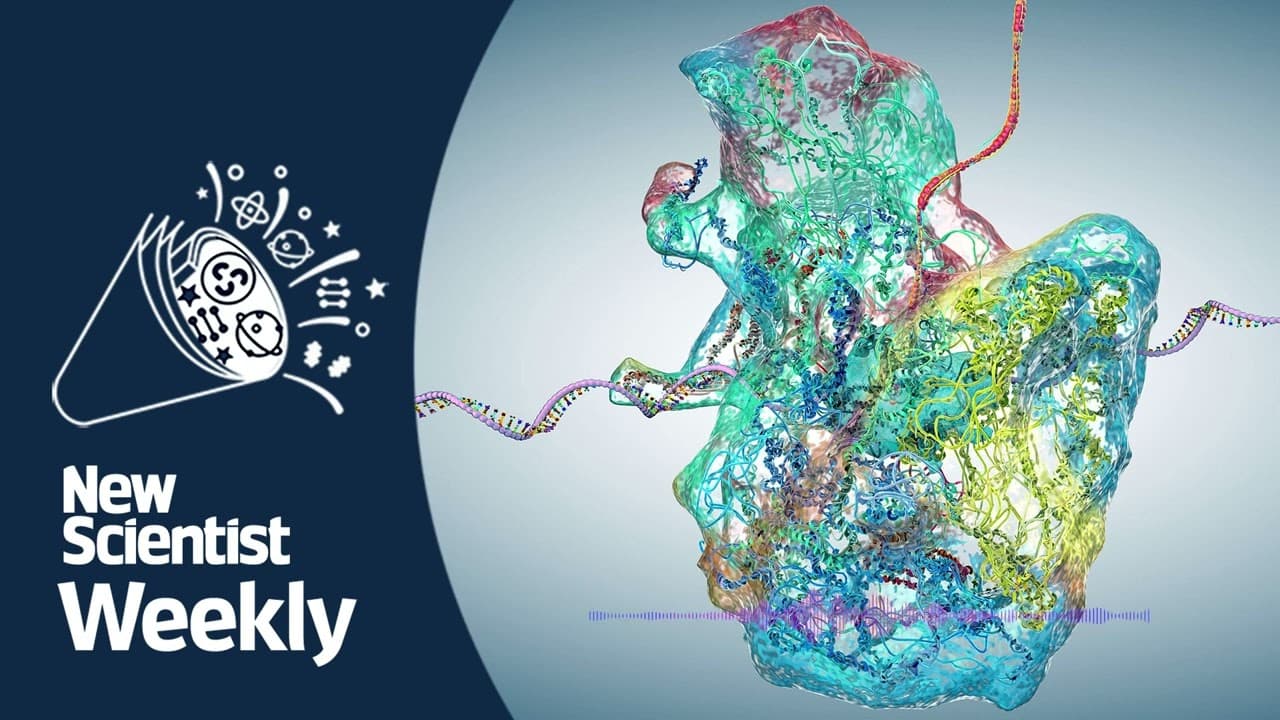
A step towards building artificial life | New Scientist Weekly podcast, episode 136
TL;DR
Self-replicating protein factory and insights on centenarians with Alzheimer's; wildfires worsening due to climate change.
Transcript
hello welcome to New Scientist weekly this is the show that brings you a curated selection of the essential stories of the week our aim is to feed your curiosity I'm your host Rowan Hooper in London and I'm Chelsea white in Portland Oregon welcome to the Shelf this week we also welcome back reporter Carissa Wong hi Carissa hiya now last week we did... Read More
Key Insights
- 💋 Achieving ribosome self-replication marks a significant stride in understanding artificial cell creation and life's origins.
- 🤢 Solar-powered sea slugs display a unique symbiosis through chloroplast utilization for photosynthesis, showcasing nature's adaptability.
- 💱 Climate change intensifies extreme wildfires, posing increasing threats to communities and ecosystems globally.
- 🧠 Centenarians challenge Alzheimer's norms, suggesting genetic resilience to typical brain changes associated with the disease.
- 🥰 Climate art emerges as a crucial narrative tool, utilizing artistic expression to convey urgent climate crisis messages.
- ❓ Understanding climate's intersectionality reveals how it impacts all aspects of human society and inequalities.
- 💱 Embracing curiosity and fascination with Earth's ongoing changes can inspire positive action amidst challenging environmental realities.
Install to Summarize YouTube Videos and Get Transcripts
Explore YouTube Video Summarizer or Get YouTube Transcript Extractor
Questions & Answers
Q: How did scientists achieve ribosome self-replication outside cells?
By optimizing a reaction involving DNA, RNA, ribosomes, and a precise molecular cocktail, they enabled ribosomes to self-replicate, shedding light on building artificial cells.
Q: How do solar-powered sea slugs utilize chloroplasts for photosynthesis?
Sea slugs dissect the chloroplasts from algae they feed on, store them, and use sunlight to photosynthesize, exhibiting a unique symbiosis and energy-gaining method.
Q: How do extreme wildfires worsen due to climate change?
Warmer temperatures and drier fuel from climate change amplify extreme wildfire risks, leading to rapid spread and destruction, a significant environmental concern.
Q: Why do centenarians with Alzheimer's-like brain changes exhibit no cognitive symptoms?
Centenarians may tolerate or override brain changes due to genetic factors, potentially escaping inflammation triggers linked to typical Alzheimer's symptoms.
Summary & Key Takeaways
-
Scientists have achieved ribosome self-replication outside cells, a milestone in understanding life's origins.
-
Solar-powered sea slugs dissect chloroplasts to photosynthesize, surviving on plant energy.
-
Climate change fuels extreme wildfires, while centenarians defy expected dementia symptoms despite brain changes.
Read in Other Languages (beta)
Share This Summary 📚
Summarize YouTube Videos and Get Video Transcripts with 1-Click
Try YouTube Summary with ChatGPT & Claude or YouTube Transcript Generator
Explore More Summaries from New Scientist weekly podcast 📚

Summarize YouTube Videos and Get Video Transcripts with 1-Click
Try YouTube Summary with ChatGPT & Claude or YouTube Transcript Generator