Products
Features
YouTube Video Summarizer
Summarize YouTube videos
Web & PDF Highlighter
Highlight web pages & PDFs
Chat with PDF
Ask any PDF questions with AI
Ask AI Clone
Chat with your highlights & memories
Audio Transcriber
Transcribe audio files to text
Glasp Reader
Read and highlight articles
Kindle Highlight Export
Export your Kindle highlights
Idea Hatch
Hatch ideas from your highlights
Integrations
Obsidian Plugin
Notion Integration
Pocket Integration
Instapaper Integration
Medium Integration
Readwise Integration
Snipd Integration
Hypothesis Integration
Apps & Extensions
Chrome Extension
Safari Extension
Edge Add-ons
Firefox Add-ons
iOS App
Android App
Discover
Discover
Ideas
Discover new ideas and insights
Articles
Curated articles and insights
Books
Book recommendations by great minds
Posts
Essays and notes from readers
Quotes
Inspiring quotes collection
Videos
Curated videos and summaries
Explore Glasp
Glasp Story
How we grew from 0 to 3 million users
Glasp Newsletter
Weekly insights and updates
Glasp Talk
Interview series with great minds
Glasp Blog
Latest news and articles
Glasp Use Cases
Learn how others use Glasp
Build & Support
Glasp API
Access Glasp's API for developers
MCP Connector
Connect Glasp to Claude & ChatGPT
Community
Glasp Reddit Community
Students
Student discount and benefits
FAQs
Frequently Asked Questions
AboutPricing
DashboardLog inSign up

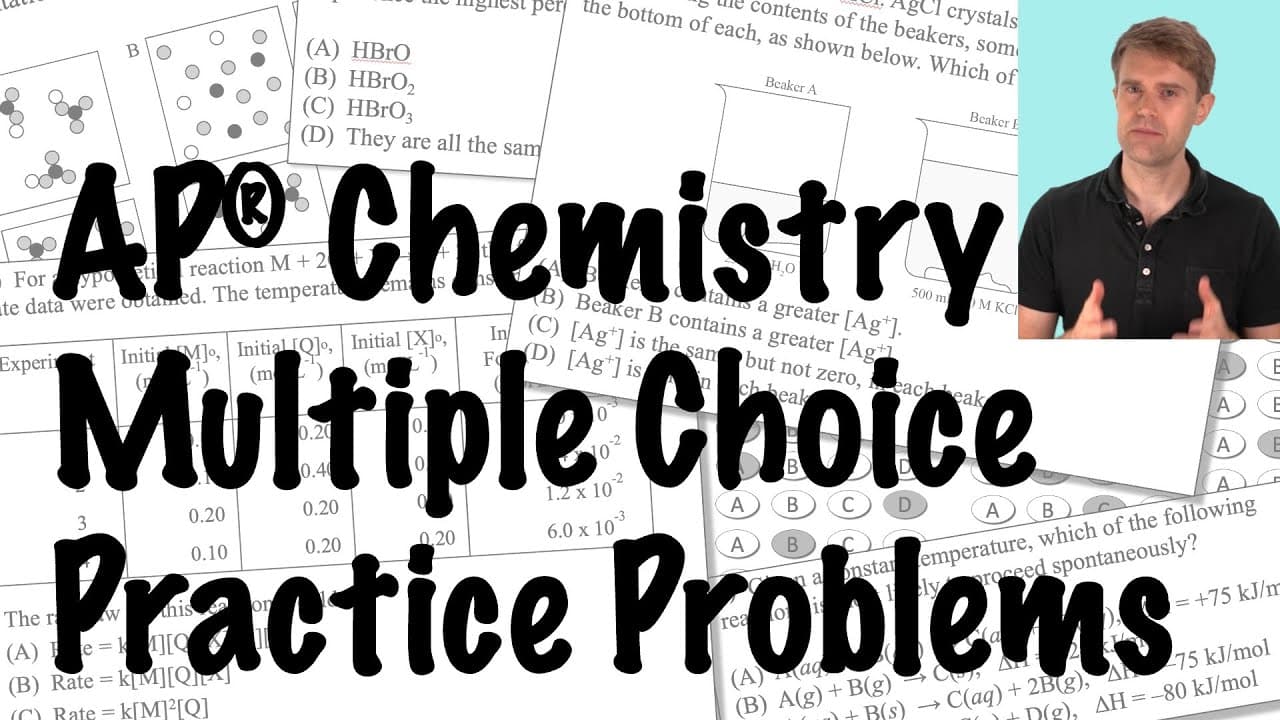
AP® Chemistry Multiple Choice Practice Problems
99.8K views
•
April 14, 2022
by
Tyler DeWitt
YouTube video player
AP® Chemistry Multiple Choice Practice Problems

TL;DR

The standard cell potential in a galvanic cell can be calculated using the equation E(cell) = E(cathode) - E(anode).

Transcript

In this video we're going to work through a  bunch of sample multiple choice questions for   the AP chemistry test. Now before you go through  this whole video, I really recommend you check out   my website. Here you can download these problems  first and do kind of a mini test. It only takes 30   minutes and then you can come back here for the  a... Read More

Key Insights

  • ❓ The standard cell potential of a galvanic cell can be determined using the difference in reduction potentials for the cathode and anode.
  • ❓ In a galvanic cell, reduction occurs at the cathode and oxidation occurs at the anode.
  • 🉐 Reduction potential is a measure of the tendency of a species to gain electrons and be reduced.
  • ⚡ The reduction potential of a species is measured relative to a standard hydrogen electrode (SHE), assigned a reduction potential of 0 volts.
  • 🥵 The specific heat capacity of a substance is the amount of heat energy required to raise the temperature of one gram of the substance by one degree celsius.

Install to Summarize YouTube Videos and Get Transcripts

Explore YouTube Video Summarizer or Get YouTube Transcript Extractor

Questions & Answers

Q: How is the standard cell potential in a galvanic cell calculated?

The standard cell potential is calculated using the equation E(cell) = E(cathode) - E(anode), where E(cathode) is the reduction potential of the cathode and E(anode) is the reduction potential of the anode.

Q: What does it mean for a species to be reduced?

When a species is reduced, it gains electrons. In a galvanic cell, reduction occurs at the cathode.

Q: What does it mean for a species to be oxidized?

When a species is oxidized, it loses electrons. In a galvanic cell, oxidation occurs at the anode.

Q: Can you explain the concept of reduction potential?

Reduction potential is a measure of the tendency of a species to gain electrons and be reduced. It is measured relative to a standard hydrogen electrode (SHE), which is assigned a reduction potential of 0 volts. The more positive the reduction potential, the greater the tendency for reduction to occur.

Summary & Key Takeaways

  • The standard cell potential in a galvanic cell is the difference between the reduction potentials of the cathode and the anode.

  • Reduction occurs at the cathode, where a species gains electrons and is reduced.

  • Oxidation occurs at the anode, where a species loses electrons and is oxidized.


Read in Other Languages (beta)

English

Share This Summary 📚

Summarize YouTube Videos and Get Video Transcripts with 1-Click

Download browser extensions on:

Try YouTube Summary with ChatGPT & Claude or YouTube Transcript Generator

Explore More Summaries from Tyler DeWitt 📚
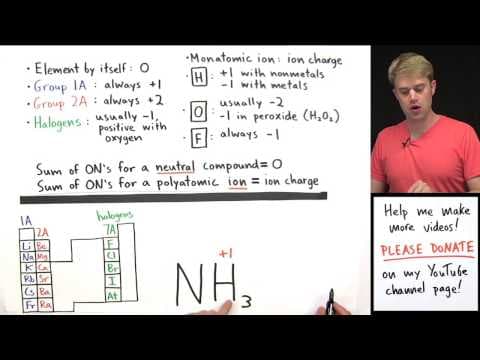
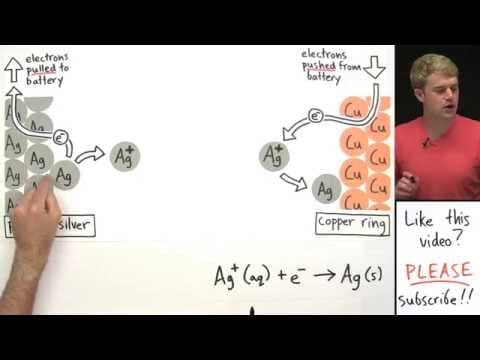
How to Calculate Oxidation Numbers Introduction thumbnail
How to Calculate Oxidation Numbers Introduction
Tyler DeWitt
How Can You Succeed on the AP Chemistry Exam Smarter? thumbnail
How Can You Succeed on the AP Chemistry Exam Smarter?
Tyler DeWitt
Electroplating Part 2 thumbnail
Electroplating Part 2
Tyler DeWitt
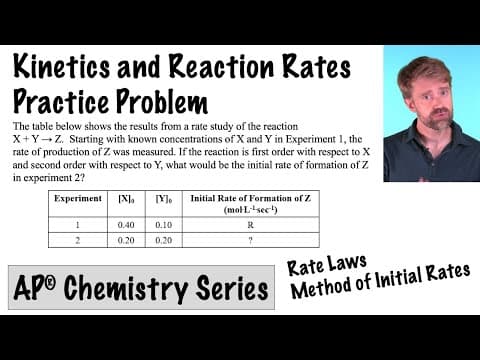
Kinetics and Reaction Rates (AP Chemistry) thumbnail
Kinetics and Reaction Rates (AP Chemistry)
Tyler DeWitt
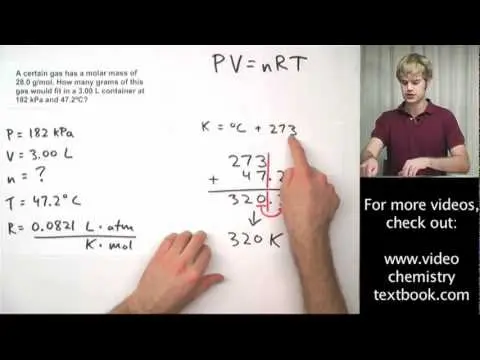
Ideal Gas Law Practice Problems with Molar Mass thumbnail
Ideal Gas Law Practice Problems with Molar Mass
Tyler DeWitt
What Happens when Stuff Dissolves? thumbnail
What Happens when Stuff Dissolves?
Tyler DeWitt

Summarize YouTube Videos and Get Video Transcripts with 1-Click

Download browser extensions on:

Try YouTube Summary with ChatGPT & Claude or YouTube Transcript Generator

Apps & Extensions

  • Chrome Extension
  • Safari Extension
  • Edge Add-ons
  • Firefox Add-ons
  • iOS App
  • Android App

Key Features

  • YouTube Video Summarizer
  • Web & PDF Summarizer
  • Web & PDF Highlighter
  • Chat with PDF
  • Ask AI Clone
  • Audio Transcriber
  • Glasp Reader
  • Kindle Highlight Export
  • Idea Hatch

Integrations

  • Obsidian Plugin
  • Notion Integration
  • Pocket Integration
  • Instapaper Integration
  • Medium Integration
  • Readwise Integration
  • Snipd Integration
  • Hypothesis Integration

More Features

  • APIs
  • MCP Connector
  • Blog & Post
  • Embed Links
  • Image Highlight
  • Personality Test
  • Quote Shots

Company

  • About us
  • Our Story
  • Blog
  • Community
  • FAQs
  • Job Board
  • Newsletter
  • Pricing
Terms

•

Privacy

•

Guidelines

© 2026 Glasp Inc. All rights reserved.