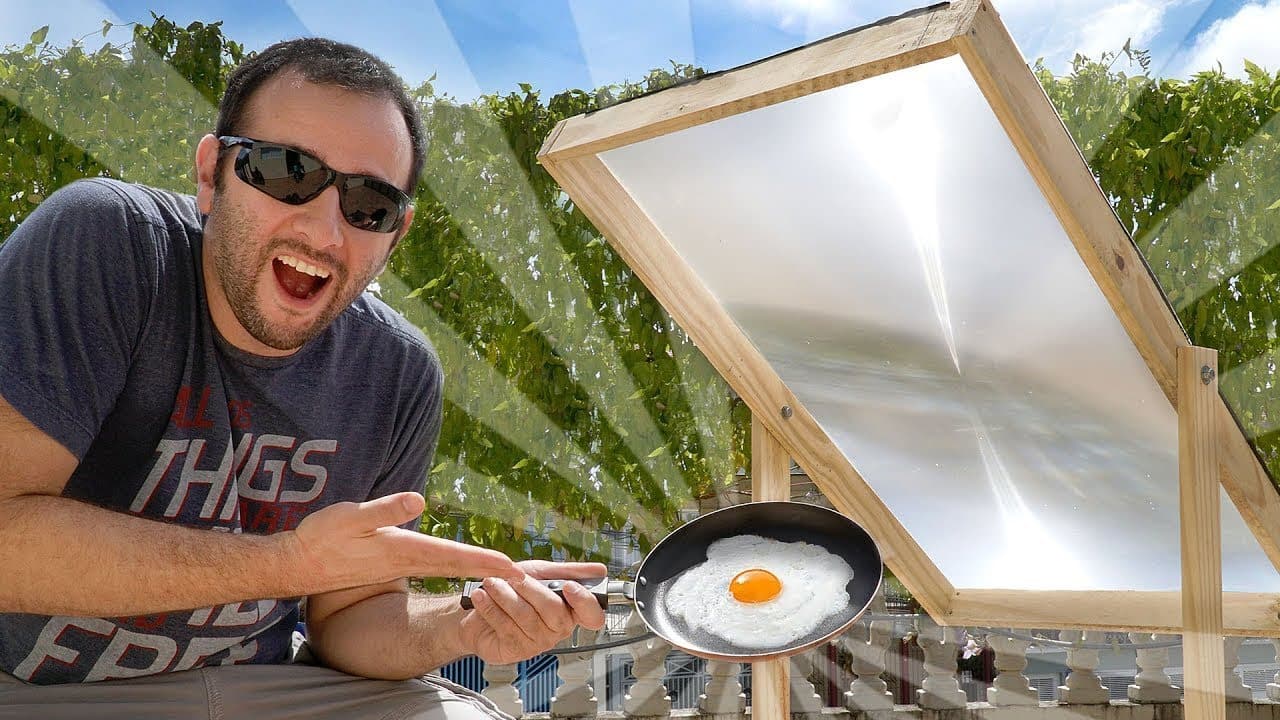
Fizemos uma LUPA GIGANTE que passa de 600ºC
TL;DR
A giant magnifying glass is used to reach 700°C.
Transcript
On Super Tuesday today, we're going to make a giant magnifying glass, a huge lens to melt things that can reach almost 700 degrees Celsius. For a change, this is an experience that is cool to see in the video, but not to do at home. Although this material that we are going to use, you will see that it is not at all easy to find. You must have al... Read More
Key Insights
- The experiment involves creating a giant magnifying glass capable of reaching temperatures up to 700°C, illustrating the principles of light convergence.
- The Fresnel lens, invented by Augustin Jean Fresnel, is highlighted for its ability to focus light efficiently while being lightweight and easy to produce.
- The lens' practical applications are discussed, including its use in lighthouses, traffic lights, and various lighting systems in theaters and cinemas.
- The experiment demonstrates the lens' ability to focus sunlight to ignite materials, pop popcorn, and fry an egg, showcasing its potential for high-temperature applications.
- Various materials are tested for melting points, from cork to aluminum, with the lens successfully melting some but not reaching the temperatures needed for copper or glass.
- The Fresnel lens is praised for its historical significance in navigation and modern applications, emphasizing its continued relevance in technology.
- The experiment is conducted with safety precautions, including the use of welding glasses to protect against intense light and heat.
- The video encourages viewers to appreciate the science behind everyday objects like lenses and their impact on technology and daily life.
Install to Summarize YouTube Videos and Get Transcripts
Explore YouTube Video Summarizer or Get YouTube Transcript Extractor
Questions & Answers
Q: What is the purpose of creating a giant magnifying glass in the video?
The purpose of creating a giant magnifying glass in the video is to demonstrate the principles of light convergence and the capabilities of a Fresnel lens. The experiment showcases how the lens can focus sunlight to reach high temperatures, allowing it to ignite materials, melt metals, and even cook food. This serves as an educational demonstration of the lens' potential applications and the science behind it.
Q: How does the Fresnel lens differ from traditional lenses?
The Fresnel lens differs from traditional lenses in its design, which allows it to be much lighter and more efficient at focusing light. Traditional lenses are typically thick and heavy, making them impractical for large-scale applications. The Fresnel lens, however, is composed of a series of concentric rings that reduce the amount of material needed while maintaining the lens' ability to focus light effectively. This design innovation made it possible to use large lenses in lighthouses and other applications where weight and size were previously prohibitive.
Q: What safety precautions are taken during the experiment?
During the experiment, several safety precautions are taken to protect against the intense light and heat generated by the giant magnifying glass. The presenter uses welding glasses to shield their eyes from the bright, concentrated light. Additionally, the materials being tested are handled with care, and the setup is designed to minimize the risk of accidental burns or fires. These precautions ensure that the experiment is conducted safely while still demonstrating the lens' capabilities.
Q: What materials are tested for melting points in the video?
In the video, various materials are tested to determine their melting points using the giant magnifying glass. The materials include cork, sulfur, a lead-tin alloy, bismuth, lead, aluminum, copper, and glass. Each material is exposed to the focused sunlight to see if it can be melted by the lens. While the lens successfully melts some materials, such as the lead-tin alloy and aluminum, it does not reach the temperatures required to melt copper or glass.
Q: What are some practical applications of the Fresnel lens?
The Fresnel lens has numerous practical applications due to its ability to focus light efficiently while being lightweight and easy to produce. Historically, it was used in lighthouses to create powerful beams of light visible from great distances, aiding in maritime navigation. Today, Fresnel lenses are used in traffic lights, theater and cinema lighting, and various optical devices. Their design allows for large lenses to be used in situations where weight and size are critical factors, making them versatile in many technological applications.
Q: How is the experiment setup to focus sunlight effectively?
The experiment is set up to focus sunlight effectively by mounting the Fresnel lens on a sturdy frame that allows for precise alignment with the sun's rays. The lens is positioned so that the sunlight converges at a specific focal point, where the materials to be tested are placed. This setup ensures that the maximum amount of sunlight is concentrated on the target, allowing for accurate testing of the lens' ability to generate high temperatures. The alignment process involves adjusting the lens position until the shadow and sunlight are perfectly aligned.
Q: What challenges are faced when attempting to melt glass with the lens?
When attempting to melt glass with the lens, the experiment faces challenges due to the high melting point of glass, which exceeds 1,200 degrees Celsius. The lens is unable to reach this temperature, and the specific type of glass used in the experiment, such as borosilicate, may have even higher resistance to heat. Additionally, glass requires even heat distribution to melt effectively, which is difficult to achieve with the focused sunlight. These factors contribute to the inability to melt glass during the experiment.
Q: What is the historical significance of the Fresnel lens in navigation?
The Fresnel lens holds significant historical importance in navigation due to its revolutionary design, which allowed lighthouses to project powerful beams of light visible from long distances. Before the Fresnel lens, lighthouses struggled to produce concentrated beams, limiting their effectiveness. The introduction of the Fresnel lens in the 1800s enabled lighthouses to guide ships more reliably, reducing maritime accidents and improving safety at sea. Its lightweight and efficient design made it possible to use large lenses in lighthouses, transforming maritime navigation and saving countless lives.
Summary & Key Takeaways
-
The video explores the creation and application of a giant magnifying glass capable of reaching temperatures up to 700°C. It demonstrates how a Fresnel lens can concentrate sunlight to ignite materials and melt metals.
-
The lens' historical significance and modern applications are discussed, showcasing its use in lighthouses, traffic lights, and various lighting systems. The experiment highlights the lens' ability to focus light efficiently.
-
Safety precautions are emphasized throughout the experiment, with welding glasses used to protect against intense light. The video encourages viewers to appreciate the science behind lenses and their technological impact.
Read in Other Languages (beta)
Share This Summary 📚
Summarize YouTube Videos and Get Video Transcripts with 1-Click
Try YouTube Summary with ChatGPT & Claude or YouTube Transcript Generator
Explore More Summaries from Manual do Mundo 📚
Summarize YouTube Videos and Get Video Transcripts with 1-Click
Try YouTube Summary with ChatGPT & Claude or YouTube Transcript Generator