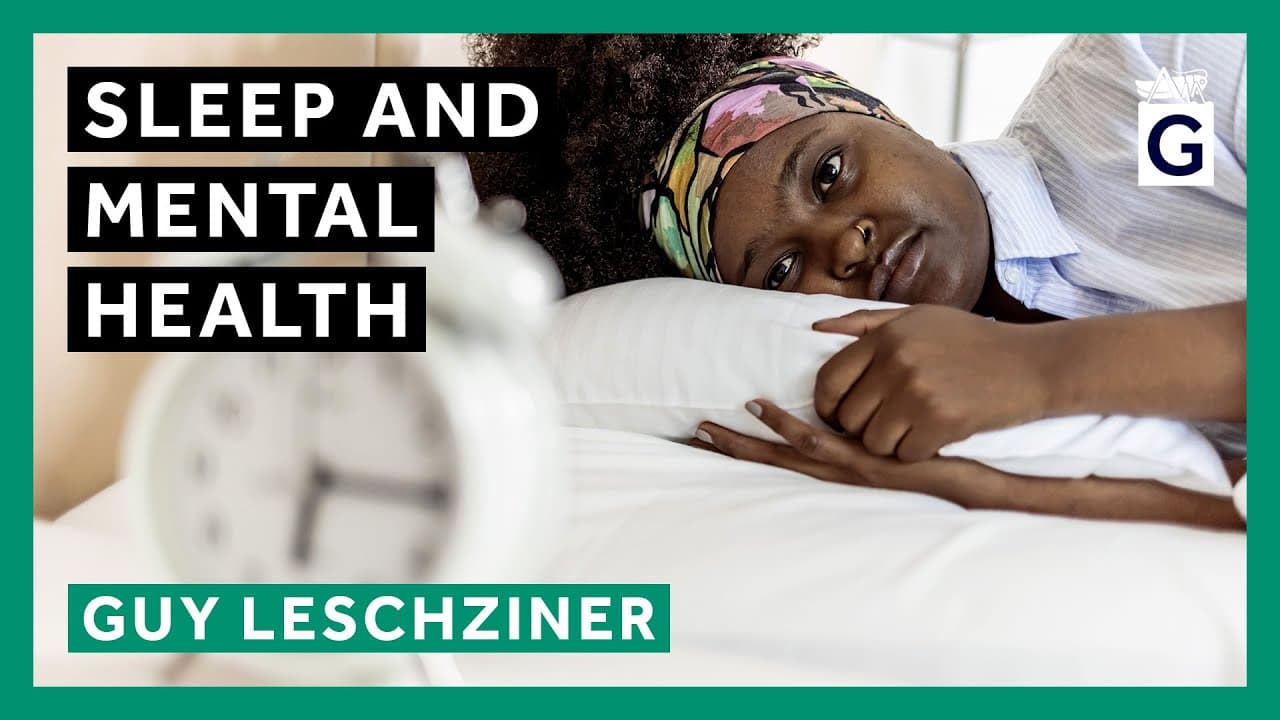
Sleep and Mental Health
TL;DR
Sleep disturbance and mental health issues have a strong relationship, with poor sleep affecting mental health and mental health disorders causing sleep problems.
Transcript
(swooshes) - I think everybody will be very familiar with this feeling, the feeling of when you've had a very bad night's sleep and you feel tired, obviously, but you also feel slightly grumpy, a little bit more irritable. So it's very intuitive to imagine that sleep may affect our mental health at least on a short term basis, on those nights when ... Read More
Key Insights
- 😪 Sleep disturbance and mental health issues have a bidirectional relationship, where sleep problems can contribute to the development or exacerbation of mental health disorders, and mental health disorders can cause sleep disturbances.
- 😪 Insomnia is often a consequence of mental health issues, but it can also precede or co-occur with the onset of mood disorders, while anxiety tends to start alongside or shortly after the onset of sleep disorders.
- 😪 Acute sleep deprivation can have significant psychological and physiological effects, including impaired emotional regulation, increased perception of pain, and cognitive dysfunction.
- 😪 Sleep disturbance is prevalent in various mental health disorders, such as anxiety, depression, post-traumatic stress disorder, and schizophrenia, and addressing sleep problems can help alleviate symptoms.
- 🧑⚕️ Cognitive behavioral therapy for insomnia (CBTi) is an effective treatment for insomnia and has shown benefits for treating mental health disorders, including anxiety and depression.
- 😪 Treating sleep disturbance should be part of standard psychiatric care to improve mental health outcomes.
Install to Summarize YouTube Videos and Get Transcripts
Explore YouTube Video Summarizer or Get YouTube Transcript Extractor
Questions & Answers
Q: What is the co-occurrence rate of mental health disorders in individuals with insomnia?
In individuals with insomnia, about 40% also have a concurrent mental health disorder, compared to a 15% rate in individuals with normal sleep.
Q: How does sleep deprivation affect emotional regulation?
Sleep deprivation impairs the ability to regulate emotions, leading to increased negative interpretation of stimuli and heightened perception of pain. Acute sleep deprivation can also lead to frontal lobe dysfunction and cognitive impairments.
Q: What is the relationship between sleep disturbance and anxiety?
Anxiety can both cause and be caused by sleep disturbance. Sleep disturbance is often present in individuals with anxiety, as the heightened state of alertness and vigilance interferes with falling asleep. Additionally, sleep deprivation can increase anxiety and alter brain activity patterns associated with anxiety.
Q: Can improving sleep quality impact depression?
There is a strong association between sleep disturbance and depression. Improving sleep quality and addressing insomnia can lead to a decrease in depressive symptoms and increase the likelihood of remission from depression.
Summary & Key Takeaways
-
Sleep disorders, such as insomnia and obstructive sleep apnea, are common and often co-occur with mental health issues.
-
Insomnia and excessive sleepiness are associated with a higher prevalence of mental health disorders compared to individuals with normal sleep.
-
There is evidence that sleep disturbance can contribute to the development or worsening of mental health disorders, such as anxiety, depression, and post-traumatic stress disorder (PTSD).
Read in Other Languages (beta)
Share This Summary 📚
Summarize YouTube Videos and Get Video Transcripts with 1-Click
Try YouTube Summary with ChatGPT & Claude or YouTube Transcript Generator
Explore More Summaries from Gresham College 📚

Summarize YouTube Videos and Get Video Transcripts with 1-Click
Try YouTube Summary with ChatGPT & Claude or YouTube Transcript Generator