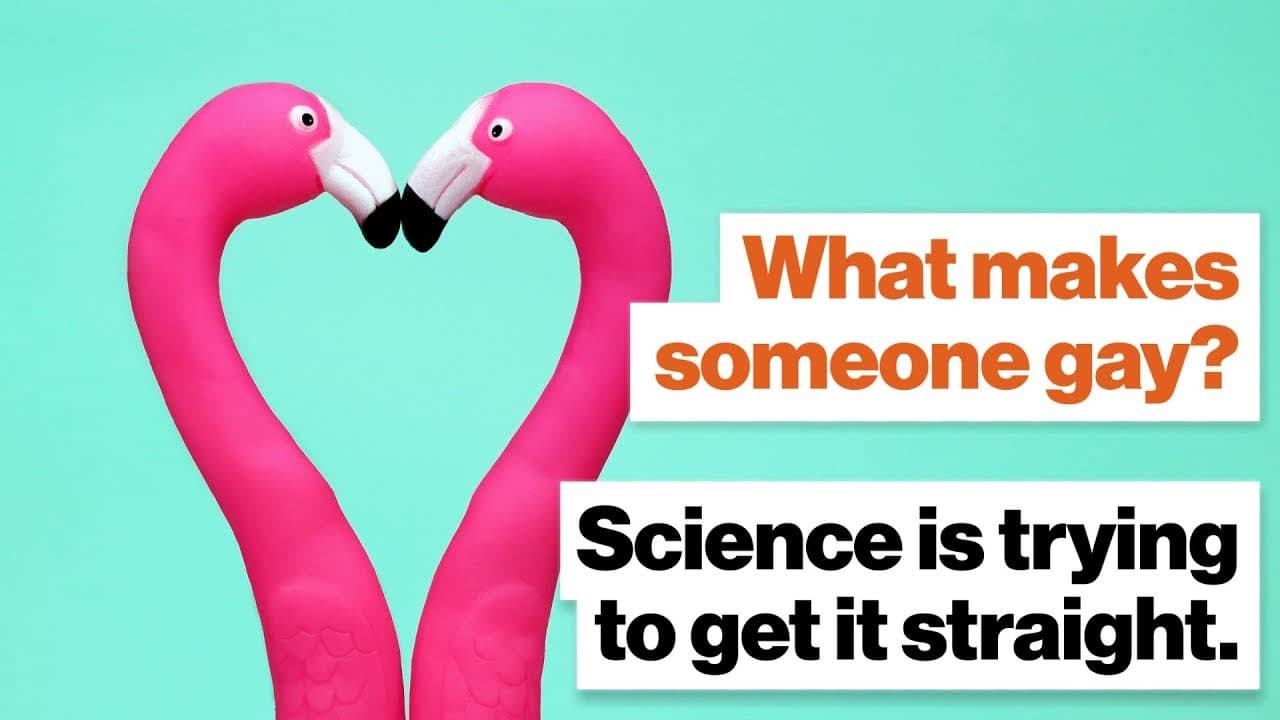
What makes someone gay? Science is trying to get it straight. | Alice Dreger | Big Think
TL;DR
Gender, sexuality, and evolution intersect with societal and biological factors, impacting behaviors and traits across cultures.
Transcript
ALICE DREGER: We don't actually know the extent to which gender is socially constructed because you can't do an experiment where you remove culture and see what happens. So we don't know to what extent what we see as gendered patterns are the result of sex, biological sex, males and females. We know that gender differs according to cultur... Read More
Key Insights
- ❓ Gender norms can vary across cultures, while some patterns may have biological bases.
- 🖐️ Childhood play and social roles exhibit gendered patterns, although not all individuals conform to these norms.
- ❓ Evolutionary pressures favor heterosexuality for reproductive purposes.
- 👪 Natural variations like homosexuality persist, possibly offering genetic advantages within families.
- 🥳 The fraternal birth order effect suggests non-genetic inborn characteristics contribute to sexual orientation.
- 👨🔬 Research on gay individuals has been more extensive, highlighting societal biases and assumptions.
- 📏 Limited understanding exists regarding the origins of straight individuals' sexual orientation.
Install to Summarize YouTube Videos and Get Transcripts
Explore YouTube Video Summarizer or Get YouTube Transcript Extractor
Questions & Answers
Q: How do gender and sexuality intersect in shaping behavior patterns?
Gender and sexuality seem to have interconnected components, impacting social roles, interests, and behaviors in childhood and beyond.
Q: Why do natural variations like homosexuality persist despite evolutionary pressures?
The existence of homosexuality may offer genetic advantages within families, as non-reproducing members contribute resources to nieces and nephews, aiding overall genetic continuity.
Q: What is the fraternal birth order effect, and how does it contribute to sexual orientation?
The effect suggests that later-born males are more likely to be gay, possibly due to maternal immune responses to male hormones during pregnancy, leading to non-genetic inborn characteristics.
Q: How does societal perception and study focus differ between straight and gay individuals?
Historically, straight people have been viewed as requiring no explanation, while gay individuals are often scrutinized, leading to varied and sometimes unfavorable explanations.
Summary & Key Takeaways
-
Gender norms vary across cultures, with some universal patterns possibly rooted in biological sex differences.
-
Childhood play and social roles show gendered patterns; some evidence suggests a link between gender and sexuality.
-
Evolution favors heterosexuality, but natural variations like homosexuality persist, possibly contributing to family genetic advantages.
Read in Other Languages (beta)
Share This Summary 📚
Summarize YouTube Videos and Get Video Transcripts with 1-Click
Try YouTube Summary with ChatGPT & Claude or YouTube Transcript Generator
Explore More Summaries from Big Think 📚


Summarize YouTube Videos and Get Video Transcripts with 1-Click
Try YouTube Summary with ChatGPT & Claude or YouTube Transcript Generator