The Place Hotter Than Death Valley & Other Extreme Locations
TL;DR
Ethiopia's Danakil Depression is the hottest region on Earth, with extreme heat, acidic water, and unique geological formations.
Transcript
thanks to brilliant for supporting this whole week of scishow go to brilliant org slash scishow to learn more the hottest region on earth is in Eastern Africa but the heat might be the least interesting thing about it it has a volcano featuring one of the planet's few lava lakes places where molten rock sits exposed full-time and it has some of the... Read More
Key Insights
- 😅 The Danakil Depression is the hottest region on Earth, with temperatures averaging 34 degrees Celsius.
- 🍽️ The depression is located at the junction of three tectonic plates, experiencing earthquakes and volcanic activity.
- 🥵 The unique combination of heat, plate tectonics, elevation, acid, and volcanism in the Danakil Depression only took place recently, about a century ago.
- 🚠 Extremophiles are able to survive in the extreme conditions of the Danakil Depression.
- ❓ Lucy, the Australopithecus afarensis skeleton, was discovered in the Danakil Depression and significantly contributed to our understanding of hominid evolution.
- 🫤 The Danakil Depression offers scientists a glimpse into the processes that formed Earth's first plates billions of years ago.
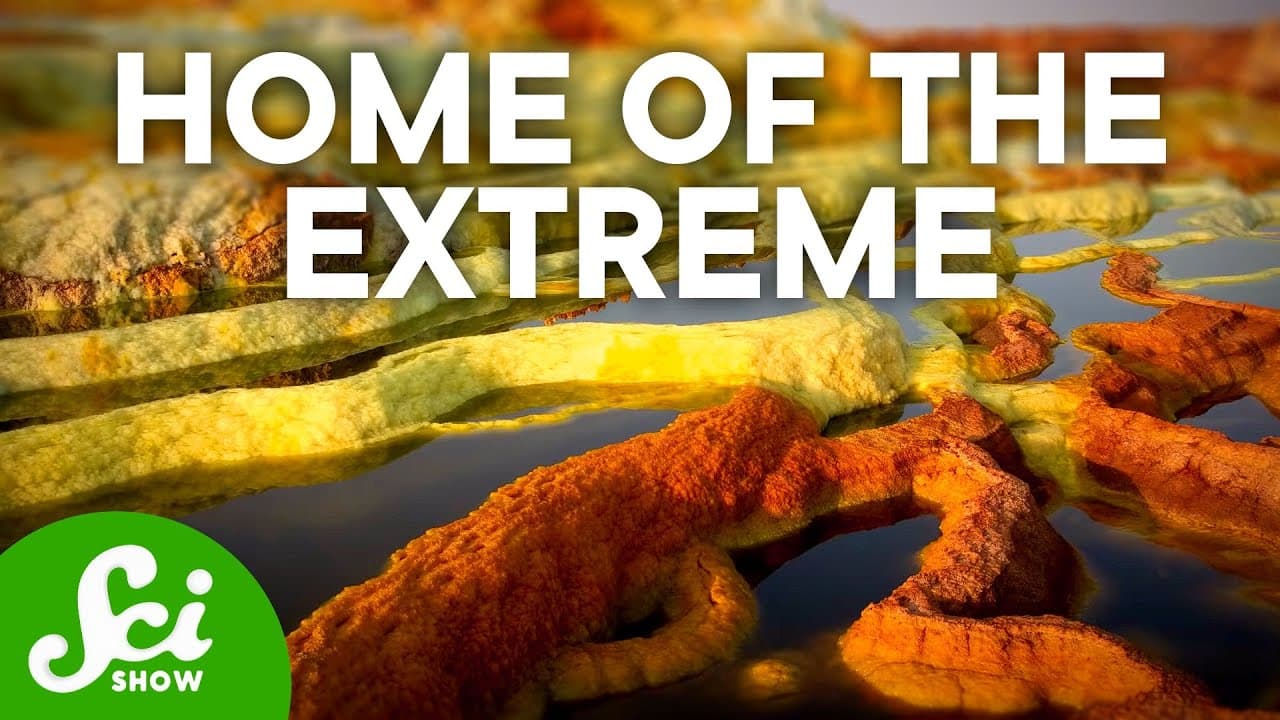
- 💦 The region is visually striking, with colorful rocks formed by the mix of water, iron, copper, sulfur, and salt.
Install to Summarize YouTube Videos and Get Transcripts
Explore YouTube Video Summarizer or Get YouTube Transcript Extractor
Questions & Answers
Q: Why is the Danakil Depression hotter than any other place on Earth?
The depression's super arid desert climate, low elevation, and the presence of a mantle plume pushing the tectonic plates apart contribute to the extreme heat in the region.
Q: What makes the Danakil Depression a unique geological site?
The depression provides scientists with a glimpse into the processes that might have formed Earth's first plates billions of years ago, as well as features colorful rocks, boiling acidic water, and a high chlorine content in the air.
Q: Are there any forms of life that can survive in the extreme conditions of the Danakil Depression?
Yes, extremophiles, or poly extremophiles, are microbes that have adapted to thrive in the harsh conditions. They are found in the depression, although larger organisms are rare.
Q: What is the significance of the discovery of Lucy in the Danakil Depression?
Lucy's partial skeleton, an Australopithecus afarensis, provided valuable insights into hominid evolution and raised new questions about the timeline and connections between different human ancestors.
Summary & Key Takeaways
-
The Danakil Depression in Ethiopia is extremely hot, with temperatures averaging 34 degrees Celsius and reaching hotter than anywhere else on Earth.
-
The depression is located at the junction of three tectonic plates, which are spreading apart, causing the region to sink lower and lower.
-
The depression features a mantle plume, resulting in earthquakes, volcanoes, and a unique landscape with colorful rocks and acidic water.
Read in Other Languages (beta)
Share This Summary 📚
Summarize YouTube Videos and Get Video Transcripts with 1-Click
Try YouTube Summary with ChatGPT & Claude or YouTube Transcript Generator
Explore More Summaries from SciShow 📚


Summarize YouTube Videos and Get Video Transcripts with 1-Click
Try YouTube Summary with ChatGPT & Claude or YouTube Transcript Generator