5 Inventions Showing Us the Future of Solar Energy
TL;DR
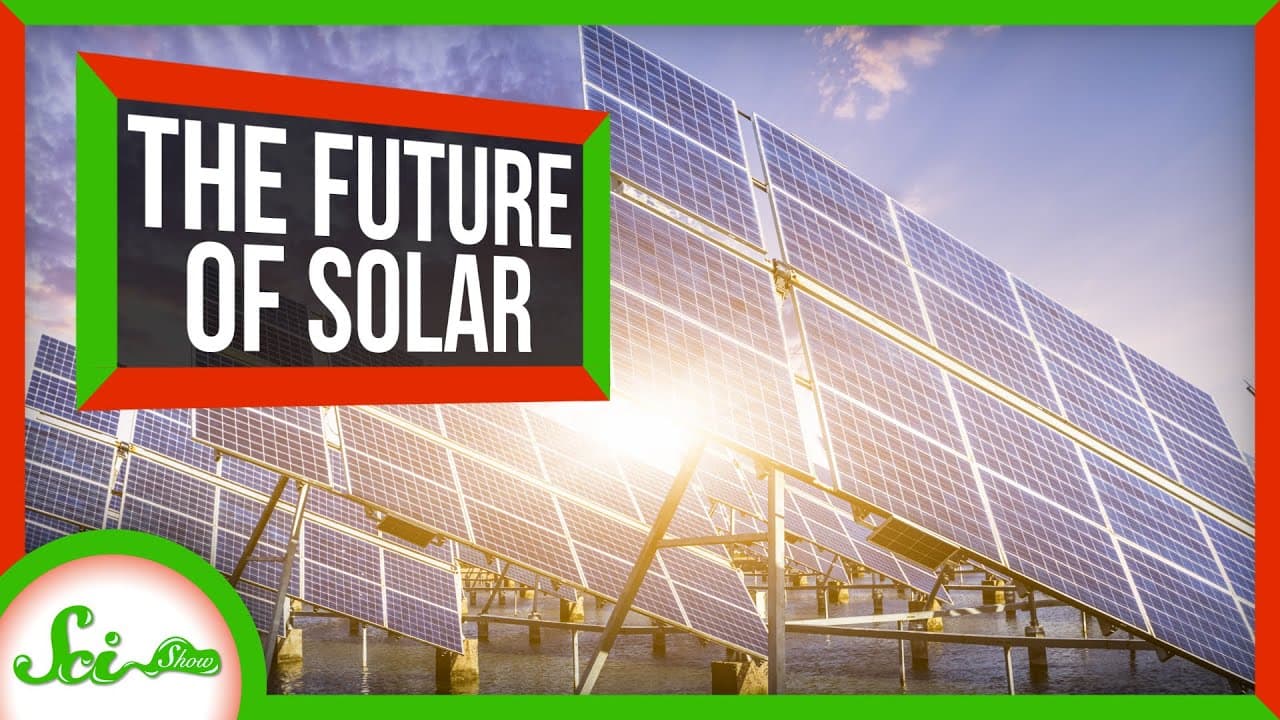
New inventions in solar energy, such as agrivoltaics, floatovoltaics, photovoltaic trackers, organic solar cells, solar fabrics, and solar thermal fuels, have the potential to revolutionize the industry.
Transcript
[♪ INTRO] When you imagine the energy of the future, solar power is probably in the picture. After all, it’s reliable, it is powerful, and it fuels the vast majority of life on Earth. In recent years, less than two percent of the world’s electricity has come from solar power—but new inventions are likely to change that. So here are five ways solar ... Read More
Key Insights
- 💦 Solar panels work best in moderate climates, but innovations like agrivoltaics and floatovoltaics are making solar energy viable in various regions.
- 😀 Photovoltaic trackers optimize energy production by ensuring solar panels face the Sun directly, contributing to increased overall efficiency.
- 🙂 Organic solar cells offer a lighter, cheaper alternative to traditional silicon cells, although their efficiency is lower.
- 🔶 Solar fabrics have the potential to generate electricity from sunlight, with applications ranging from wearable technology to large-scale heavy textiles.
- 🥹 Solar thermal fuels hold promise for sustainable heating, as they can store and release solar energy on demand.
Install to Summarize YouTube Videos and Get Transcripts
Explore YouTube Video Summarizer or Get YouTube Transcript Extractor
Questions & Answers
Q: How do agrivoltaics and floatovoltaics improve the efficiency of solar panels?
Agrivoltaics and floatovoltaics provide space for solar panels without compromising crop fields or placing a strain on available land. Additionally, the presence of crops or bodies of water helps cool the panels, reducing the impact of heat on efficiency.
Q: How do photovoltaic trackers work?
Photovoltaic trackers move solar panels along tracks that follow the arc of the Sun throughout the day. By constantly facing the Sun directly, the panels maximize energy production. Although they require a small amount of energy to operate, the increased energy generation outweighs this loss.
Q: What are the advantages of organic solar cells over traditional silicon cells?
Organic solar cells are lighter, cheaper, and can be partially transparent. This makes them suitable for installation in a wider range of locations, including windows. However, they are less efficient than silicon cells, converting about 13% of solar energy into electricity.
Q: How do solar fabrics generate electricity?
Solar fabrics integrate tiny solar panels into clothing or heavy textiles, enabling the generation of electricity. These embedded solar cells can convert sunlight into energy, which can then be used to power devices or charge batteries.
Q: What is the objective of using solar thermal fuels?
Solar thermal fuels aim to store the Sun's energy in chemical bonds and release it as heat when needed. The goal is to develop a rechargeable fuel that can heat homes sustainably, with the potential for long-term storage and reuse.
Summary & Key Takeaways
-
Solar panels perform most efficiently at temperatures below 25 degrees Celsius, which can be challenging in hot climates. Agrivoltaics, installing solar panels over crop fields, and floatovoltaics, placing solar panels on bodies of water, help keep panels cool and increase efficiency.
-
Photovoltaic trackers move solar panels along tracks to ensure they always face the Sun directly, optimizing energy production. While heavy for rooftops, they are practical in other settings.
-
Organic solar cells made of lightweight, partially transparent materials are a cheaper alternative to silicon solar panels. Although less efficient, they can be easily applied to windows, opening up new possibilities for solar energy generation.
-
Solar fabrics, textiles with embedded solar cells, show promise for wearable or heavy textile applications. Researchers have successfully generated enough energy to charge devices using solar fabric.
-
Some researchers are exploring the use of solar thermal fuels, which store solar energy to be released as heat later on. This emissions-free technology has the potential to heat homes sustainably.
Read in Other Languages (beta)
Share This Summary 📚
Summarize YouTube Videos and Get Video Transcripts with 1-Click
Try YouTube Summary with ChatGPT & Claude or YouTube Transcript Generator
Explore More Summaries from SciShow 📚


Summarize YouTube Videos and Get Video Transcripts with 1-Click
Try YouTube Summary with ChatGPT & Claude or YouTube Transcript Generator