What Are REITs and How Do They Work?
TL;DR
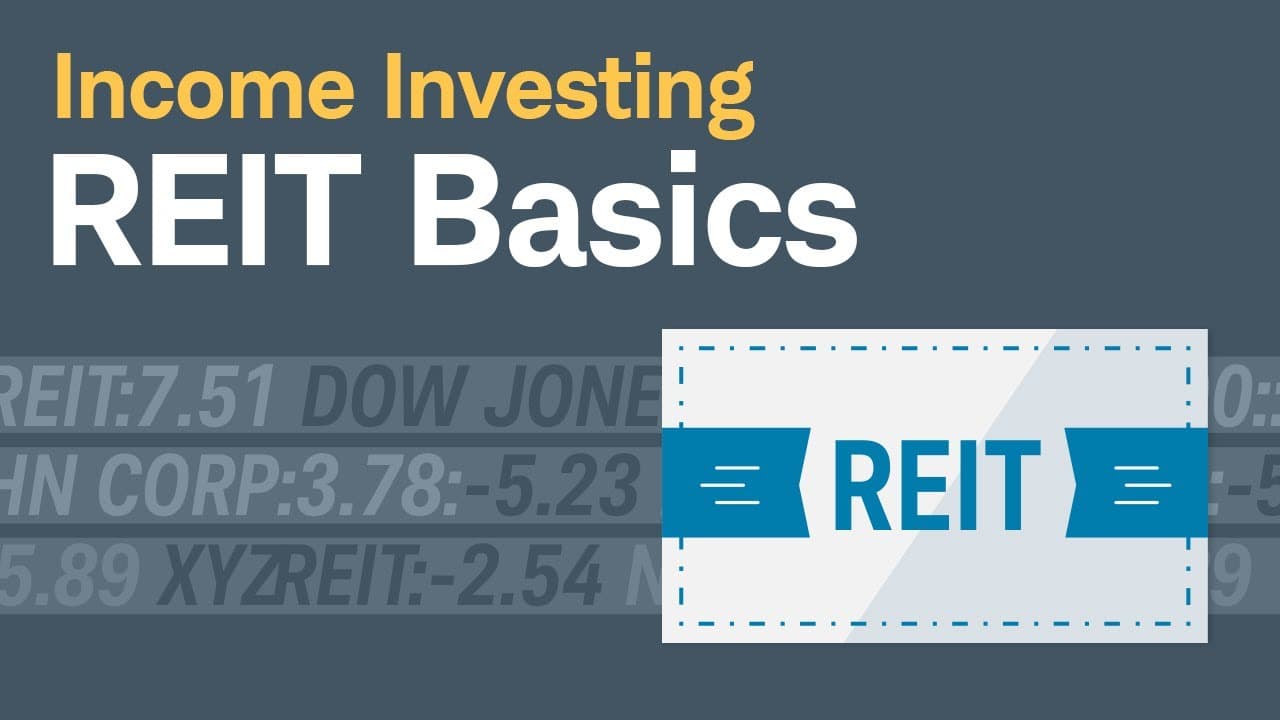
REITs are trusts that let individuals participate in the gains and losses of real estate portfolios by purchasing publicly traded shares. Created after President Eisenhower signed a law in 1960, they may own apartment buildings, shopping centers, hospitals, hotels, or other properties. U.S. REITs must distribute 90% of their taxable income as dividends, although dividends are not guaranteed. Read on to understand their revenue, costs, and risks.
Transcript
real estate investment trusts most commonly known as REITs were created to make it easier for individuals to gain exposure to real estate Investments before reads investors typically needed a lot of money to invest in real estate particularly commercial real estate often real estate was owned by Partnerships only certain types of investors could pa... Read More
Key Insights
- 🤑 REITs allow individuals to invest in real estate without needing large sums of money.
- 🔬 They are structured as trusts that invest in portfolios of real estate properties.
- 🧡 REIT shares are publicly traded, making them accessible to a wide range of investors.
- 👨💼 The performance of the underlying businesses in the portfolio affects the performance of the REIT.
- ❓ REITs generate income primarily through rental revenue from the properties they own.
- ❓ REITs are required to pay 90% of their taxable income as dividends to shareholders.
- ❓ Dividends from REITs are not guaranteed and depend on the trust's earnings.
Install to Summarize YouTube Videos and Get Transcripts
Explore YouTube Video Summarizer or Get YouTube Transcript Extractor
Questions & Answers
Q: What are REITs and why were they created?
Real estate investment trusts, or REITs, are trusts that invest in portfolios of real estate. They were created to make real estate investing more accessible to individuals who lacked the large amounts of capital commonly needed for commercial property investments.
Q: When were REITs created?
REITs were created in 1960 when President Eisenhower signed a law establishing them. This new type of corporation made it easier for individuals to gain exposure to real estate investments.
Q: How can individuals invest in a REIT?
Individuals can buy shares of a REIT to participate in the gains and losses of its real estate portfolio. Equity REITs are publicly traded on the same exchanges as other companies, so purchasing a REIT is similar to buying a stock.
Q: What types of properties can a REIT own?
A REIT can invest in a portfolio containing properties such as apartment buildings, shopping centers, hospitals, and hotels. The example in the transcript, XYZ Strip Malls REIT, owns strip malls across the United States.
Q: How does a REIT generate revenue?
REITs commonly generate revenue from rent paid by tenants occupying their properties. For XYZ Strip Malls REIT, long-term leases provide its primary cash source, and rent from stores is its main revenue source.
Q: What expenses reduce a REIT's earnings?
Payments on borrowed money, capital expenditures, and other costs are subtracted from a REIT's revenue. What remains, if anything, is generally called net income or earnings.
Q: Why can leverage be risky for a REIT?
A REIT may borrow money to control more real estate with a smaller amount of money, which introduces leverage. Too much leverage creates interest-rate risk because higher interest payments may force the trust to spend more repaying borrowed money.
Q: Are REIT dividends guaranteed?
No, REIT dividends are not guaranteed because a trust does not always generate earnings. Although U.S. REITs must pay 90% of their taxable income as dividends, rapid overexpansion can produce low or negative earnings and make dividend payments difficult.
Summary & Key Takeaways
-
REITs were created to make real estate investing more accessible to individuals, who previously needed a lot of money to invest in commercial real estate.
-
A REIT is a type of trust that invests in real estate portfolios, such as strip malls, hospitals, and hotels.
-
Investors can buy shares of a REIT, similar to buying stocks, to participate in the gains and losses of the portfolio.
Read in Other Languages (beta)
Share This Summary 📚
Summarize YouTube Videos and Get Video Transcripts with 1-Click
Try YouTube Summary with ChatGPT & Claude or YouTube Transcript Generator
Explore More Summaries from Charles Schwab 📚





Summarize YouTube Videos and Get Video Transcripts with 1-Click
Try YouTube Summary with ChatGPT & Claude or YouTube Transcript Generator