Atheism: Does God exist? | John Vervaeke and Lex Fridman
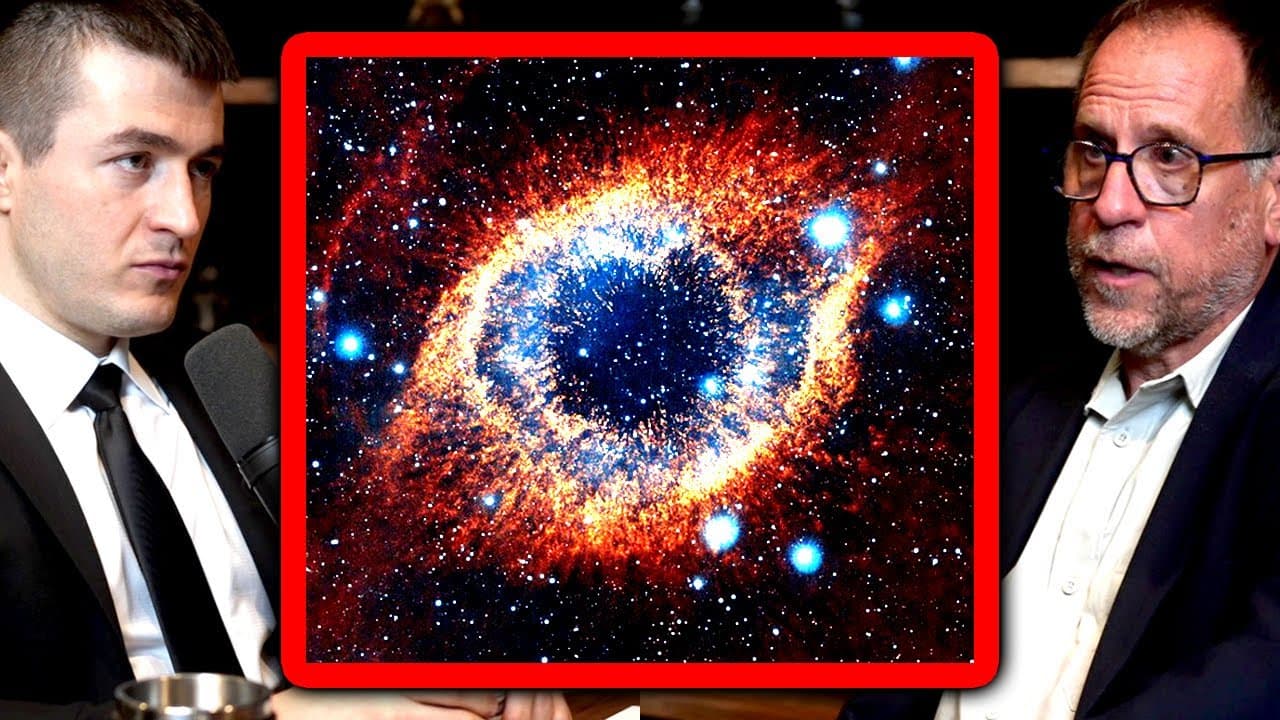
TL;DR
Non-theism rejects the shared presuppositions between theists and atheists, challenging the idea of a personal Supreme Being and the importance of correct beliefs.
Transcript
is an atheist closer to truth than a person who believes in God so I'm a non-theist which I which means I think the shared set of presuppositions between the theist and the atheist are actually what needs to be rejected can you uh explain that further yes I can and uh and I want to point out by the way that they're uh there are lots of non-theistic... Read More
Key Insights
- ❓ Non-theism rejects the shared presuppositions of theists and atheists, challenging the belief in a personal Supreme Being and the importance of correct beliefs.
- 🛝 The concept of "no thingness" is central to non-theism, suggesting that the ground of being is not a being itself but rather an absence of being.
- 🙈 Non-theism sees sacredness as rooted in deeper levels of meaning, beyond beliefs and propositions.
- 💍 Meaning in non-theism is both created and discovered, with individuals participating in the process and engaging with external sources.
- 👨🔬 The search for meaning in non-theism is not about passively finding something external, but about actively creating and engaging with meaning in all aspects of life.
- ❓ Non-theism highlights the ability to find fulfillment and meaning in even the most mundane and ordinary experiences.
- 🚱 Non-theistic religious traditions exist, challenging the notion that non-theism is solely an atheistic perspective.
Install to Summarize YouTube Videos and Get Transcripts
Explore YouTube Video Summarizer or Get YouTube Transcript Extractor
Questions & Answers
Q: What is non-theism and how does it differ from atheism and agnosticism?
Non-theists reject the shared assumptions between theists and atheists, whereas atheism denies the existence of a Supreme Being and agnosticism emphasizes uncertainty about the existence of a God. Non-theists reject the idea of a personal Supreme Being and the importance of correct beliefs altogether.
Q: What is the most troublesome aspect of theistic beliefs for non-theists?
Non-theists find the concept of a personal Supreme Being and the assumption that the ground of being is a being itself to be fundamental mistakes. They argue that the ultimate reality is "no thingness" and reject the notion of a Supreme Being.
Q: Is meaning in non-theism created or discovered?
Non-theism suggests that meaning is both created and discovered. Non-theists participate in meaning by engaging with insights and experiences, but they also recognize that meaning can come from external sources. It is not a passive process of discovery, but an active participation.
Q: How does non-theism view the search for meaning?
Non-theism challenges the idea of searching for meaning as an external process of discovering a glowing orb. Instead, it emphasizes the ability to create meaning in everything and highlights the importance of being engaged and involved in the search for meaning.
Summary & Key Takeaways
-
Non-theists believe that both theists and atheists share common assumptions, such as the belief in a personal Supreme Being and the importance of correct beliefs, and reject these claims.
-
Non-theism challenges the notion that the ground of being is a being itself, emphasizing the concept of "no thingness" as the ultimate reality.
-
Sacredness, according to non-theism, is not dependent on beliefs and propositions but is rooted in deeper levels of meaning.
Read in Other Languages (beta)
Share This Summary 📚
Summarize YouTube Videos and Get Video Transcripts with 1-Click
Try YouTube Summary with ChatGPT & Claude or YouTube Transcript Generator
Explore More Summaries from Lex Clips 📚

Summarize YouTube Videos and Get Video Transcripts with 1-Click
Try YouTube Summary with ChatGPT & Claude or YouTube Transcript Generator