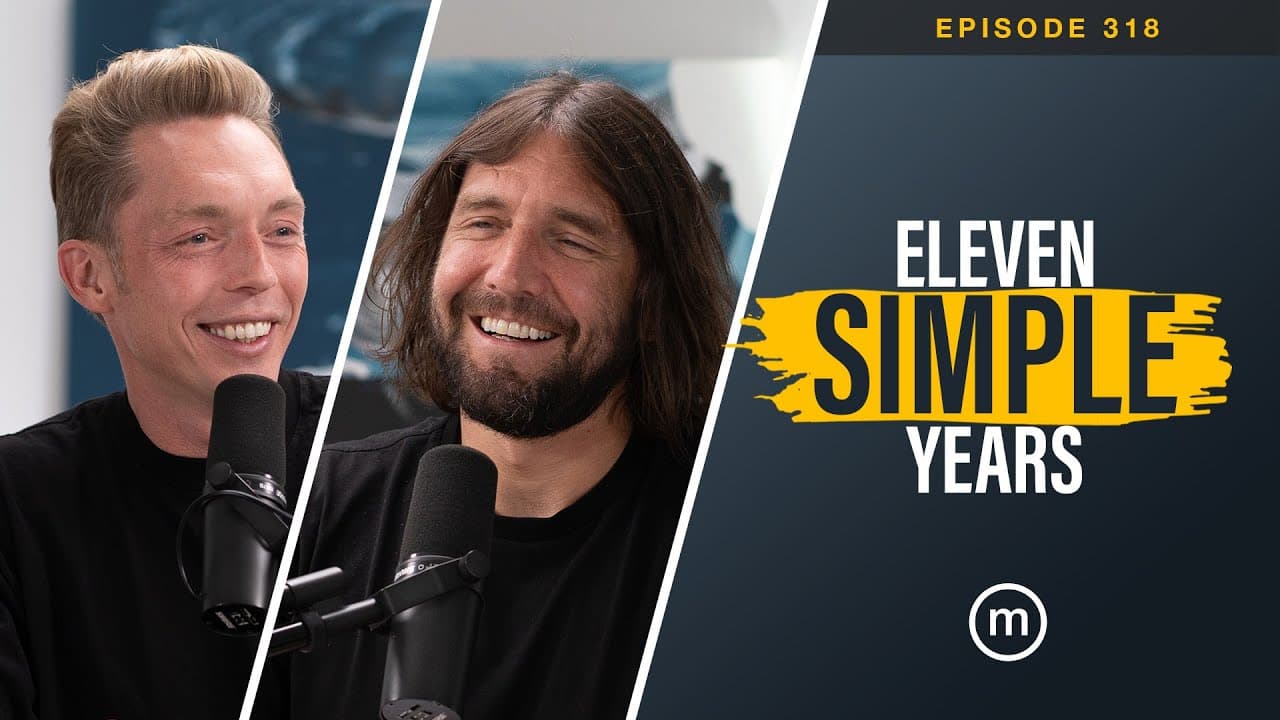
Ep. 318 | Eleven Simple Years
TL;DR
Joshua and Ryan reflect on 11 years of minimalism, sharing insights and advice.
Transcript
hello minimizers welcome to the minimalist podcast where we discuss what it means to live a meaningful life with les my name is Joshua Fields Milburn and I'm Ryan Nicodemus and together we are the minimalists 11 years of less that's right Ryan yeah ma'am today is December 14th which is officially the 11year anniversary of the minimalists is that ma... Read More
Key Insights
- Minimalism starts with decluttering physical items but often reveals deeper emotional and psychological clutter that needs addressing.
- Sentimentality towards items can lead to excess, and understanding that things aren't inherently meaningful can help in letting go.
- Minimalism seems radical because society normalizes excessive consumption, but historically, such levels of ownership were unheard of.
- Consumerism extends beyond physical items to experiences, relationships, and achievements, often as an attempt to fill a perceived void.
- Deprivation can be useful temporarily to identify what truly adds value, but long-term deprivation can be harmful.
- There is no perfect destination in minimalism; it's an ongoing process of adjusting and being flexible to change.
- Empowering people to make their own choices is more important than convincing them to adopt minimalism.
- Minimalism is not about deprivation but about intentional use of resources and can be a tool for living a meaningful life.
Install to Summarize YouTube Videos and Get Transcripts
Explore YouTube Video Summarizer or Get YouTube Transcript Extractor
Questions & Answers
Q: How has your understanding of, and approach toward, minimalism developed over the last eleven years?
Over the past eleven years, minimalism has evolved from simply decluttering physical items to a comprehensive approach that addresses emotional and psychological clutter. Initially focused on reducing material possessions, the journey revealed deeper issues related to social, career, and emotional clutter. This understanding led to a more profound inward reflection, realizing that minimalism is not just about less stuff, but about a more intentional and meaningful life.
Q: Why does minimalism seem radical?
Minimalism appears radical because modern society has normalized excessive consumption and ownership. Historically, the current levels of personal possessions would have been considered extreme, even for royalty. The normalization of owning hundreds of thousands of items creates a perception that reducing possessions is extreme, when in fact, it's a return to a more balanced state of living.
Q: How do we address our issue with clinging?
Addressing the issue of clinging involves understanding that sentimentality towards items often leads to excess. It's important to recognize that nothing is inherently sentimental; rather, we assign meaning to objects. By realizing that holding onto items doesn't serve us, we can begin to let go, focusing on what truly adds value to our lives and creating space for more meaningful experiences and relationships.
Q: What is the most important lesson you’ve learned about consumerism?
The most important lesson about consumerism is that it extends beyond physical items to experiences, relationships, and achievements. Consumerism is the ideology that acquiring things will lead to happiness or fulfillment. However, this chase often results in a loss of freedom and peace. True fulfillment comes from valuing freedom and tranquility, not from accumulating more, whether it's items or experiences.
Q: What is the 'god-shaped hole'?
The 'god-shaped hole' refers to the void people feel in their lives, which historically was believed to be filled by spiritual or religious fulfillment. In modern times, consumerism has become the new substitute, with people attempting to fill this void with material possessions and experiences. Minimalism teaches that this void is not something to be filled but embraced as part of the human experience, creating space for peace and acceptance.
Q: Based on your eleven years of experience in minimalism, what advice do you have for those of us starting on our minimalism journey at an older age?
For those starting minimalism later in life, it's important to focus on the benefits of less, rather than just reducing possessions. Consider how your life might improve with less clutter and more intentional living. It's never too late to start, and the journey is about finding what adds value to your life now. Avoid long-term deprivation and focus on creating a space that supports your current lifestyle and goals.
Q: Is deprivation helpful?
Deprivation can be helpful temporarily to identify what truly adds value to your life. By removing excess, you can better understand your needs and desires. However, long-term deprivation can be harmful, leading to a sense of lack rather than abundance. The goal of minimalism is not deprivation but intentional living, using resources deliberately and finding joy in what you have.
Q: If you had the power to make everyone a minimalist, would you do it?
No, because minimalism is about personal choice and intentional living. To impose minimalism on others would be to exert power over them, which contradicts the principles of empowerment and freedom that minimalism promotes. Everyone's journey is unique, and it's important for individuals to discover what minimalism means to them and how it can enhance their lives without coercion.
Summary & Key Takeaways
-
Joshua and Ryan discuss how minimalism has evolved for them over the past 11 years, highlighting the shift from physical decluttering to addressing deeper emotional and psychological issues.
-
They explore the radical perception of minimalism, emphasizing how societal norms have shifted to normalize excessive consumption, making minimalism seem extreme.
-
The episode includes advice for those starting their minimalism journey later in life, stressing the importance of intentional living and the potential pitfalls of long-term deprivation.
Read in Other Languages (beta)
Share This Summary 📚
Summarize YouTube Videos and Get Video Transcripts with 1-Click
Try YouTube Summary with ChatGPT & Claude or YouTube Transcript Generator
Explore More Summaries from The Minimalists Podcast 📚

Summarize YouTube Videos and Get Video Transcripts with 1-Click
Try YouTube Summary with ChatGPT & Claude or YouTube Transcript Generator