The Future of Tall Buildings
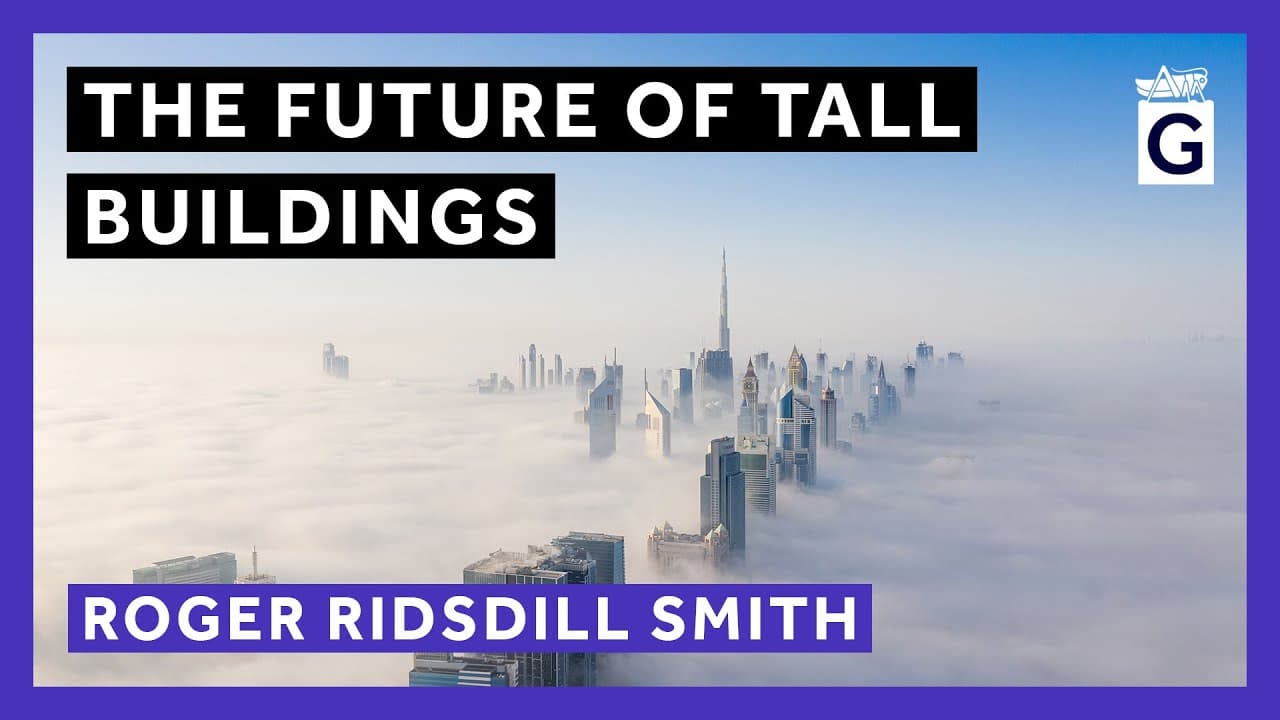
TL;DR
Tall buildings have both positive and negative impacts on the environment and society, requiring a careful balance between sustainability and design.
Transcript
foreign so I'm going to take a particular Focus during this talk the construction industry currently accounts for around 39 of the carbon dioxide emissions annually and 28 of that is operational and 11 is related to construction directly and Tool buildings require a relatively larger amount of carbon in their construction than lower rise structures... Read More
Key Insights
- 🏗️ Tall buildings have a significant impact on carbon dioxide emissions due to high energy demands for construction.
- 🏗️ The history of tall buildings shows how advancements in technology and materials have driven their construction.
- 🥺 Increased density in cities can lead to reduced carbon emissions but requires efficient transportation systems.
- 🏗️ The use of low-carbon materials and sustainable construction practices can help reduce the environmental impact of tall buildings.
- 🏛️ There is a need to balance the aesthetic and functional aspects of tall building design with sustainability considerations.
- 🏛️ The impact of tall buildings on social dynamics and quality of life should be carefully evaluated.
- 🗑️ Existing structures should be valued and reused whenever possible to reduce waste and carbon emissions.
Install to Summarize YouTube Videos and Get Transcripts
Explore YouTube Video Summarizer or Get YouTube Transcript Extractor
Questions & Answers
Q: How do tall buildings contribute to carbon dioxide emissions?
Tall buildings require a significant amount of carbon in their construction, contributing to carbon dioxide emissions. The high energy demand for construction, particularly for steel and cement production, leads to substantial carbon emissions.
Q: What are the challenges in constructing tall buildings?
One of the main challenges is the stability and structural design required to withstand vertical and lateral loads, such as wind and earthquakes. Foundations also play a crucial role, with the type and depth varying depending on ground conditions.
Q: How do tall buildings impact urban density and transportation?
Tall buildings increase urban density, which has advantages such as reduced transportation needs and improved access to amenities. However, careful consideration must be given to transportation infrastructure to ensure accessibility and minimize carbon emissions.
Q: What solutions exist to reduce the environmental impact of tall buildings?
There are several approaches, including using existing structures whenever possible, recycling and reusing materials, and prioritizing low-carbon materials for construction. Designing for longevity and adaptability also reduces the need for frequent demolitions and reconstructions.
Summary & Key Takeaways
-
The construction industry accounts for a significant portion of carbon dioxide emissions, with tall buildings contributing to a large share.
-
The history of tall buildings shows limitations in structural techniques, but advancements in elevator technology and the use of steel revolutionized construction.
-
Modern tall building designs focus on efficient structures, utilizing core systems and outriggers to distribute forces and resist lateral loads.
Read in Other Languages (beta)
Share This Summary 📚
Summarize YouTube Videos and Get Video Transcripts with 1-Click
Try YouTube Summary with ChatGPT & Claude or YouTube Transcript Generator
Explore More Summaries from Gresham College 📚


Summarize YouTube Videos and Get Video Transcripts with 1-Click
Try YouTube Summary with ChatGPT & Claude or YouTube Transcript Generator