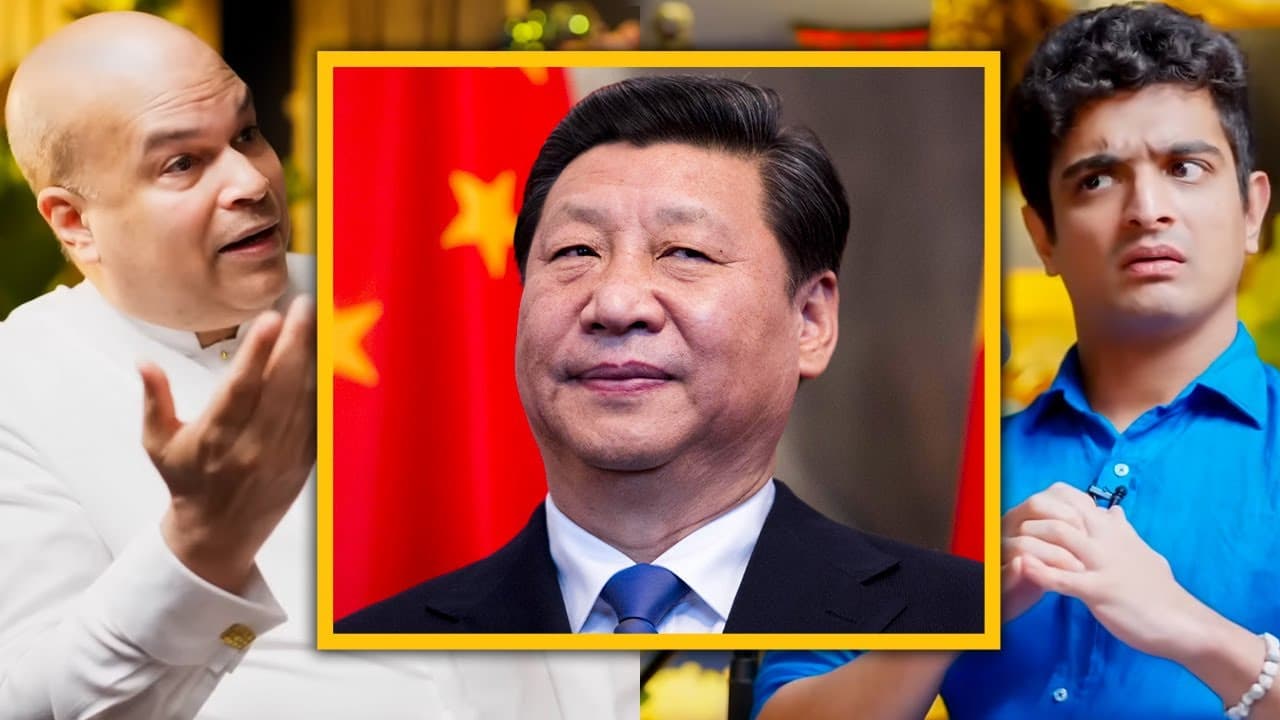
China's Strategy AGAINST India? Hambantota Port Problem Explained By Sri Lankan Diplomat
TL;DR
The discussion highlights the complex geopolitical tensions involving India, Sri Lanka, and China, particularly regarding economic dependencies.
Transcript
your friends are scrolling through short content but you my friend you're here to learn welcome to the honest clips I want to begin by uh asking you if you're aware of how much tension there is between India and China to the degree where even people who watch the show probably are united by this dislike about you and they might be divided because o... Read More
Key Insights
- 🇮🇴 India's perception of China's influence in Sri Lanka is driven by strategic considerations, particularly concerning maritime security in the Indian Ocean.
- 🇱🇰 Sri Lanka’s geographical location is both a strategic asset and a challenge, requiring nuanced diplomatic maneuvering.
- 🇱🇰 Effective communication and trust-building measures between Sri Lanka and India can help mitigate geopolitical misunderstandings.
- 🫵 China's lending practices in developing countries are often viewed critically by India, shaping regional economic dependencies.
- 🇱🇰 India's willingness to assist Sri Lanka during financial crises showcases deep historical and cultural ties between the nations.
- ™️ Strengthening economic infrastructures, such as trade routes and energy connections, can help stabilize regional dynamics and foster cooperation.
- 🇱🇰 The importance of perception in international relations is underscored by Sri Lanka's need to reassure India about its intentions with China.
Install to Summarize YouTube Videos and Get Transcripts
Explore YouTube Video Summarizer or Get YouTube Transcript Extractor
Questions & Answers
Q: What are the main concerns India has about China's presence in Sri Lanka?
India is primarily concerned about China's strategic investments in Sri Lanka, such as in the Hambantota Port, which could allow China to establish a military presence in the Indian Ocean. This perception of threat is heightened by the historical context of regional stability and India's geopolitical interests, requiring Sri Lanka to ensure it doesn't inadvertently align too closely with Chinese military ambitions.
Q: How does Sri Lanka view its relationship with both India and China?
Sri Lanka views its relationship with India as fundamentally important due to geographic, cultural, and civilizational ties. While recognizing the economic benefits of engaging with China, Sri Lankan leaders express a cautious approach, ensuring their actions do not threaten India’s security. The aim is to navigate complex geopolitics by fostering strong communication and understanding with both nations.
Q: What was India's role in assisting Sri Lanka during its economic crisis?
India played a crucial role in assisting Sri Lanka during its economic crisis, providing around four billion dollars in financial aid without stringent conditions. This support was instrumental in stabilizing Sri Lanka's economy and preventing potential unrest. Indian officials actively engaged in discussions to restructure Sri Lanka's debts, illustrating deep-rooted ties and mutual support.
Q: Why did Sri Lanka choose to take a loan from China for the Hambantota Port?
Sri Lanka opted to take a loan from China primarily because other sources of financing, such as the World Bank, were unavailable at the time. The previous government realized the urgent need for a port in the south to stimulate development but lacked local private sector interest. Consequently, China’s offer for funding seemed like the only viable option.
Q: What are some suggested avenues for improving India-Sri Lanka relations?
Improving India-Sri Lanka relations could hinge on enhanced economic integration through projects such as oil pipelines, electricity connectivity, and increased trade agreements. By fostering closer ties in various sectors, both nations can diminish feelings of insecurity and bolster cooperative relationships, ultimately creating a more stable regional dynamic.
Q: How does perception play a role in Sri Lanka's international relations?
Perception is critical in Sri Lanka's international relations, especially in how their actions are viewed by India. Sri Lanka's leaders are aware that commercial agreements or relationships with China can be misconstrued as threats to India. As a result, they emphasize transparency and communication in dialogues to alleviate any concerns and misunderstandings.
Q: What historical context underpins the current tensions between India and Sri Lanka?
The current tensions are rooted in historical events where Sri Lanka's foreign alignments, such as during the 1980s with the USA, created friction with India. As China has increased its presence in the region, fears have resurfaced regarding foreign influence and security threats, necessitating a more cautious approach in ongoing diplomatic relations.
Summary & Key Takeaways
-
The content explores the historical and current tensions between India and China, particularly concerning China's influence in Sri Lanka through initiatives like the Hambantota Port.
-
It provides a Sri Lankan perspective on its strategic location, emphasizing the need for careful diplomatic relations with both India and China to avoid geopolitical misunderstandings.
-
The dialogue emphasizes that Sri Lanka values its ties with India, focusing on economic integration and collaboration to mitigate external threats and foster regional stability.
Read in Other Languages (beta)
Share This Summary 📚
Summarize YouTube Videos and Get Video Transcripts with 1-Click
Try YouTube Summary with ChatGPT & Claude or YouTube Transcript Generator
Explore More Summaries from TRS Clips 📚





Summarize YouTube Videos and Get Video Transcripts with 1-Click
Try YouTube Summary with ChatGPT & Claude or YouTube Transcript Generator