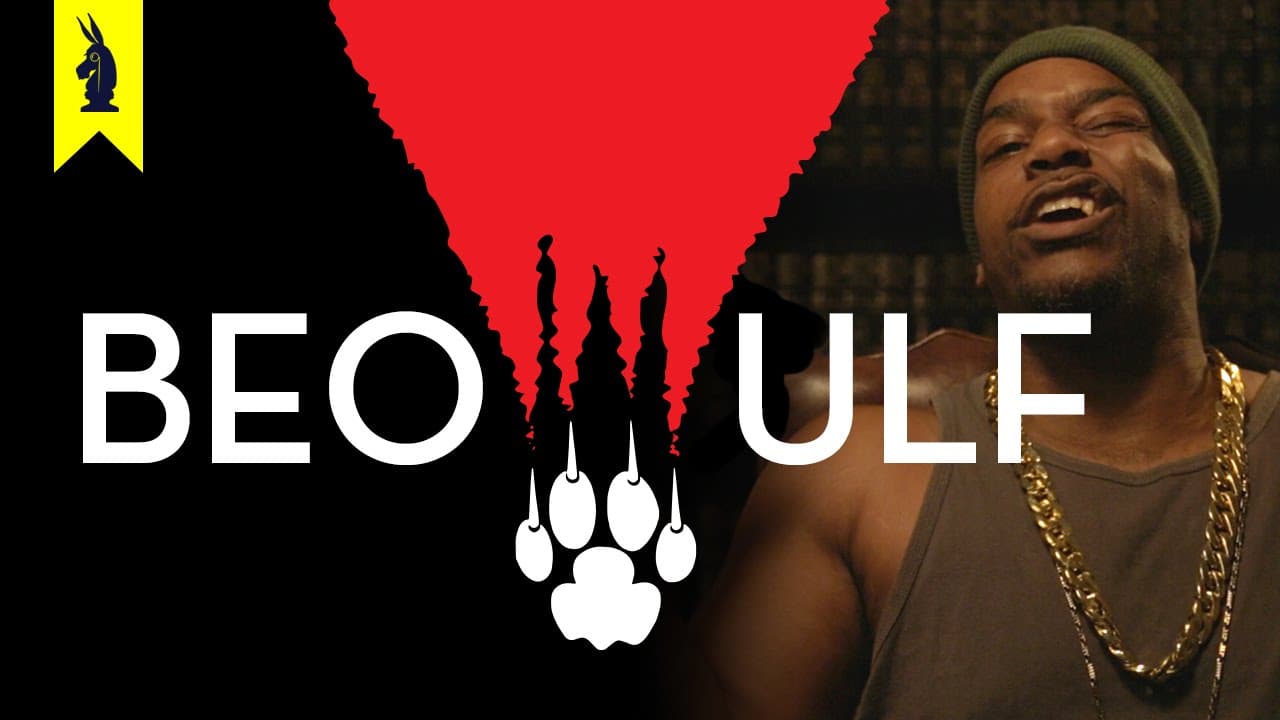
Beowulf - Thug Notes Summary and Analysis
TL;DR
Beowulf confronts monsters and pride, ultimately facing death.
Transcript
Word up, playas. This week on Thug Notes we kickin it in to beast mode with Beowulf by... So. S’all good up in The Land of the Danes where righteous King Hrothgar dun built a mead-hall for his army so they can get white-boy wasted on the reg. Them playas ragin so hard that they disturb a stank beast named Grendel, who start rollin up to the mead-ha... Read More
Key Insights
- 📶 Beowulf's name symbolizes his dual nature as a human and a warrior, reflecting both his strength and vulnerability.
- 👻 The mead-hall represents community and the sanctuary that heroes protect, highlighting the social aspect of warrior culture.
- 🛟 Grendel serves as a metaphor for chaos, challenging the order established by society and its rulers.
- 😮 Beowulf's rise to kingship illustrates the weight of leadership and its responsibility to the well-being of one’s people.
- 🥺 The story critiques the consequences of pride, suggesting it can lead to isolation and downfall, even for the mightiest hero.
- ❓ Relationships in the text emphasize loyalty, with Beowulf’s bond with his warriors illustrated through shared struggles and loyalty in battle.
- ✊ The contrast between Beowulf's heroic deeds and his inevitable death reinforces the transient nature of glory and power.
Install to Summarize YouTube Videos and Get Transcripts
Explore YouTube Video Summarizer or Get YouTube Transcript Extractor
Questions & Answers
Q: What motivates Beowulf to help Hrothgar and the Danes?
Beowulf is driven by a strong sense of duty and a desire for glory. He views defeating Grendel as an opportunity to prove his strength and honor, establishing himself as a legendary warrior. His eagerness to face challenges unarmed also signifies his confidence in his abilities and intentions to win lasting fame.
Q: How does Beowulf's battle tactic against Grendel differ from traditional heroics?
Rather than using weapons, Beowulf chooses to confront Grendel unarmed, showcasing his confidence and honoring the idea of personal valor. This tactic is significant because it emphasizes the theme of strength and bravery as a warrior's virtue, setting a precedent for his later exploits while also creating tension in his fight.
Q: What role does pride play in Beowulf's character throughout the poem?
Pride is a double-edged sword for Beowulf. Initially, it drives him to take on immense challenges, but as he grows in power, it blinds him to wisdom. Hrothgar warns him against hubris, but Beowulf's need to constantly prove himself ultimately leads to his downfall when he faces the dragon alone.
Q: How does the theme of mortality manifest in Beowulf's story?
Mortality is a pervasive theme, especially highlighted during Beowulf’s final encounter with the dragon. Even a seemingly invincible hero cannot escape death. His ultimate demise illustrates the inevitable fate that all mortals face, regardless of their accomplishments, underscoring the poem’s reflection on heroism and humanity's fragility.
Summary & Key Takeaways
-
Beowulf, a heroic figure, defeats Grendel and his mother to save King Hrothgar’s mead-hall, displaying his immense strength and bravery.
-
After returning to Geatland to become king, Beowulf faces a dragon due to human greed, resulting in his mortal wound and eventual death.
-
The narrative emphasizes themes of pride, mortality, and the responsibilities of leadership within Anglo-Saxon culture.
Read in Other Languages (beta)
Share This Summary 📚
Summarize YouTube Videos and Get Video Transcripts with 1-Click
Try YouTube Summary with ChatGPT & Claude or YouTube Transcript Generator