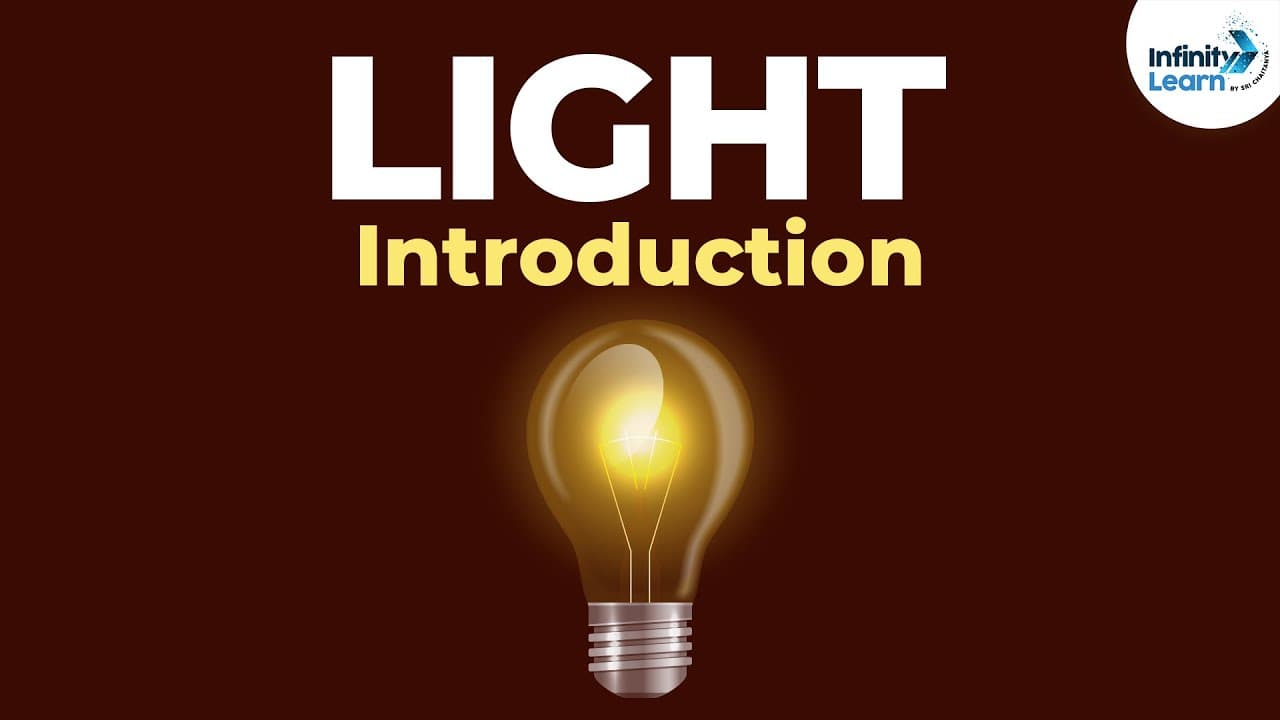
Introduction to Light | Physics | Don't Memorise
TL;DR
We perceive almost 80% of the world through our sense of sight, which relies on light and the reflection of light from objects.
Transcript
how do we humans perceive the things around us we have five senses that help us to interact with the world around us these are sight hearing taste smell and touch eyes help us to see things years help us to hear sounds we smell with our nose taste with our tongue and a sense of touch is provided by our skin of course all senses are important but th... Read More
Key Insights
- 👻 Sight is our most important sense, allowing us to perceive 80% of the world.
- 🙂 Light is necessary for us to see objects, either by being emitted from luminous objects or by being reflected off non-luminous objects.
- 🙂 Non-luminous objects appear visible to us because they reflect light from luminous objects.
Install to Summarize YouTube Videos and Get Transcripts
Explore YouTube Video Summarizer or Get YouTube Transcript Extractor
Questions & Answers
Q: Why can't we see objects in the dark?
We need light to see objects, as our sense of sight relies on light entering our eyes. In the dark, when there is no light, objects are not illuminated and therefore not visible to us.
Q: What are luminous objects?
Luminous objects are objects that can generate their own light, such as the Sun, fluorescent bulbs, or burning candles. They emit light that can be seen by our eyes.
Q: How do non-luminous objects become visible to us?
Non-luminous objects cannot generate their own light, but they can reflect light from luminous objects. When light from a luminous object falls on a non-luminous object, it reflects that light towards our eyes, allowing us to see the object.
Q: Why can we see dust particles in the air when light shines on them?
When light from a source like a torch or sunlight reflects off the surfaces of dust particles in the air, it travels towards our eyes. This reflected light is what makes the dust particles visible to us.
Summary & Key Takeaways
-
Sight is the most important sense, as it allows us to perceive 80% of the world around us.
-
Light is necessary for us to see objects, as it travels from luminous objects or reflects from non-luminous objects.
-
Non-luminous objects reflect light from luminous objects, allowing us to see them.
Read in Other Languages (beta)
Share This Summary 📚
Summarize YouTube Videos and Get Video Transcripts with 1-Click
Try YouTube Summary with ChatGPT & Claude or YouTube Transcript Generator
Explore More Summaries from Infinity Learn NEET 📚

Summarize YouTube Videos and Get Video Transcripts with 1-Click
Try YouTube Summary with ChatGPT & Claude or YouTube Transcript Generator