Why Is Caregiving Considered Real Work?
TL;DR
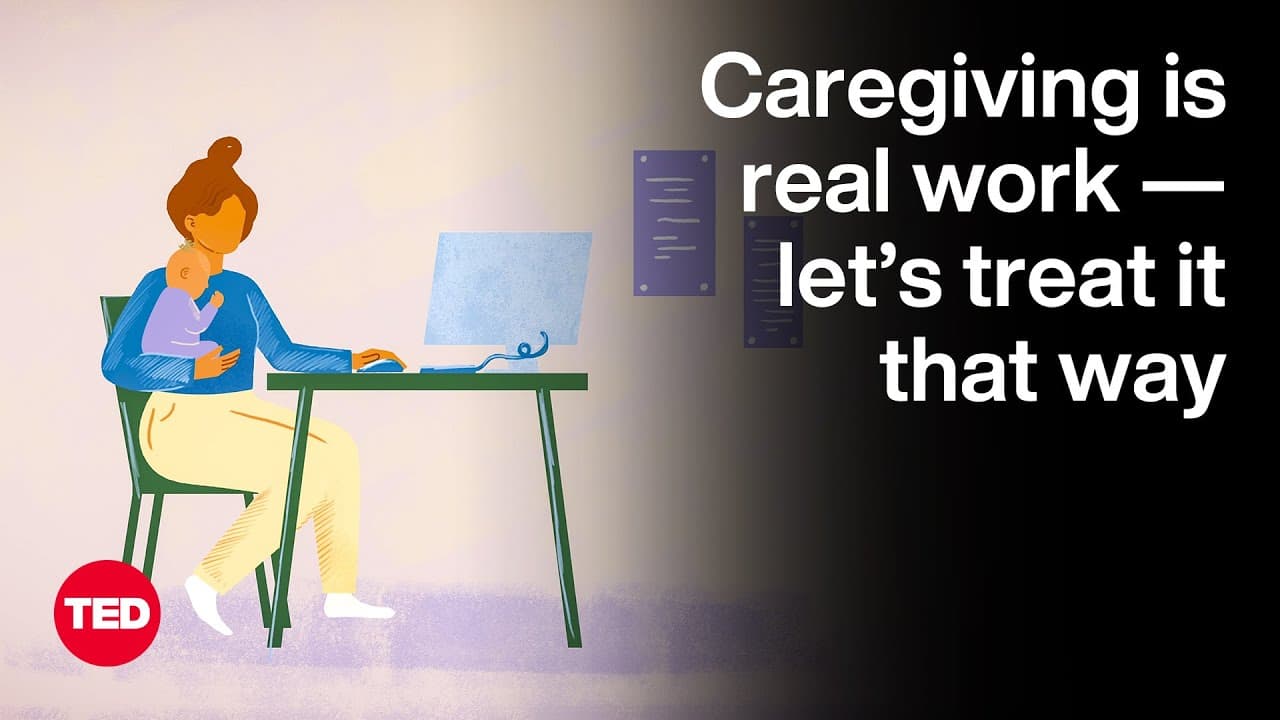
Caregiving is essential yet often undervalued, with approximately 16 billion hours spent on unpaid care work globally, predominantly by women. The COVID-19 pandemic highlighted its importance, creating an opportunity for individuals and employers to recognize and support caregivers. Acknowledging caregiving as a critical skill and implementing flexible workplace policies can significantly improve the experience of caregivers.
Transcript
Every day, people around the world spend 16 billion hours on unpaid care work -- cooking for their families, cleaning up after them, caring for children and older relatives and all the other routine household tasks. These activities are happening all day, at every hour, in every country around the world. But because many don't get paid for this wor... Read More
Key Insights
- 🤝 Unpaid care work, including household chores and caregiving for family members, is crucial and often taken for granted. It is predominantly done by women, impacting their participation in the paid labor market.
- 😷 The COVID-19 pandemic has increased the burden of unpaid care work, especially for working parents, leading to setbacks in gender equality and women's employment.
- 🌍 The pandemic also brought visibility to care work, with workplaces adapting and recognizing its importance. This presents an opportunity to reframe care work and create more accommodating workplaces.
- 💼 Individuals providing care should acknowledge and value their work, treating it as a critical and valuable skillset. Caregiving experience can be highlighted on CVs, emphasizing skills such as multitasking, project management, and communication.
- 🏢 Employers play a crucial role in changing the perception and support for care work. They should create environments where caregivers can openly discuss their responsibilities without facing penalties or biases.
- 👦 Workplaces should offer flexibility to accommodate the needs of caregivers, including time off for child or elder care, establishing boundaries, and remote work options.
- 🌱 Care work is a rapidly growing sector due to an aging population. This presents an opportunity for innovation, job creation, and the development of new industries to support and care for the elderly.
- 💡 Recognizing the value and importance of care work can lead to systemic changes in how society views and supports caregivers, ultimately benefiting all individuals and workplaces.
Install to Summarize YouTube Videos and Get Transcripts
Explore YouTube Video Summarizer or Get YouTube Transcript Extractor
Questions & Answers
Q: What is care work?
Care work is a catch-all term for all the tasks and chores that are done in service of other people. It includes activities like cooking, cleaning, caring for children, and looking after older relatives. While some care work is paid, a significant amount is done for free, often by women.
Q: How has the COVID-19 pandemic affected unpaid care work?
During the pandemic, the closure of schools and the strain on the healthcare system led to a doubling of time spent on unpaid care and domestic work for working parents. This has been particularly challenging for women and has pushed many out of the paid labor market, undoing years of progress.
Q: How can individuals recognize and value their own care work?
It is essential for caregivers to acknowledge and name their care work for themselves and others. Whether it is fitting caregiving around paid employment or taking a break to care for someone in need, this is critical work that should not be viewed as a distraction. It is important to validate and acknowledge the emotions and challenges that come with caregiving.
Q: How can caregivers highlight the skills gained from care work in different contexts?
Caregiving involves various skills like transportation management, logistics, medical interpretation, and financial management. These skills are valuable and transferable across different contexts. Whether you have a job or are seeking paid work, it is essential to frame caregiving experiences and skills in a positive light on your CV or while communicating with colleagues.
Q: What systemic changes do employers need to make regarding care work?
Employers must create an environment where employees can openly discuss their care work without facing penalties or being seen as less focused or dedicated. Caregiving should be addressed early on during employee training, and workplaces should track and understand the care responsibilities of their employees to implement necessary policy changes. Employers should also ensure that caregivers are not disadvantaged in terms of project assignments or opportunities for promotion.
Q: What kind of flexibility should workplaces offer to accommodate caregivers?
Workplaces should provide flexibility based on the lived realities of caregivers. For parents, this may mean allowing time off when children are sick or taking time for school-related activities. Remote work options and the establishment of boundaries surrounding caregiving responsibilities should be respected. Similarly, caregivers of elders, sick individuals, or the disabled should be given reasonable amounts of leave and projects should focus on deliverables rather than constant meetings and check-ins.
Q: Why is it important to shift the way we think about care work?
Care work is one of the fastest-growing sectors of the economy, owing to a growing and aging population. By 2030, over two billion people in the world will require care. This presents an opportunity to shift the narrative around caring for others and seek innovative solutions. The aging population will need support, opening up avenues for new industries and job opportunities.
Summary & Key Takeaways
-
Unpaid care work, including household tasks and caregiving, is essential for society but often taken for granted. It is predominantly done by women.
-
The COVID-19 pandemic has disproportionately affected women due to increased unpaid care work and disrupted employment. It highlights the need for recognition and accommodation of care work.
-
Both individuals and employers have a role in valuing and supporting care work. Individuals should acknowledge its importance, highlight the skills gained, and communicate their needs to employers. Employers should create inclusive policies, track caregiving responsibilities, and provide flexibility for caregivers. The care sector also presents economic opportunities.
Read in Other Languages (beta)
Share This Summary 📚
Summarize YouTube Videos and Get Video Transcripts with 1-Click
Try YouTube Summary with ChatGPT & Claude or YouTube Transcript Generator
Explore More Summaries from TED 📚






Summarize YouTube Videos and Get Video Transcripts with 1-Click
Try YouTube Summary with ChatGPT & Claude or YouTube Transcript Generator