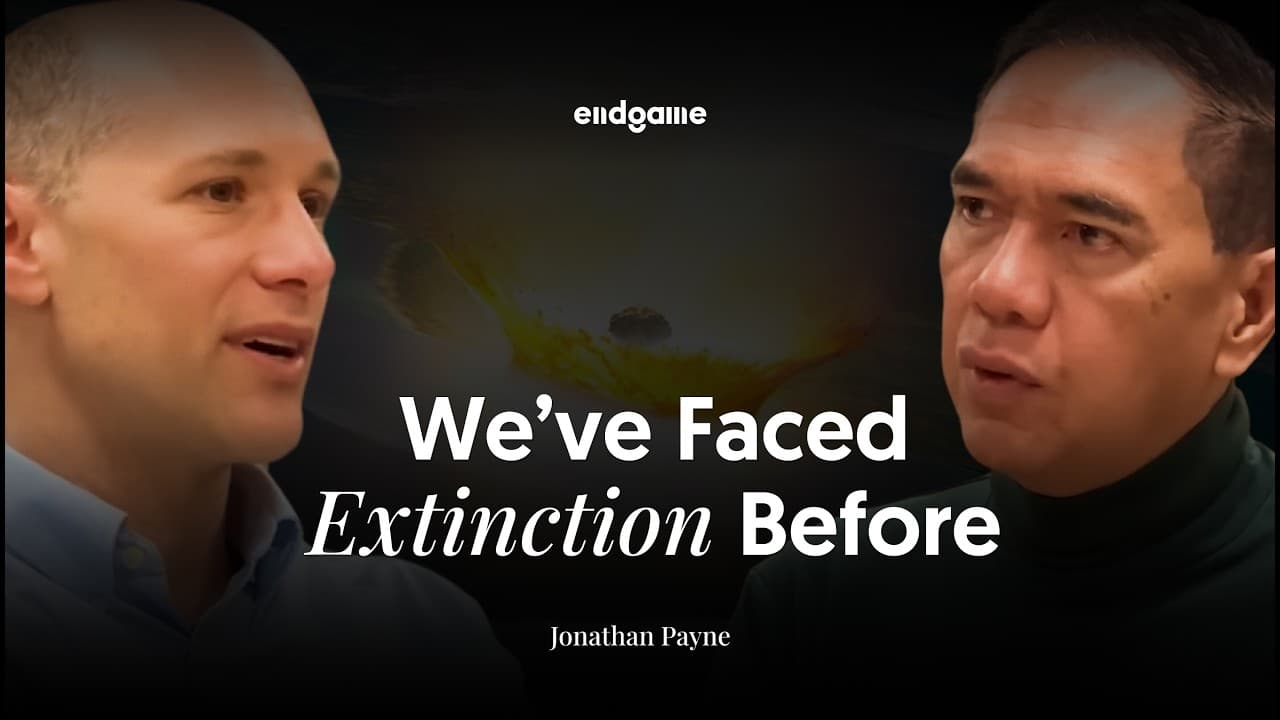
How to Prevent Mass Extinction from Happening (Again) - Jonathan Payne | Endgame #217
TL;DR
Geology offers insights into climate change and mass extinction.
Transcript
GITA WIRJAWAN: Hi friends, today we're visited by Jonathan Payne, who is a professor of geology at Stanford University. John, thank you so much for gracing our show. JONATHAN PAYNE: It's great to be here. -Tell us about yourself. You grew up in New York and decided to just be fascinated with geology after you started figuring out about the din... Read More
Key Insights
- Jonathan Payne's fascination with geology began in his childhood, influenced by family and local geological features, sparking a lifelong interest in understanding Earth's history.
- Geology provides crucial insights into Earth's past, including the evolution of life, mass extinctions, and the planet's climate history, which can inform our understanding of current climate challenges.
- Understanding geology is essential for resource management, as all resources ultimately come from the Earth, including metals and rare earth elements used in modern technology.
- Mass extinctions have occurred throughout Earth's history, with causes ranging from asteroid impacts to massive volcanic eruptions, each affecting biodiversity and climate differently.
- The end-Permian extinction, the most significant in Earth's history, was likely caused by volcanic activity in Siberia, leading to massive carbon dioxide release and global warming.
- Geological evidence shows that mass extinctions and climate changes can take millions of years to recover from, emphasizing the importance of addressing current environmental issues proactively.
- Jonathan Payne emphasizes the importance of education in geology, advocating for better teaching at all levels to inspire future generations to understand and address geological and environmental challenges.
- Despite the challenges, Payne remains optimistic about humanity's ability to innovate and solve environmental issues, drawing parallels with past technological advancements that have improved living standards.
Install to Summarize YouTube Videos and Get Transcripts
Explore YouTube Video Summarizer or Get YouTube Transcript Extractor
Questions & Answers
Q: What sparked Jonathan Payne's interest in geology?
Jonathan Payne's interest in geology was sparked by his childhood experiences in upstate New York, where he explored the natural world and collected fossils with his family. His father's profession as a history professor and a family friend's interest in geology further influenced his fascination with understanding Earth's history and the ancient world.
Q: Why is understanding geology important for modern society?
Understanding geology is crucial for modern society as it provides insights into Earth's resources, which are essential for technological advancements and daily life. Geology also helps in understanding natural hazards, such as earthquakes and volcanic eruptions, and informs strategies for sustainable resource management and environmental conservation.
Q: What are the causes of mass extinctions according to geological evidence?
Geological evidence suggests that mass extinctions have been caused by various factors, including asteroid impacts, massive volcanic eruptions, and changes in climate and ocean chemistry. Each extinction event had different causes and consequences, affecting biodiversity and ecosystems uniquely, with the end-Permian extinction being the most significant due to volcanic activity.
Q: How does the end-Permian extinction compare to other mass extinctions?
The end-Permian extinction, occurring 252 million years ago, is considered the most significant mass extinction event, with the highest percentage of species loss and long recovery time. It was likely caused by massive volcanic eruptions in Siberia, leading to significant carbon dioxide emissions and global warming, unlike other extinctions that had different causes, such as asteroid impacts.
Q: What role does geology play in understanding climate change?
Geology plays a crucial role in understanding climate change by providing insights into Earth's past climate events and mass extinctions. This historical perspective helps scientists predict future climate trends and develop strategies to mitigate the impacts of current climate change, emphasizing the importance of reducing carbon emissions and managing Earth's resources sustainably.
Q: Why is education in geology important according to Jonathan Payne?
Jonathan Payne believes that education in geology is vital for inspiring future generations to understand and address environmental challenges. Teaching geology can spark curiosity about Earth's history and processes, equipping students with the knowledge to solve resource management issues and mitigate natural hazards, ultimately contributing to a more sustainable future.
Q: What is Jonathan Payne's view on human innovation and environmental challenges?
Jonathan Payne is optimistic about human innovation in addressing environmental challenges. He believes that despite denialism and current obstacles, humanity has the potential to develop technologies and strategies to mitigate climate change and resource depletion, drawing parallels with past technological advancements that have improved living standards and solved previous challenges.
Q: How does Jonathan Payne address climate change denialism?
Jonathan Payne addresses climate change denialism by emphasizing the geological evidence of past climate events and mass extinctions, highlighting the long-term consequences of current environmental issues. He advocates for education and awareness to counter denialism, encouraging informed decision-making and proactive measures to address climate change and its impacts on future generations.
Summary & Key Takeaways
-
Jonathan Payne, a Stanford University geology professor, discusses his journey into geology, influenced by childhood experiences and family connections, highlighting the importance of understanding Earth's history.
-
Geology provides insights into Earth's past mass extinctions and climate changes, offering lessons for current environmental challenges and emphasizing the need for resource management and hazard understanding.
-
Payne stresses the importance of education in inspiring future generations to address geological and environmental issues, remaining optimistic about humanity's potential to innovate and solve these challenges.
Read in Other Languages (beta)
Share This Summary 📚
Summarize YouTube Videos and Get Video Transcripts with 1-Click
Try YouTube Summary with ChatGPT & Claude or YouTube Transcript Generator
Explore More Summaries from Gita Wirjawan 📚




Summarize YouTube Videos and Get Video Transcripts with 1-Click
Try YouTube Summary with ChatGPT & Claude or YouTube Transcript Generator