Surprisingly STEM: Moon Rock Processors
TL;DR
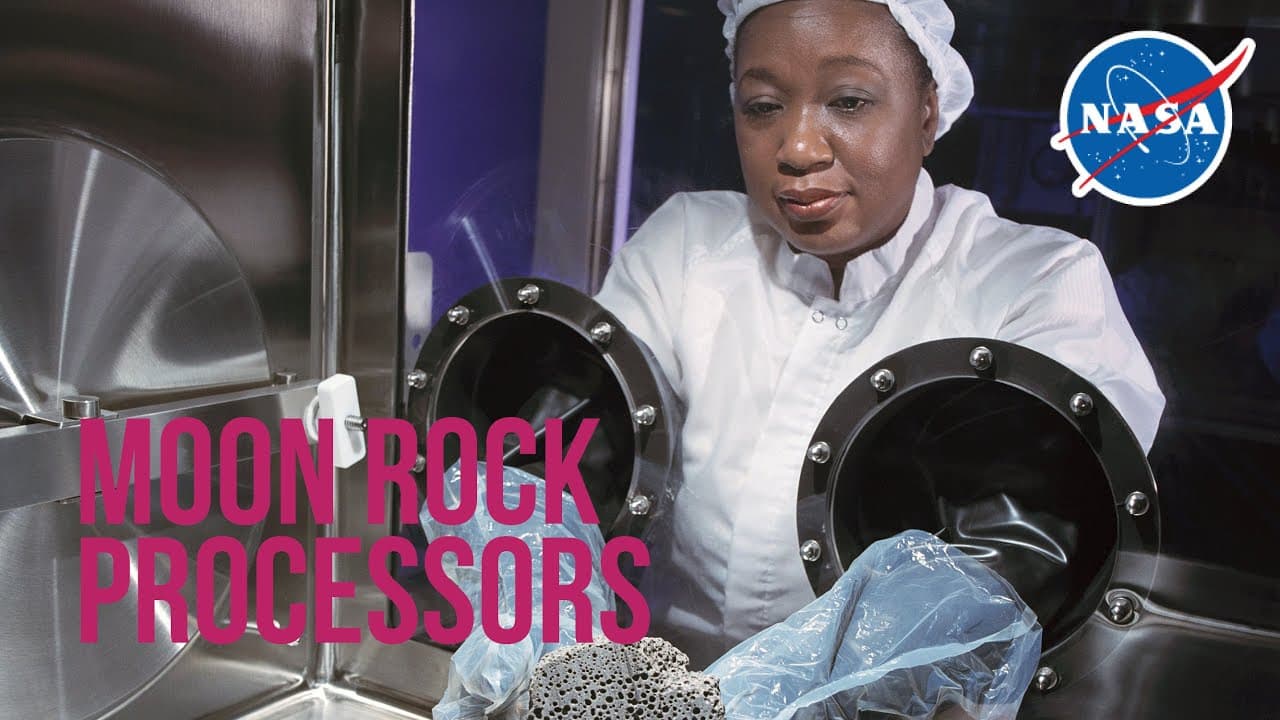
NASA scientists at Johnson Space Center study Moon rocks to learn about Earth's history and prepare for future missions.
Transcript
This is the only place in the world that you can work with Moon rocks on the scale that we work with them and handle them every day. It's so exciting that the astronauts brought back the samples and they're here at Johnson Space Center. My name is Andrea Beatrice Mosie. I've been working here at NASA for 47 years. My name is Juliane Gross. I'm the ... Read More
Key Insights
- 💦 Moon rocks provide valuable insight into Earth's history, the formation of the solar system, and the presence of water.
- 💁 The Moon's geological inactivity preserves the original information recorded since its formation, allowing scientists to study the evolution of the Sun and impacts on the Moon.
- 👨🎤 Moon rock samples are carefully protected from environmental contaminants to maintain their scientific integrity.
- 🎟️ The upcoming Artemis missions will build on the knowledge gained from the Apollo missions and gather more diverse samples from the Moon's south polar region.
- 💦 To work with Moon rocks, aspiring scientists should study Earth science and geology, find mentors, and be actively engaged in their education.
- 👾 NASA encourages curiosity, resilience, and the pursuit of knowledge when pursuing a career in space exploration.
- 👨🔬 Over the past 47 years, NASA's research and exploration efforts have been fueled by the knowledge gained from the Apollo samples.
Install to Summarize YouTube Videos and Get Transcripts
Explore YouTube Video Summarizer or Get YouTube Transcript Extractor
Questions & Answers
Q: Why are NASA scientists studying Moon rocks?
NASA scientists study Moon rocks to understand Earth's origins, the presence of water, and the history of the solar system. The Moon's geological inactivity and unchanged environment provide valuable information.
Q: How are Moon rocks stored and allocated to researchers?
Moon rocks are stored in a pristine sample vault and a return sample vault at Johnson Space Center. Scientists break the rocks, document samples, and allocate them to researchers for analysis.
Q: Why can't Moon rock samples be touched with bare hands?
Touching Moon rock samples with bare hands introduces oil and contaminates the samples. Researchers analyze the samples without the interference of substances found on Earth.
Q: What is the purpose of the upcoming Artemis missions?
The Artemis missions aim to go back to the Moon, specifically the south polar region, to gather new samples that are more representative of the Moon's geology. This will enhance our understanding of the Moon's overall region.
Summary & Key Takeaways
-
NASA scientists at Johnson Space Center work with Moon rocks brought back from six Apollo missions to study Earth's history, the origin of life, and the presence of water.
-
The Moon's geological inactivity and lack of environmental change make it a valuable source of original information about the formation of the Earth and the solar system.
-
Moon rocks are stored in a pristine sample vault and allocated to researchers for analysis, and astronauts receive geology training to recognize diverse rock types on future missions.
Read in Other Languages (beta)
Share This Summary 📚
Summarize YouTube Videos and Get Video Transcripts with 1-Click
Try YouTube Summary with ChatGPT & Claude or YouTube Transcript Generator
Explore More Summaries from NASA STEM 📚





Summarize YouTube Videos and Get Video Transcripts with 1-Click
Try YouTube Summary with ChatGPT & Claude or YouTube Transcript Generator