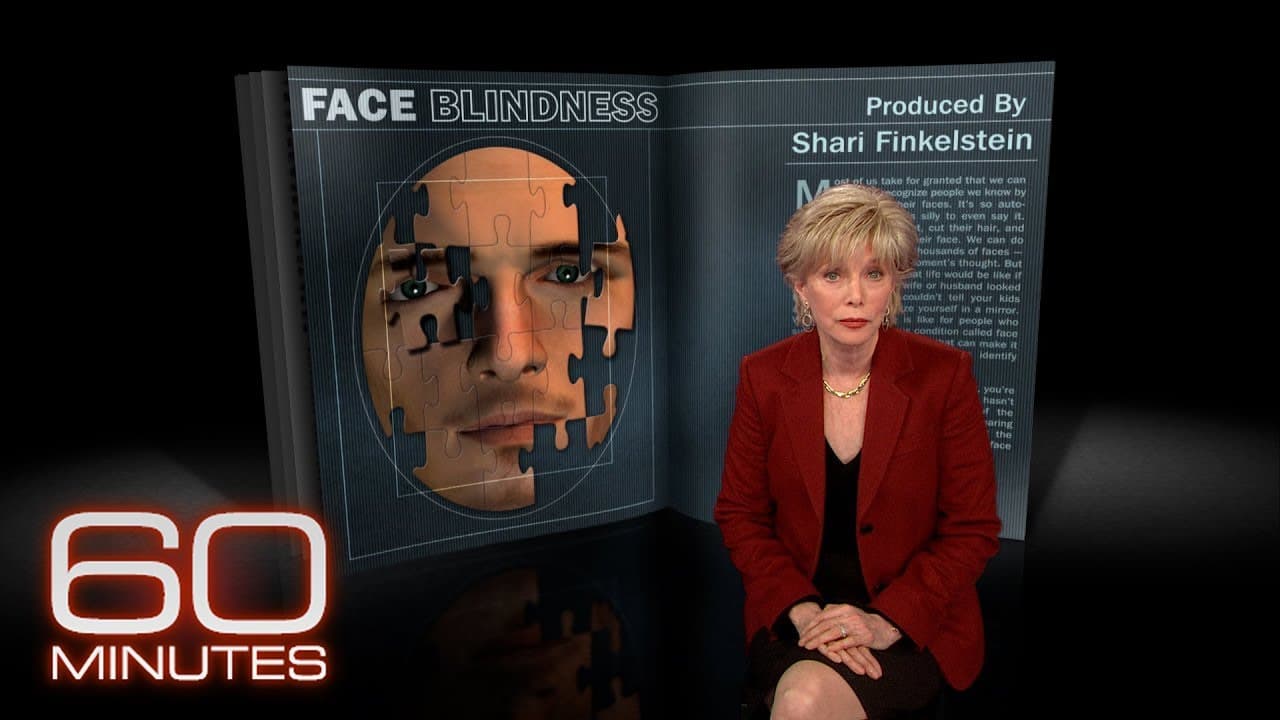
From the 60 Minutes Archive: Face Blindness
TL;DR
Face blindness, or prosopagnosia, makes recognizing faces impossible, affecting relationships and self-identity.
Transcript
60 minutes rewind most of us take for granted that we can instantly recognize people we know by looking at their faces it's so automatic it almost sounds silly to even say it friends can put on a hat cut their hair and still we know them by their face we can do this for thousands upon thousands of faces without ever giving it a moment's t... Read More
Key Insights
- 😀 Prosopagnosia, or face blindness, hinders recognizing faces, making daily interactions complex.
- 😀 Super recognizers have exceptional face recognition abilities, a stark contrast to face blind individuals.
- 🙂 Research on the fusiform face area in the brain sheds light on the neurological basis of face blindness.
- 😀 Face blindness can result in missed social connections and difficulties in forming relationships.
- 😀 Understanding face blindness highlights the importance of non-visual cues in recognizing individuals.
- 🥰 Face blindness poses challenges in self-identity and raises questions about the experience of love and emotional connections.
- 🥰 Chuck Close's experience as a face-blind portrait artist highlights the relationship between art and visual impairment.
Install to Summarize YouTube Videos and Get Transcripts
Explore YouTube Video Summarizer or Get YouTube Transcript Extractor
Questions & Answers
Q: What is face blindness, and how does it affect individuals like Jacob Hodes?
Face blindness, known as prosopagnosia, hinders individuals like Jacob from recognizing faces, leading to challenges in daily interactions due to an inability to identify familiar people visually.
Q: How do super recognizers differ from individuals with face blindness?
Super recognizers like Jennifer Jarrett excel at remembering faces, almost to the point of flawless recognition, contrasting starkly with those suffering from face blindness, who find facial recognition exceedingly difficult.
Q: What insights did research uncover about the brain's role in identifying faces?
Scientific studies have indicated a specific brain region, the fusiform face area, crucial for face recognition. Individuals with face blindness lack proper functioning in this area, affecting their ability to recognize faces effectively.
Q: How can face blindness impact social relationships and self-identity?
Face blindness can lead to miscommunications, missed connections, and even challenges in forming relationships. Additionally, it raises questions about how affected individuals perceive love and personal connections without visual face recognition.
Summary & Key Takeaways
-
Face blindness, or prosopagnosia, is a condition where individuals struggle to recognize faces, impacting everyday interactions.
-
Individuals with face blindness rely on other cues like voice or dress to identify people, resulting in potential social pitfalls.
-
Researchers are studying the brain mechanisms involved in face recognition to understand and potentially treat face blindness.
Read in Other Languages (beta)
Share This Summary 📚
Summarize YouTube Videos and Get Video Transcripts with 1-Click
Try YouTube Summary with ChatGPT & Claude or YouTube Transcript Generator
Explore More Summaries from 60 Minutes 📚


Summarize YouTube Videos and Get Video Transcripts with 1-Click
Try YouTube Summary with ChatGPT & Claude or YouTube Transcript Generator