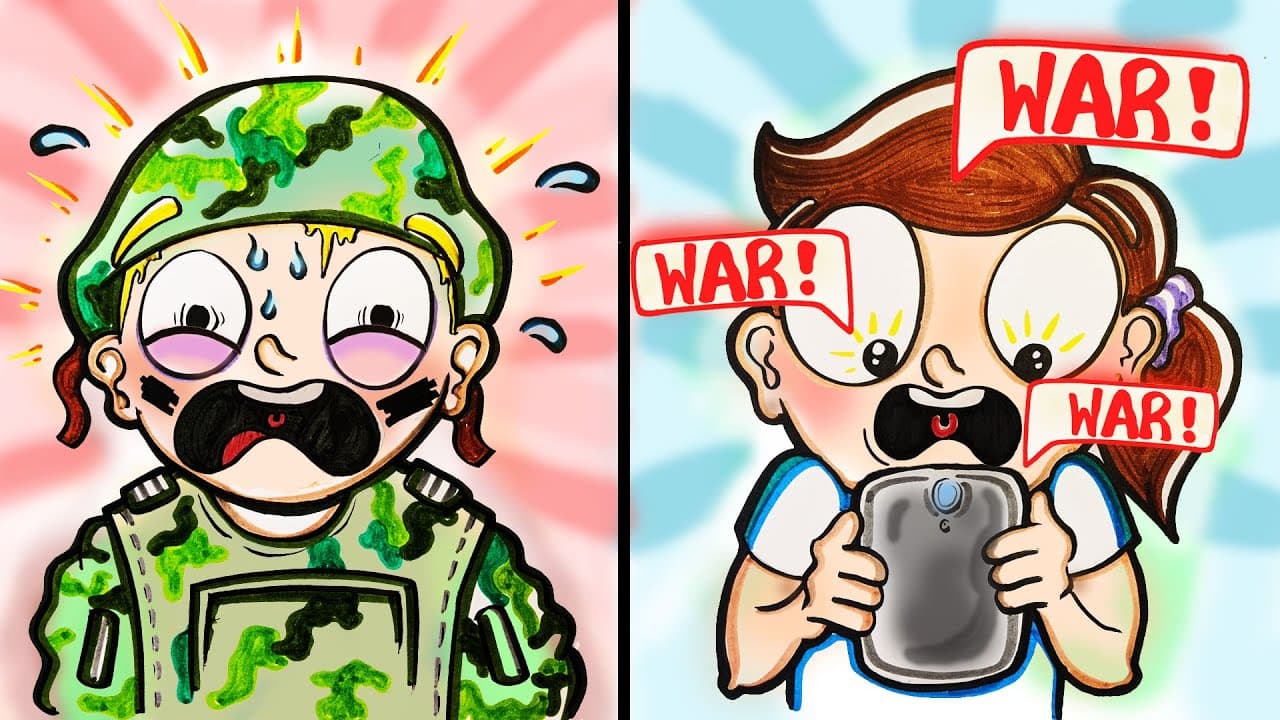
Why News of WAR Hijacks Your Brain!
TL;DR
Our fascination with war is rooted in our shared history and the body's biological response to stress, which can be addictive.
Transcript
if you're like me you woke up on Jan 1st 2020 like hashtag new year new me babe made yourself a smoothie started to meditate and then BAM we're at World War 3 memes started we kept refreshing Twitter we watched the news obsessively and honestly I felt weirdly fascinated by the concept of war a variety of psychological studies have found that soldie... Read More
Key Insights
- ❓ Hunter-gatherer societies were less violent due to possessing fewer possessions.
- 🫱 Settling down and the growth of populations introduced the concept of large-scale wars.
- ✋ The body's stress response to war creates a thrilling and hyper-focused state, similar to a natural high.
- 👾 War movies and games tap into this biological urge for stress, providing a safe outlet.
- ✋ Soldiers may mistakenly miss war because their brains have become accustomed to high stress levels.
- 🧑⚕️ Chronic stress has numerous negative effects on the body, affecting overall health and well-being.
- 🫱 Understanding the true nature of the body's response to stress is crucial in preventing the glorification of war.
Install to Summarize YouTube Videos and Get Transcripts
Explore YouTube Video Summarizer or Get YouTube Transcript Extractor
Questions & Answers
Q: Why are soldiers known to miss war?
Soldiers who have experienced war become accustomed to high levels of stress, leading their brains to seek out the feel-good hormones associated with stress. They may incorrectly perceive this as missing war.
Q: How does the body respond to stress during war?
A stress response is triggered, which increases heart rate, quickens breath, and releases hormones like adrenaline and cortisol. This leads to temporary increased physical strength and hyper-focused attention.
Q: Why do civilians enjoy war movies?
War movies target the brain's stress response system, creating a thrilling experience. After the movie, civilians can return to a safe environment, satisfying their biological urge for stress without experiencing the actual dangers of war.
Q: What are the negative effects of chronic stress?
Chronic stress, characterized by persistently strong stressors, leads to decreased immune function, impaired digestion, increased nervousness, susceptibility to infection, and desensitization, due to the hormone cortisol.
Summary & Key Takeaways
-
Hunter-gatherer societies were less violent because they had fewer possessions and less to fight over.
-
As humans settled down and populations grew, large-scale wars became a concept.
-
The body's stress response to war, triggered by hormones, creates a thrilling sensation and hyper-focus.
Read in Other Languages (beta)
Share This Summary 📚
Summarize YouTube Videos and Get Video Transcripts with 1-Click
Try YouTube Summary with ChatGPT & Claude or YouTube Transcript Generator
Explore More Summaries from AsapSCIENCE 📚



Summarize YouTube Videos and Get Video Transcripts with 1-Click
Try YouTube Summary with ChatGPT & Claude or YouTube Transcript Generator