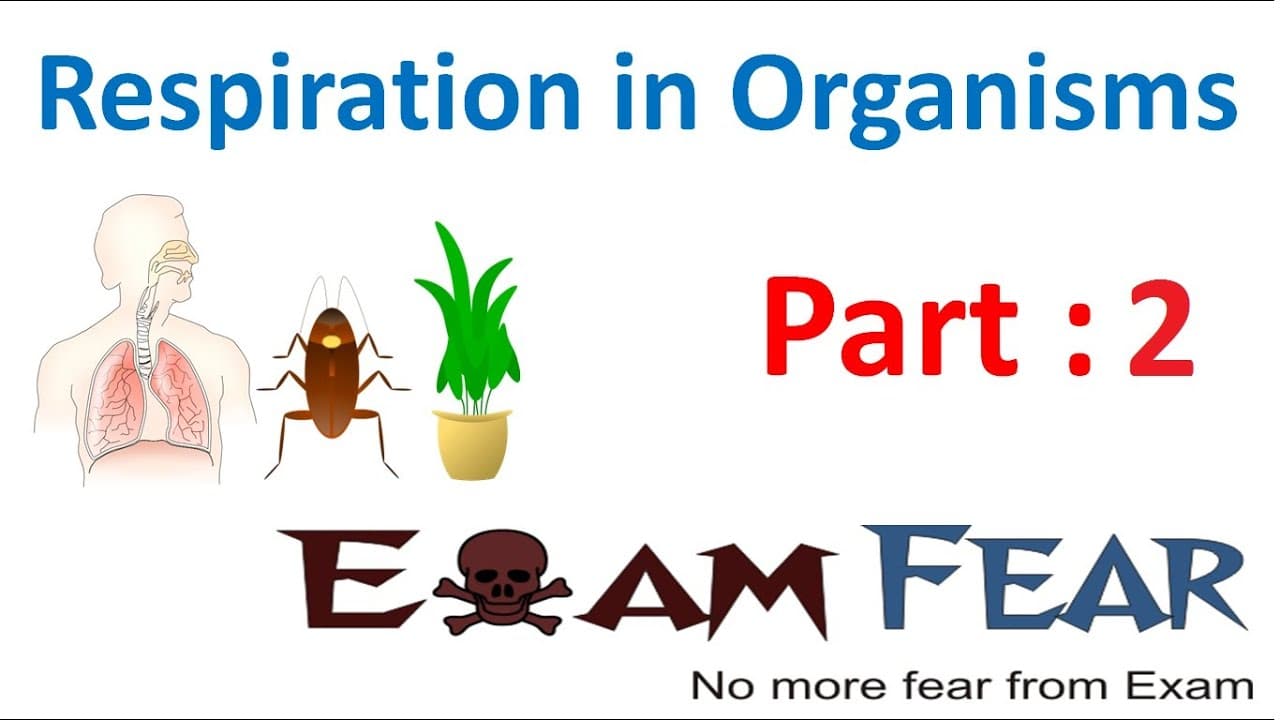
Biology Respiration in Organisms Part 2 (Respiration) Class 7 VII
TL;DR
This video explains the process of respiration, including the exchange of oxygen and carbon dioxide and the role of ATP molecules.
Transcript
hello friends this video on respiration in organisms part 2 is brought to you by exam for your calm no more fear from exam so now a few questions that might be bothering you how does this exchange of oxygen and carbon dioxide takes place with a closed field so we are saying that oxygen has to get come inside your body carbon dioxide has to come out... Read More
Key Insights
- 🗑️ Respiration is a vital process for organisms to obtain energy and eliminate waste.
- 😋 Oxygen is necessary for the oxidation of food and the production of energy.
- 😋 Glucose, obtained from food, is oxidized to produce carbon dioxide, water, and energy.
- ❓ Carbon dioxide is eliminated from the body through the respiratory system.
- 😪 Hemoglobin in red blood cells helps in the transport of oxygen to different cells.
- 🏪 ATP molecules store and release energy for various cellular activities.
- 🎭 Respiration is essential for performing physical and internal processes in the body.
Install to Summarize YouTube Videos and Get Transcripts
Explore YouTube Video Summarizer or Get YouTube Transcript Extractor
Questions & Answers
Q: How does the exchange of oxygen and carbon dioxide take place in the body?
Oxygen and carbon dioxide are exchanged in the body's cells through a complex process called respiration. Oxygen is taken in and carbon dioxide is released as a byproduct of the oxidation of food.
Q: How does oxygen reach different cells of the body?
Oxygen is carried to different cells of the body through the bloodstream. Hemoglobin in red blood cells binds with oxygen and transports it to cells via blood vessels.
Q: How does carbon dioxide from different cells reach the right place to be expelled out?
Carbon dioxide produced in cells diffuses into the bloodstream. It is transported back to the lungs through the blood vessels, where it is eventually exhaled.
Q: How is energy stored in the body during respiration?
The energy produced during the oxidation of food is stored in ATP (adenosine triphosphate) molecules. ATP acts as the energy currency of cells and is used for various cellular processes.
Summary & Key Takeaways
-
Respiration is a process that involves the intake of oxygen, oxidation of food, production of energy, and elimination of carbon dioxide.
-
The exchange of oxygen and carbon dioxide takes place through a complex process in the body's cells.
-
Glucose, the simplest form of carbohydrate, is oxidized in the presence of oxygen to produce carbon dioxide, water, and energy.
Read in Other Languages (beta)
Share This Summary 📚
Summarize YouTube Videos and Get Video Transcripts with 1-Click
Try YouTube Summary with ChatGPT & Claude or YouTube Transcript Generator
Explore More Summaries from LearnoHub - Class 11, 12 📚

Summarize YouTube Videos and Get Video Transcripts with 1-Click
Try YouTube Summary with ChatGPT & Claude or YouTube Transcript Generator