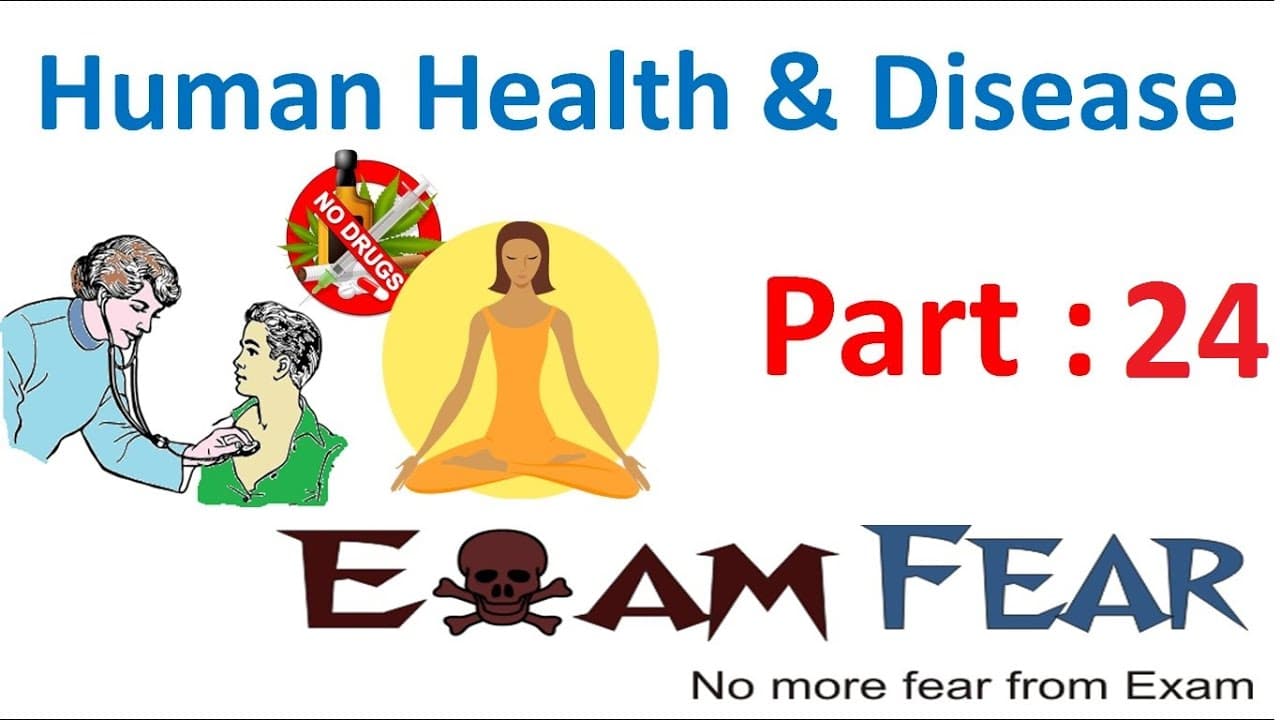
Biology Human Health & Diseases part 24 (Questions) class 12 XII
TL;DR
This video explores various aspects of human health and disease, including the transmission of diseases, abbreviations used in the field, the differences between cancer cells and normal cells, prevention of waterborne diseases, and the role of biology in controlling infectious diseases.
Transcript
hello friends this video on human health and disease is part 24 is brought to you by exam feel calm no more fear from exam so now that we have reached towards the end of this lesson let us quickly look at some of the questions question number 1 how does the transmission of each of the following diseases take place amebiasis malaria as SCAD gases an... Read More
Key Insights
- 😋 Diseases like amebiasis, malaria, SCAD gases, and pneumonia can be transmitted through contaminated food, water, air, and insects.
- 🍉 Abbreviations such as MALT, CMI, HIV, and NACO are used in the field of biology to represent complex terms.
- ♋ Cancer cells differ from normal cells in their continuous growth, division, spread, and interference with normal body functioning.
- 💦 Preventing waterborne diseases requires consuming clean water, using filtration systems, disinfecting water reservoirs, practicing proper sewage disposal, and avoiding stagnant water.
- 🎮 Biology has played a crucial role in controlling infectious diseases through understanding causal agents, transmission, and developing vaccines and better drugs.
- 🎁 Innate immunity is present at birth and provides non-specific protection, while acquired immunity develops afterward and is pathogen-specific.
- 🍼 Active immunity involves the body producing antibodies, typically through vaccination, while passive immunity involves the injection of ready-made antibodies, such as through mother's milk.
Install to Summarize YouTube Videos and Get Transcripts
Explore YouTube Video Summarizer or Get YouTube Transcript Extractor
Questions & Answers
Q: How are diseases like amebiasis, malaria, SCAD gases, and pneumonia transmitted?
Amebiasis is transmitted through contaminated food and water, with houseflies acting as the transmitting agent. Malaria is transmitted through infected mosquitoes. SCAD gases are also transmitted through contaminated food and water. Pneumonia spreads through contaminated air, primarily when infected individuals sneeze.
Q: What are some well-known abbreviations used in this chapter, and what do they stand for?
Some abbreviations used in the video include MALT (mucosal-associated lymphoid tissue), CMI (cell-mediated immunity), HIV (human immunodeficiency virus), and NACO (National AIDS Control Organization).
Q: How are cancer cells different from normal cells?
Cancer cells differ from normal cells as they continuously grow and divide, unlike normal cells that have a limit. Cancer cells can spread from one part of the body to another, whereas normal cells remain in one location. Additionally, cancerous cells do not die like normal cells, leading to the formation and growth of tumors.
Q: What measures can be taken to prevent waterborne diseases?
To prevent waterborne diseases, one should consume clean drinking water and consider using filtration or purification systems like aqua guard or reverse osmosis. Regular cleaning of water reservoirs is important to avoid contamination. Proper disposal of sewage and avoiding stagnant water are also crucial to prevent waterborne diseases.
Summary & Key Takeaways
-
The video discusses the transmission of diseases such as amebiasis, malaria, SCAD gases, and pneumonia through contaminated food, water, air, and insects.
-
It explains abbreviations used in biology, including MALT (mucosal-associated lymphoid tissue), CMI (cell-mediated immunity), and HIV (human immunodeficiency virus).
-
The differences between cancer cells and normal cells are highlighted, focusing on the continuous growth, division, spread, and interference with normal body functioning in cancer cells.
-
Preventive measures for waterborne diseases are mentioned, such as consuming clean drinking water, proper filtration and storage, and proper disposal of sewage.
-
The video highlights how the study of biology has helped in controlling infectious diseases through understanding causal agents, transmission, and the development of vaccines and drugs.
Read in Other Languages (beta)
Share This Summary 📚
Summarize YouTube Videos and Get Video Transcripts with 1-Click
Try YouTube Summary with ChatGPT & Claude or YouTube Transcript Generator
Explore More Summaries from LearnoHub - Class 11, 12 📚



Summarize YouTube Videos and Get Video Transcripts with 1-Click
Try YouTube Summary with ChatGPT & Claude or YouTube Transcript Generator