What Are the Oldest Known Animal Fossils?
TL;DR
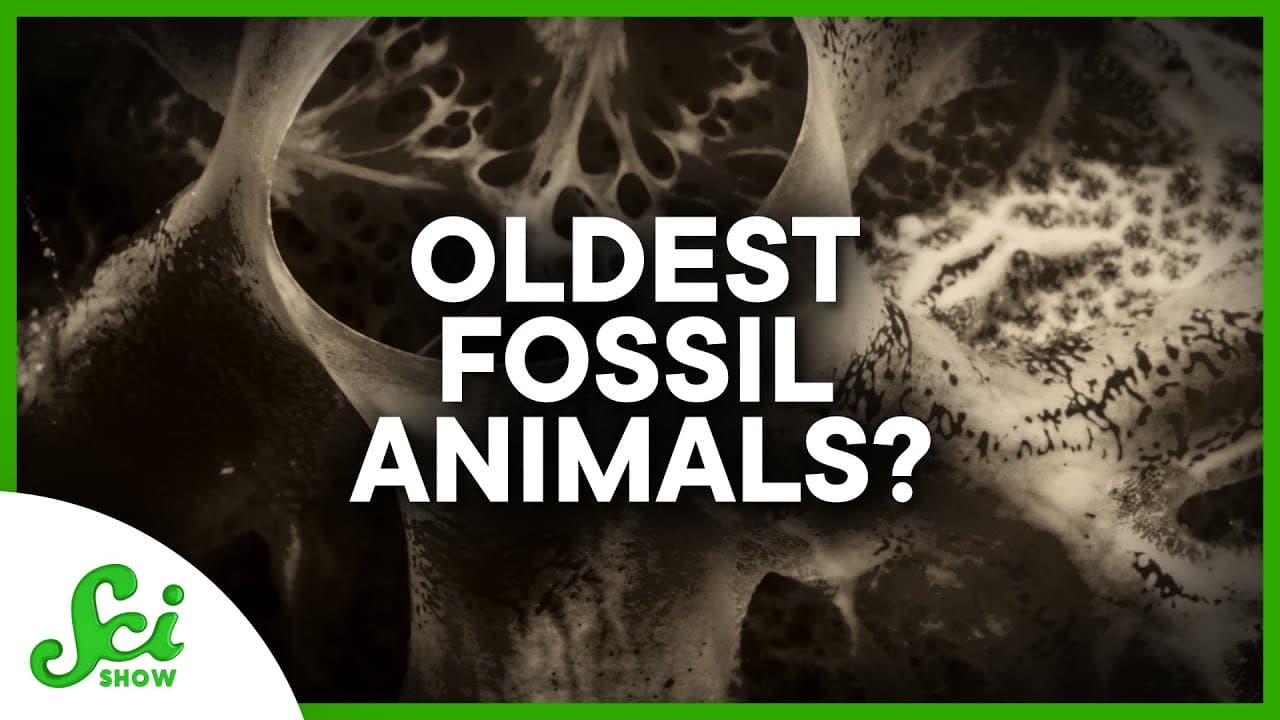
Fossils of sponges dating back 890 million years may be the oldest known animal fossils, potentially reshaping our understanding of early animal evolution. These sponges likely survived in oxygen-poor environments, thriving in reefs formed by cyanobacteria, thus challenging the idea that higher oxygen levels were necessary for early animal life.
Transcript
[♪ INTRO] The early evolution of animals is shrouded in mystery, in part because the fossil record is simply spotty. But things might be a little bit clearer now, thanks to a new study in Nature that reports what might be the oldest fossil animals ever found. Specifically, they are sponges. Sponges are among the most ancient animal groups, and mode... Read More
Key Insights
- 🧑🤝🧑 Fossils of sponges dating back 890 million years could be the oldest known animal fossils, challenging previous assumptions about the timing of animal evolution.
- 🧑🏭 Oxygen levels during that time may not have been a limiting factor for the evolution of early animals, as these sponges survived in oxygen-poor conditions.
- ❓ The discovery of these fossils provides important clues about the early evolution of animals and our ancestral origins.
- 🏪 The hippocampus plays a role in storing visual memories of sequences of images, while the visual cortex is involved in storing single-image memories.
Install to Summarize YouTube Videos and Get Transcripts
Explore YouTube Video Summarizer or Get YouTube Transcript Extractor
Questions & Answers
Q: Why is it challenging to study the early evolution of animals?
The fossil record is spotty, and the earliest animals were small, soft-bodied creatures that were not abundant, leading to a sparse fossil record.
Q: Why are these fossil sponges significant?
These fossils could potentially be the oldest known animal fossils, providing insights into the early evolution of animals.
Q: How did these sponges survive in oxygen-poor times?
The sponges may have survived by living in reefs formed by photosynthesizing cyanobacteria, which released oxygen.
Q: What role does the hippocampus play in visual memory?
New research shows that the hippocampus plays a role in storing visual memories of sequences of images, while visual cortex is involved in storing single-image memories.
Summary & Key Takeaways
-
A new study reports the discovery of what might be the oldest fossil animals ever found, specifically sponges dating back 890 million years.
-
The lack of early animal fossils is due to factors such as their small size and scarcity during that time period.
-
Oxygen levels during that time were lower, but these sponges may have survived by living in reefs that were formed by oxygen-releasing cyanobacteria.
Read in Other Languages (beta)
Share This Summary 📚
Summarize YouTube Videos and Get Video Transcripts with 1-Click
Try YouTube Summary with ChatGPT & Claude or YouTube Transcript Generator
Explore More Summaries from SciShow 📚


Summarize YouTube Videos and Get Video Transcripts with 1-Click
Try YouTube Summary with ChatGPT & Claude or YouTube Transcript Generator