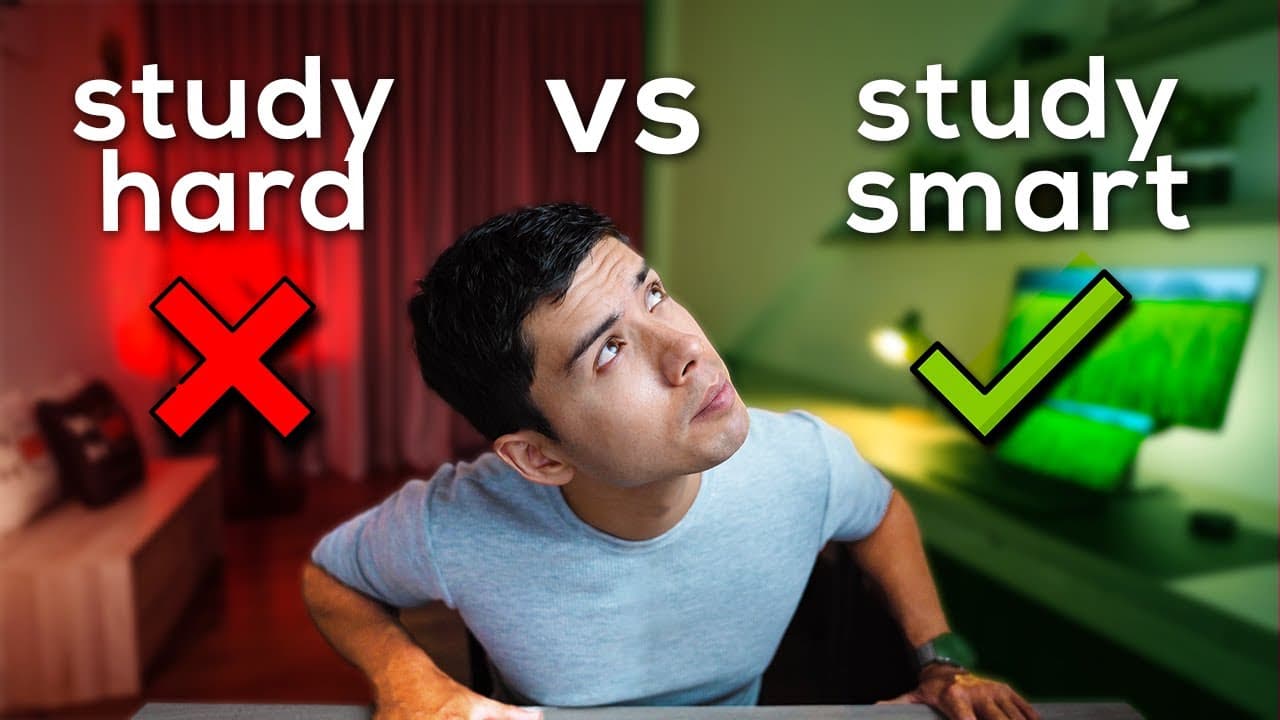
Why Studying SMARTER Beats Studying HARDER
TL;DR
Focus on task efficiency, not study hours, for better results.
Transcript
we need to stop being so obsessed with the number of hours we study there are so many eight hours study with me videos on youtube or how i'm able to study 12 hours a day videos and i've made a fair view of these videos myself on this channel because they get a lot of views these kind of videos do really well on my channel suggesting that you gu... Read More
Key Insights
- Studying smarter involves focusing on task completion rather than the number of hours spent studying. This approach is more effective in achieving higher grades.
- Parkinson's Law suggests that work expands to fill the time available, leading to procrastination if too much time is allocated for tasks.
- Identifying specific educational goals is crucial. Understanding why you're studying and what you need to achieve helps prioritize tasks and manage time efficiently.
- Efficiency in studying means determining the least amount of work needed to achieve desired results, focusing on essential tasks that impact overall grades.
- Pseudo-studying is a common pitfall where students think they are studying but are not effectively engaging with the material. Active studying methods are essential.
- Studying should be engaging but also focused. Extra activities that don’t contribute to achieving educational goals may be unnecessary and time-consuming.
- Studying excessively long hours can lead to neglecting other important life aspects like exercise and socializing, making it an unsustainable strategy.
- The ultimate goal is to focus on completing tasks that bring you closer to your educational objectives, rather than merely logging study hours.
Install to Summarize YouTube Videos and Get Transcripts
Explore YouTube Video Summarizer or Get YouTube Transcript Extractor
Questions & Answers
Q: What is the main argument against focusing on study hours?
The main argument is that focusing on study hours rather than task efficiency can lead to wasted time and procrastination. By concentrating on completing specific tasks that align with educational goals, students can achieve better results without unnecessarily long study sessions.
Q: How does Parkinson's Law relate to studying?
Parkinson's Law states that work expands to fill the time available for its completion. In the context of studying, this means that if students allocate too much time for a task, they may procrastinate and take longer than necessary, reducing overall efficiency.
Q: What is pseudo-studying and why is it problematic?
Pseudo-studying is when students believe they are studying but are not effectively engaging with the material. This often involves passive activities like reading without comprehension. It is problematic because it gives a false sense of productivity without contributing to learning or academic success.
Q: Why is it important to set specific educational goals?
Setting specific educational goals helps students prioritize tasks and manage their time more effectively. It allows them to focus on activities that directly contribute to achieving their desired outcomes, such as grades or skills, rather than spending time on less impactful tasks.
Q: How can students determine the least amount of studying needed?
Students can determine the least amount of studying needed by identifying the essential tasks that impact their grades, such as major assignments and exams. They should focus on understanding marking criteria and using resources like past exams to guide their study efforts efficiently.
Q: What role does active studying play in studying smarter?
Active studying involves engaging with the material through methods like questioning, summarizing, and applying knowledge. It is crucial for studying smarter because it enhances comprehension and retention, making study sessions more productive and effective compared to passive learning methods.
Q: Why is studying for excessively long hours unsustainable?
Studying for excessively long hours is unsustainable because it can lead to burnout and neglect of other important life aspects such as physical health and social interactions. A balanced approach that includes efficient study practices and personal well-being is more sustainable and beneficial in the long term.
Q: What is the ultimate goal of studying smarter?
The ultimate goal of studying smarter is to focus on completing tasks that bring students closer to their educational objectives, such as achieving specific grades or acquiring necessary skills, rather than merely logging hours. This approach ensures more effective use of time and resources, leading to better academic outcomes.
Summary & Key Takeaways
-
The video emphasizes the importance of studying smarter by focusing on task efficiency rather than the number of hours spent studying. It highlights the pitfalls of excessive studying and encourages setting clear educational goals.
-
Parkinson's Law is discussed, illustrating how work expands to fill the time available, which can lead to procrastination. The video advises prioritizing tasks that significantly impact grades and avoiding pseudo-studying.
-
Studying smarter involves active engagement with material and setting specific goals. The video warns against the unsustainable nature of studying for excessively long hours, advocating for a balanced approach to education and life.
Read in Other Languages (beta)
Share This Summary 📚
Summarize YouTube Videos and Get Video Transcripts with 1-Click
Try YouTube Summary with ChatGPT & Claude or YouTube Transcript Generator
Explore More Summaries from Mike Dee 📚



Summarize YouTube Videos and Get Video Transcripts with 1-Click
Try YouTube Summary with ChatGPT & Claude or YouTube Transcript Generator