How to Rank #1 on Google: SEO Best Practices
TL;DR
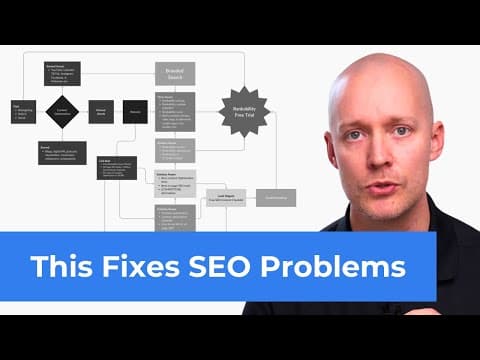
To rank #1 on Google, start with bottom-of-the-funnel keywords, focusing on transactional and comparison intents. Build topical authority and update old content before optimizing. Analyze search intent to guide content structure and create unique, moat-worthy content that stands out from competitors.
Transcript
hey in this video I'm going to show you several SEO best practices using a real life example so just follow my process and you'll be able to dominate Google in 2023. let's Dive Right In so the first best practice is to use the reverse keyword strategy here's how to do it okay so the reverse keyword strategy is actually quite simple but it's really ... Read More
Key Insights
- The reverse keyword strategy starts with bottom-of-the-funnel keywords, focusing on transactional and comparison intents before moving up the funnel.
- Transactional keywords are crucial as they indicate a searcher close to making a buying decision, making them a priority for targeting.
- Comparison keywords can steer searchers away from competitors and towards your product, making them valuable for ranking efforts.
- Informational keywords should support bottom-of-the-funnel keywords, building topical authority and pushing searchers down the funnel.
- Analyzing search intent helps structure content appropriately, ensuring it aligns with user expectations and Google's search results.
- Refreshing and upgrading old content can revive its performance, making it more relevant and actionable for current search intents.
- Creating unique content with a moat, or competitive edge, ensures long-term ranking by offering something competitors cannot easily replicate.
- Prioritizing video content for keywords with video blocks in search results can enhance visibility in both Google and YouTube.
Install to Summarize YouTube Videos and Get Transcripts
Explore YouTube Video Summarizer or Get YouTube Transcript Extractor
Questions & Answers
Q: How to implement the reverse keyword strategy?
The reverse keyword strategy involves starting with bottom-of-the-funnel keywords, focusing on those with transactional or comparison intent. These keywords indicate a searcher close to making a purchase decision. By building your strategy around these, you can create content that targets users ready to convert, then gradually move up the funnel to capture broader, informational queries.
Q: What are transactional keywords?
Transactional keywords are search terms that indicate a user's intent to make a purchase or complete a transaction. These keywords often include phrases like 'buy,' 'purchase,' or 'order,' and are crucial for targeting users who are ready to convert. By focusing on these keywords, businesses can attract high-intent traffic that is more likely to result in sales.
Q: Why is search intent analysis important for SEO?
Analyzing search intent is crucial for aligning your content with user expectations and Google's search results. By understanding the intent behind a keyword, whether informational, navigational, transactional, or comparison, you can structure your content to meet those needs, increasing the likelihood of ranking well and satisfying searchers' queries.
Q: How can refreshing old content improve SEO performance?
Refreshing old content involves updating and upgrading it to align with current search intents and improve its relevance. By adding new insights, visuals, and structure, you can make the content more actionable and valuable, prompting Google to re-crawl and re-index the page, potentially improving its ranking and traffic.
Q: What makes content 'moat-worthy'?
Moat-worthy content is unique and difficult for competitors to replicate, providing a competitive edge. It often involves a unique angle, comprehensive study, or original data that sets it apart from existing content. By creating such content, you ensure long-term ranking success and make it more linkable and valuable to users.
Q: How to prioritize video content in SEO strategy?
Prioritize video content for keywords that trigger video blocks in Google's search results, as this indicates users prefer video answers. By creating video content for these keywords, you can enhance visibility in both Google and YouTube, capturing more traffic and aligning with user preferences for video consumption.
Q: What role do comparison keywords play in SEO?
Comparison keywords help steer searchers away from competitors and towards your product by addressing their comparison intent. These keywords often involve phrases like 'versus' or 'compare' and are valuable for influencing purchasing decisions. Ranking for these keywords can increase brand visibility and drive conversions.
Q: How to build topical authority in SEO?
Building topical authority involves creating comprehensive content that covers a subject extensively, demonstrating expertise and relevance. This can be achieved by supporting bottom-of-the-funnel keywords with informational content, answering related queries, and consistently updating content to reflect new insights and developments in the topic area.
Summary & Key Takeaways
-
The reverse keyword strategy involves starting with bottom-of-the-funnel keywords to capture transactional and comparison intent, then moving up the funnel. This approach prioritizes keywords that are closer to conversion, ensuring a focused and effective SEO strategy.
-
Refreshing outdated content before optimizing it can significantly improve its performance. By updating and upgrading content with new insights and visuals, you can align it with current search intents and increase its relevance and authority.
-
Creating unique content with a competitive moat ensures long-term ranking success. By offering a distinct angle or comprehensive study, you can make your content more linkable and difficult for competitors to replicate, leading to sustained visibility and traffic.
Read in Other Languages (beta)
Share This Summary 📚
Summarize YouTube Videos and Get Video Transcripts with 1-Click
Try YouTube Summary with ChatGPT & Claude or YouTube Transcript Generator
Explore More Summaries from Nathan Gotch 📚

Summarize YouTube Videos and Get Video Transcripts with 1-Click
Try YouTube Summary with ChatGPT & Claude or YouTube Transcript Generator