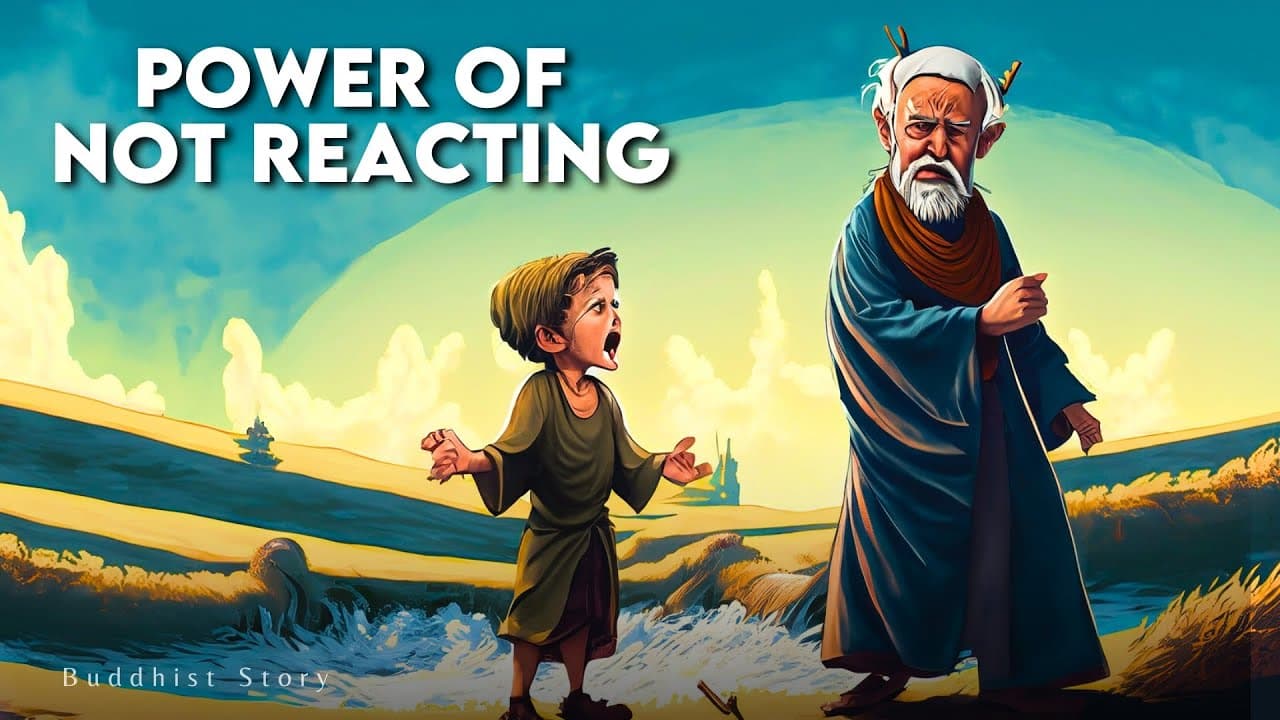
Power of Not Reacting - How to Control Your Emotions | Gautam Buddha Motivational Story
TL;DR
Learn how to control your emotions by practicing mindfulness and the art of not reacting, leading to improved relationships and overall well-being.
Transcript
once upon a time a person went to Gautam Buddha seeking advice on how to control his emotions the person was struggling with anger and frustration and he was looking for a way to manage his emotions better Buddha smiled and asked him to sit down he said I will tell you a story once upon a time there was a king who ruled a prosperous country one day... Read More
Key Insights
- 🥺 Not reacting to situations can help control emotions and lead to better decision-making and relationships.
- 🥰 Mindfulness and meditation can increase self-awareness and help in practicing the art of not reacting.
- ❓ Controlling emotions doesn't mean suppressing them, but processing and responding thoughtfully.
- ✌️ Practicing not reacting takes time and patience but can bring inner peace and happiness.
- 🤔 The mind is powerful, what we think affects our emotions and actions.
- ❓ Letting go of attachments and practicing compassion can bring happiness and freedom.
- 🫒 Dwelling in the past or future hinders living in the present moment.
- 🥺 Diligence leads to a way of life, while idleness leads to stagnation.
Install to Summarize YouTube Videos and Get Transcripts
Explore YouTube Video Summarizer or Get YouTube Transcript Extractor
Questions & Answers
Q: What did the king learn from the story told by Gautam Buddha?
The king learned that it's not the external situations that ruin his mood, but his reaction to them. By not reacting impulsively, he can maintain his composure and make better decisions.
Q: How did Michael change after practicing mindfulness and not reacting?
Michael became more aware of his thoughts and emotions and started responding thoughtfully instead of reacting impulsively. His relationships improved, and he became admired for his calm and thoughtful demeanor.
Q: Does not reacting mean suppressing emotions?
No, not reacting means taking the time to process emotions and respond thoughtfully instead of impulsively. It's important to acknowledge emotions as a natural part of human experience, but not let them control our actions.
Q: How can controlling emotions through not reacting benefit our lives?
By not reacting impulsively, we can improve our relationships, make better decisions, and experience inner peace and happiness. It allows us to respond with reason rather than emotion.
Summary & Key Takeaways
-
Gautam Buddha tells a story about a king who learned to control his emotions and make better decisions by not reacting impulsively to situations that upset him.
-
Michael, a young man, also practices mindfulness and the art of not reacting, which helps him improve his relationships and become known for his calm and thoughtful demeanor.
-
Controlling our emotions through not reacting can lead to better relationships, decision-making, and overall life satisfaction.
Read in Other Languages (beta)
Share This Summary 📚
Summarize YouTube Videos and Get Video Transcripts with 1-Click
Try YouTube Summary with ChatGPT & Claude or YouTube Transcript Generator
Explore More Summaries from Wisdom Insights 📚

Summarize YouTube Videos and Get Video Transcripts with 1-Click
Try YouTube Summary with ChatGPT & Claude or YouTube Transcript Generator