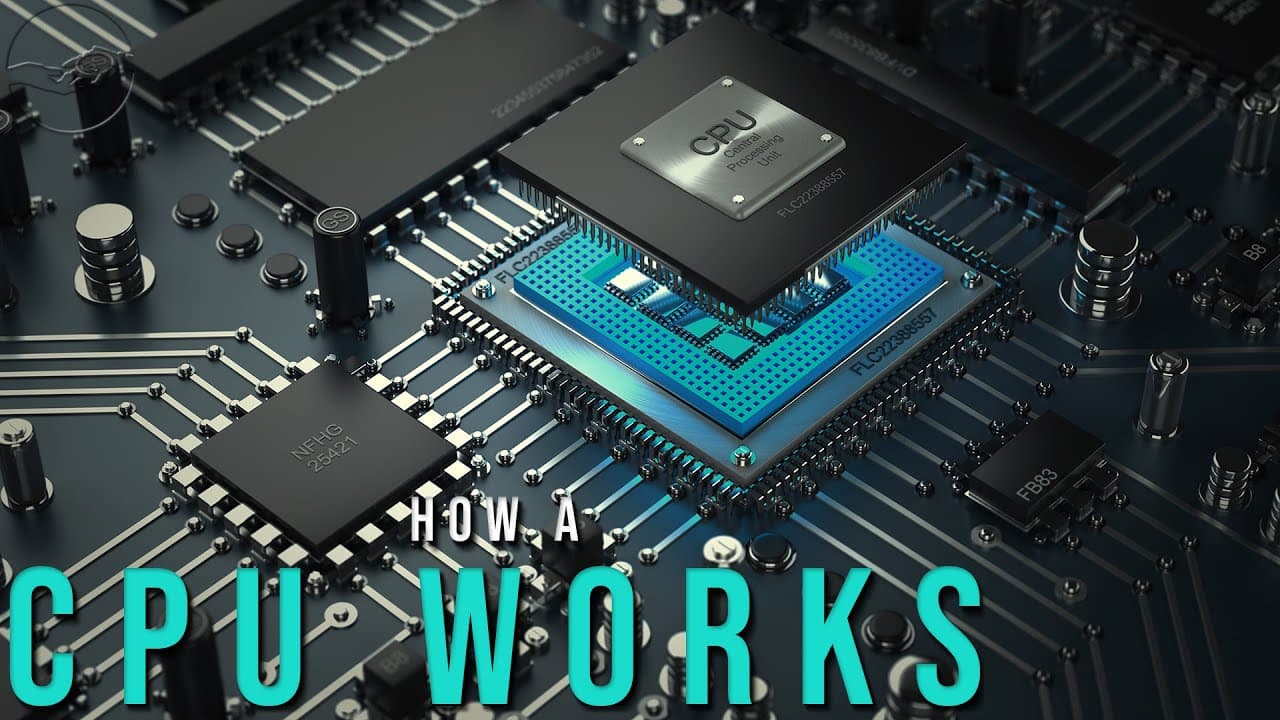
How A CPU Works | The CPU Explained
TL;DR
Classical computing operates asynchronously through hardware and software parallelism, maximizing computer resources for efficient execution.
Transcript
Hi, thanks for tuning into Singularity Prosperity. This video is the third in a multi-part series discussing computing. In this video, we'll be discussing classical computing, more specifically - how the CPU operates and CPU parallelism. In the previous video in this series we discussed the shrinking of the transistor, allowing for more powerful an... Read More
Key Insights
- 🏛️ Classical computing operates in serial but utilizes hardware and software parallelism for efficient execution.
- ⌛ CPU cache reduces access time to essential data, enhancing CPU performance.
- ❓ Pipelining enables multiple stages of instructions to be executed simultaneously, improving efficiency.
- 💯 Hardware parallelism, including multiple cores and superscalar pipelines, enhances computational capabilities.
- 🈸 Software parallelism, like multithreading, improves performance by segmenting applications for efficient CPU resource utilization.
- 🧵 Concurrency issues arise in multi-threaded applications due to dependencies between threads.
- 🎚️ Modern processors incorporate hardware level parallelism for increased performance.
Install to Summarize YouTube Videos and Get Transcripts
Explore YouTube Video Summarizer or Get YouTube Transcript Extractor
Questions & Answers
Q: How does classical computing differ from parallel computing?
Classical computing operates in serial while parallel computing uses hardware and software optimizations to execute instructions simultaneously across multiple cores and threads.
Q: What is the role of the CPU cache in classical computing?
The CPU cache stores frequently accessed data to reduce access time, improving CPU performance by providing immediate access to essential information.
Q: How does pipelining improve CPU efficiency?
Pipelining allows for executing multiple stages of instructions simultaneously, reducing clock cycles per instruction (CPI) and enhancing CPU performance through asynchronous operation.
Q: How does hardware parallelism contribute to computing performance?
Hardware parallelism, such as multiple cores and superscalar pipelines, increases computational capacity by enabling simultaneous execution of instructions across different processing units.
Summary & Key Takeaways
-
Classical computing operates in serial but appears parallel due to optimizations.
-
CPU parallelism involves hardware and software level optimizations for faster execution.
-
Utilization of multiple cores and threads enhances performance through parallel processing.
Read in Other Languages (beta)
Share This Summary 📚
Summarize YouTube Videos and Get Video Transcripts with 1-Click
Try YouTube Summary with ChatGPT & Claude or YouTube Transcript Generator
Explore More Summaries from Futurology — An Optimistic Future 📚






Summarize YouTube Videos and Get Video Transcripts with 1-Click
Try YouTube Summary with ChatGPT & Claude or YouTube Transcript Generator