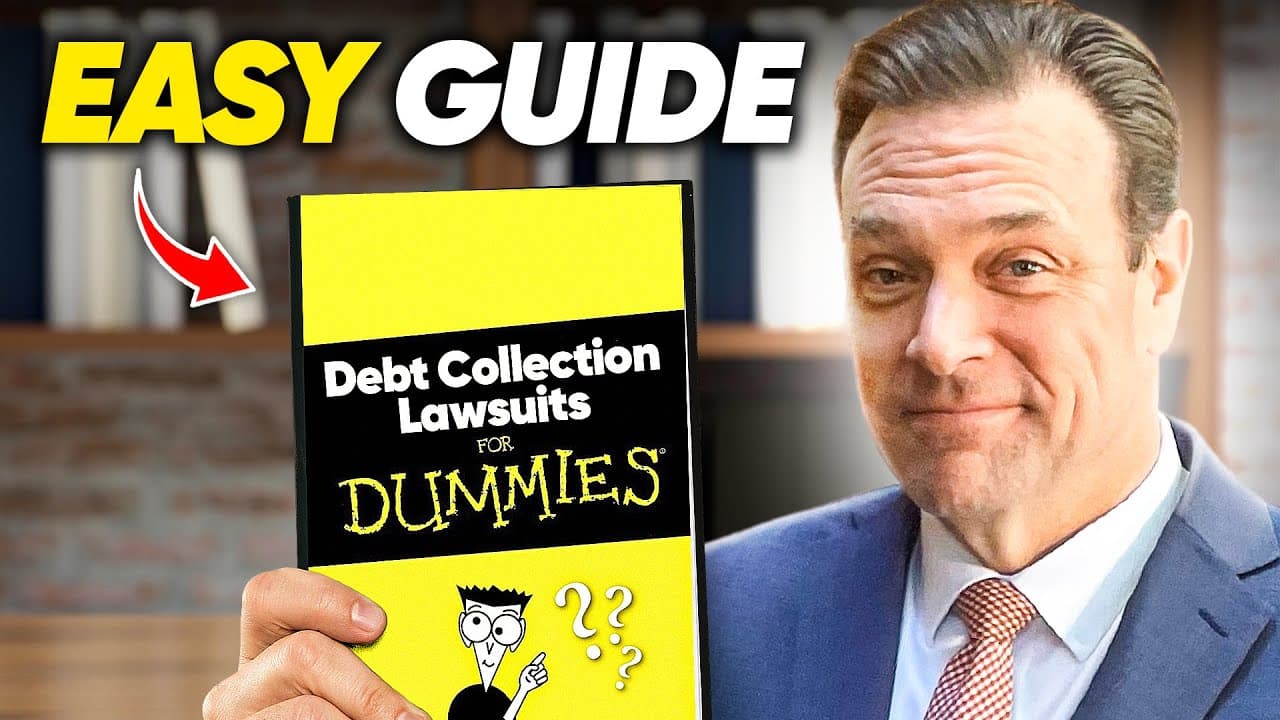
What You NEED To Know About Responding To Debt Collection Lawsuits (For Beginners)
TL;DR
Learn the importance of filing an answer to a debt collection lawsuit to avoid default judgment and protect your assets.
Transcript
hey everybody John skeba here from the consumer Warrior YouTube channel and in this video we are going to do a beginner's guide to responding to a debt collection lawsuit specifically drafting the answer to the lawsuit which is the very first step that you have to do to avoid any type of default judgment and be able to deal with this thing once and... Read More
Key Insights
- 📁 Filing an answer is the most important step in responding to a debt collection lawsuit and avoiding default judgment.
- 💼 Many consumers fail to file an answer, resulting in default judgments in over 95% of debt collection cases.
- 🐕🦺 Tutorials and services like Solos Suit can provide assistance in drafting and filing the answer.
- ❓ Understanding the timeframe to respond and following court procedures is essential.
- 🖤 The answer should focus on admitting, denying, or claiming lack of information regarding the specific allegations made in the complaint.
- 🖤 It is important to be honest and accurate in the answer, but admitting lack of information is acceptable if unsure of the debt details.
- 💁 Overcomplicating the answer with unnecessary information or settlement offers is not recommended.
Install to Summarize YouTube Videos and Get Transcripts
Explore YouTube Video Summarizer or Get YouTube Transcript Extractor
Questions & Answers
Q: Why is filing an answer important in a debt collection lawsuit?
Filing an answer is crucial in a debt collection lawsuit because without it, the court may enter a default judgment against you, resulting in more severe financial consequences.
Q: What happens if I don't file an answer to the complaint?
If you fail to file an answer, the court may grant the debt collector everything they are asking for, including attorney's fees and interest. The original lawsuit amount can double or more, and the debt collector can garnish your wages, bank accounts, and place a lien on your property.
Q: Can I admit, deny, or claim lack of information in response to the allegations in the complaint?
Yes, when drafting the answer, you can admit, deny, or state that you don't have enough information to admit or deny each specific allegation made by the creditor or plaintiff.
Q: What information should I include in the answer to the debt collection lawsuit?
The answer should focus on responding to the specific allegations made in the complaint. It is crucial to be honest, accurate, and only provide information relevant to the debt and its ownership. Avoid including personal details or settlement offers.
Summary & Key Takeaways
-
Filing an answer to a debt collection lawsuit is crucial to avoid default judgment, which can result in additional fees, interest, and garnishment of wages, bank accounts, and property.
-
Over 95% of debt collection lawsuits end in default judgment because consumers fail to file an answer.
-
Filing an answer is a basic step in the civil litigation process and can be simplified by using tutorials or services like Solos Suit, which provides assistance in drafting and filing the answer.
Read in Other Languages (beta)
Share This Summary 📚
Summarize YouTube Videos and Get Video Transcripts with 1-Click
Try YouTube Summary with ChatGPT & Claude or YouTube Transcript Generator
Explore More Summaries from Consumer Warrior 📚

Summarize YouTube Videos and Get Video Transcripts with 1-Click
Try YouTube Summary with ChatGPT & Claude or YouTube Transcript Generator