The Growing Generational Wealth Gap
TL;DR
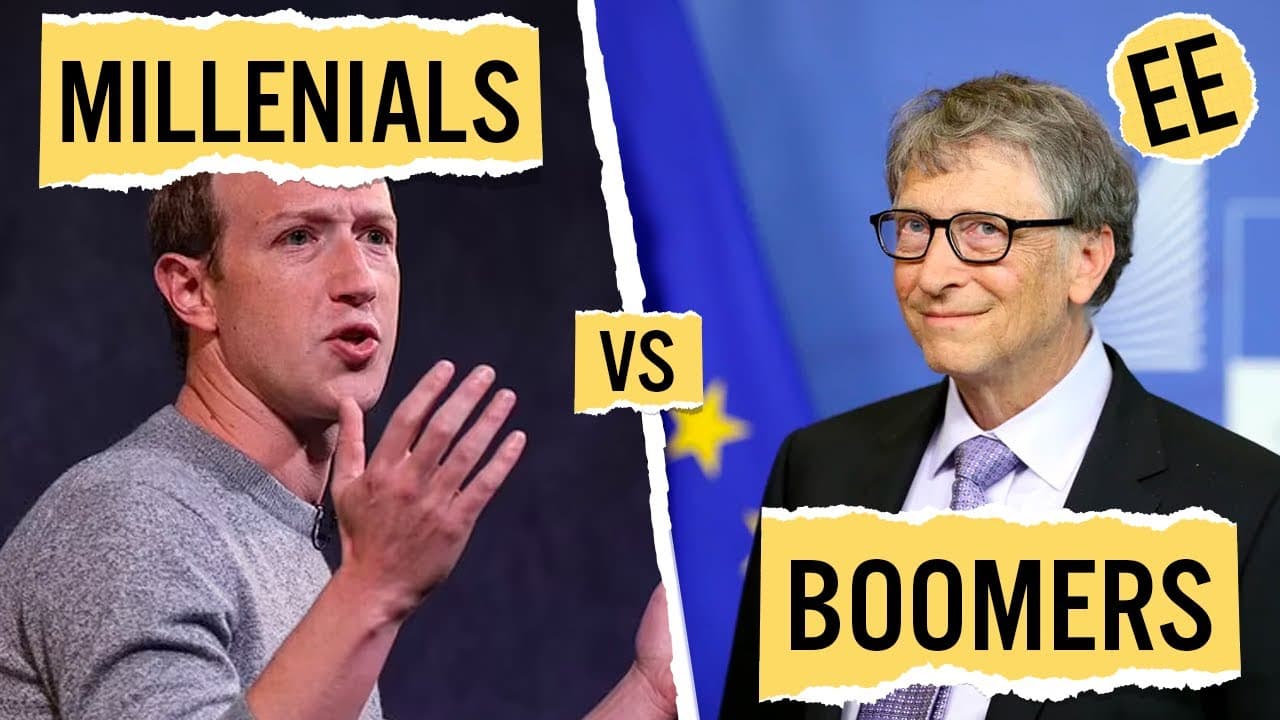
Millennials face significant wealth challenges compared to previous generations.
Transcript
It’s the hope of almost every generation in history that their children and grandchildren will go on to live wealthier more prosperous lives than their own. People put countless hours of thought and planning into things like their children’s education, life insurance, and estate inheritance to make this dream a reality, but overwhelmingly it i... Read More
Key Insights
- Millennials are significantly poorer than previous generations, accounting for only 3% of national wealth compared to boomers' 27% at the same age.
- The share of wealth owned by people under 40 has halved over the past 30 years, impacting consumer spending power.
- Economic downturns have hit millennials hard, but the wealth gap is driven by more than just financial crises.
- Boomers benefited from higher real incomes and lower education costs, allowing for greater savings and wealth accumulation.
- Homeownership is a key determinant of wealth, with homeowners having significantly higher net worth than renters.
- The wealth gap is exacerbated by a concentration of wealth among a small number of extremely wealthy individuals.
- Generational wealth transfer may not solve the wealth gap, as wealth is often passed to older heirs, not younger generations.
- Addressing wealth inequality requires systemic changes beyond symptomatic fixes like student loan forgiveness or increased minimum wages.
Install to Summarize YouTube Videos and Get Transcripts
Explore YouTube Video Summarizer or Get YouTube Transcript Extractor
Questions & Answers
Q: What is the main reason millennials are poorer than previous generations?
Millennials are poorer than previous generations due to a combination of economic crises, lower real incomes, and higher education costs. These factors have limited their ability to save and accumulate wealth compared to baby boomers and Gen X'ers, who benefited from higher real incomes and lower living costs.
Q: How does the generational wealth gap affect consumer spending?
The generational wealth gap affects consumer spending as younger generations, particularly those under 40, have less disposable income. This demographic is traditionally seen as a key consumer market. Reduced spending power among millennials could lead to decreased demand for goods and services, impacting businesses globally.
Q: Why is homeownership important for wealth accumulation?
Homeownership is crucial for wealth accumulation because it significantly increases an individual's net worth. Homeowners tend to have a median net worth of $231,400 compared to renters, whose median net worth is below $5,020. Owning property not only provides a stable asset but also allows for appreciation in value over time.
Q: What role does wealth concentration play in the generational wealth gap?
Wealth concentration plays a significant role in the generational wealth gap, as a small number of extremely wealthy individuals hold a large portion of the total wealth. This concentration means that the wealth gap is not just a generational issue but a broader economic inequality problem, with wealth increasingly pooled among a few.
Q: Will generational wealth transfer solve the wealth gap?
Generational wealth transfer is unlikely to solve the wealth gap because wealth is often passed to older heirs, not younger generations. As wealth continues to concentrate among older generations, younger individuals may still face challenges in accumulating wealth, unless systemic economic changes are implemented.
Q: What systemic changes are needed to address wealth inequality?
Addressing wealth inequality requires systemic changes such as reforming education costs, increasing real incomes, and implementing policies that promote wealth distribution. Solutions like student loan forgiveness and increased minimum wages can alleviate symptoms but do not address the root causes of the growing wealth gap.
Q: How have economic downturns impacted millennials' wealth?
Economic downturns have significantly impacted millennials' wealth by limiting job opportunities and reducing savings potential. Entering the workforce during the 2008 mortgage crisis and facing subsequent financial challenges have hindered their ability to build wealth, compared to previous generations who had more stable economic conditions.
Q: Is the generational wealth gap a significant economic issue?
Yes, the generational wealth gap is a significant economic issue as it affects consumer spending, economic growth, and wealth distribution. While it may not be as dire as some suggest, the gap highlights broader issues of economic inequality that need to be addressed to ensure sustainable economic development.
Summary & Key Takeaways
-
Millennials face a significant wealth gap compared to previous generations, holding only 3% of national wealth. This is due to factors such as economic crises, lower real incomes, and higher education costs. The concentration of wealth among a few wealthy individuals exacerbates this gap.
-
The generational wealth gap impacts consumer spending, as younger generations have less disposable income. Homeownership is a major factor in wealth accumulation, with homeowners having much higher net worth than renters. Addressing this gap requires systemic economic changes.
-
Wealth transfer from boomers to younger generations may not solve the wealth gap, as wealth is often passed to older heirs. Systemic changes, rather than symptomatic fixes, are needed to address wealth inequality and its impact on economic growth and consumer spending.
Read in Other Languages (beta)
Share This Summary 📚
Summarize YouTube Videos and Get Video Transcripts with 1-Click
Try YouTube Summary with ChatGPT & Claude or YouTube Transcript Generator
Explore More Summaries from Economics Explained 📚





Summarize YouTube Videos and Get Video Transcripts with 1-Click
Try YouTube Summary with ChatGPT & Claude or YouTube Transcript Generator