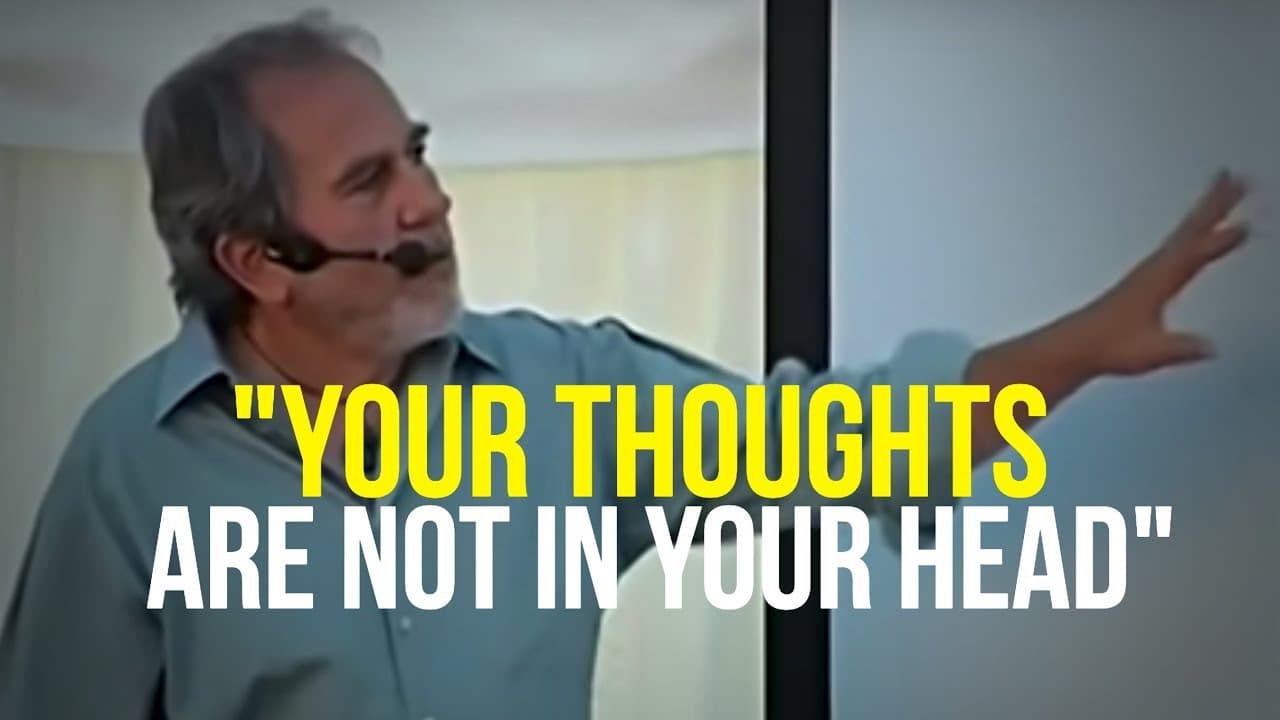
The Science That Will Change Your Future part 2 | Dr. Bruce Lipton
TL;DR
Belief affects health significantly, with both placebo and nocebo effects influencing outcomes.
Transcript
many of you have heard about the drug Prozac every year billions of dollars are spent on buying prozac and here's a surprise that the prozac is no better than a sugar pill so that it is a placebo drug and yet the people who take it believe in the drug so much it makes them better this is what medicine does not tell you is that there is negative thi... Read More
Key Insights
- 💭 The placebo and nocebo effects illustrate the significant impact of belief on health, where thoughts can dictate physical outcomes.
- 🧑⚕️ Perceptions about health are acquired early in life, influenced by genetics, subconscious factors, and the environment.
- 🤕 The early learning period from birth to age six is critical for programming beliefs, impacted heavily by parental messaging and experiences.
- 🤳 Children are in a state of super learning, making them receptive to various influences, which can shape their identity and self-esteem.
- 😷 Negative thoughts can have tangible effects on health, evidencing the importance of mental outlook in medical contexts.
- 🔨 Conscious awareness is underutilized, yet it is a powerful tool for rewriting ingrained negative beliefs and fostering a healthier mindset.
- 💭 The interplay between subconscious programming and conscious thought can facilitate transformative changes in one's health and well-being.
Install to Summarize YouTube Videos and Get Transcripts
Explore YouTube Video Summarizer or Get YouTube Transcript Extractor
Questions & Answers
Q: What is the placebo effect, and how does it work?
The placebo effect is a phenomenon where individuals experience real health improvements from a treatment that is inactive, such as a sugar pill, solely because they believe it will help them. This effect showcases the power of positive thinking, as the patient’s belief system triggers biological processes that can lead to actual healing, demonstrating the mind's role in physical health.
Q: What is the nocebo effect, and how does it differ from the placebo effect?
The nocebo effect refers to negative outcomes arising from harmful beliefs or expectations about a treatment or health condition. Unlike the placebo effect, which is driven by positive beliefs leading to healing, the nocebo effect illustrates how negative thoughts can manifest in physical symptoms and contribute to worsening health, highlighting the significant role of mindset in health outcomes.
Q: How does early childhood experience influence beliefs about health?
Early childhood experiences markedly shape beliefs and perception through exposure to societal and familial messages. A child’s subconscious mind absorbs information about safety, danger, and self-identity from interactions with caregivers, which then informs their beliefs regarding health and self-worth, often without conscious awareness, leading to longstanding implications on their perspectives and choices later in life.
Q: What brain states are prevalent during early childhood, and how do they affect learning?
During early childhood, particularly from birth to age six, children operate predominantly in lower brainwave frequencies such as Delta and Theta. These states facilitate a significant absorption of information, akin to a hypnagogic trance, allowing for rapid learning and programming of beliefs. As children grow, they transition to higher frequencies, impacting their ability to consciously reshape their mindset and behaviors.
Q: Why is positive thinking linked to better health outcomes?
Positive thinking is linked to better health outcomes due to its ability to enhance immune function and reduce stress. When an individual believes in the potential for healing, their body can respond positively through physiological changes. This response is often more impactful than the treatment itself, demonstrating that belief systems can significantly influence health.
Q: In what ways can our conscious mind help to reshape negative beliefs instilled in childhood?
The conscious mind allows individuals to analyze and reflect upon ingrained negative beliefs and actively reprogram them through intentional practices such as mindfulness, cognitive behavioral techniques, and affirmations. By consciously engaging in positive thinking and challenging negative narratives, people can gradually alter their subconscious beliefs, leading to enhanced well-being and improved health outcomes.
Summary & Key Takeaways
-
The impact of belief on health is profound, where positive thoughts can lead to healing through the placebo effect, while negative thoughts can contribute to illness through the nocebo effect.
-
Individual perceptions of health are influenced by genetics, subconscious programming, and conscious decision-making, with early childhood experiences critically shaping our beliefs and mental frameworks.
-
The first six years of life are crucial for learning and identity formation, as children are in a programmable state, absorbing beliefs from their environment that affect their self-image and capabilities throughout life.
Read in Other Languages (beta)
Share This Summary 📚
Summarize YouTube Videos and Get Video Transcripts with 1-Click
Try YouTube Summary with ChatGPT & Claude or YouTube Transcript Generator
Explore More Summaries from Video Advice 📚


Summarize YouTube Videos and Get Video Transcripts with 1-Click
Try YouTube Summary with ChatGPT & Claude or YouTube Transcript Generator