Kepler Finds Newborn Exoplanet on This Week @NASA - June 24, 2016
TL;DR
NASA astronomers have found a planet outside our solar system, using the Kepler Space Telescope and the W. M. Keck Observatory. This newly discovered planet is larger than Neptune and only 5 to 10 million years old.
Transcript
“Here’s some of the stories trending This Week at NASA!” NASA announced June 20th, astronomers have discovered the youngest fully formed exoplanet ever detected. The discovery of the planet outside our solar system was made using NASA's Kepler Space Telescope and the W. M. Keck Observatory on Mauna Kea, Hawaii. The newfound planet is a bit larger t... Read More
Key Insights
- 💁 NASA's Kepler Space Telescope and the W. M. Keck Observatory collaborated to discover the youngest fully formed exoplanet outside our solar system.
- 🤩 The newfound planet is larger than Neptune and completes a close orbit around its star every five days.
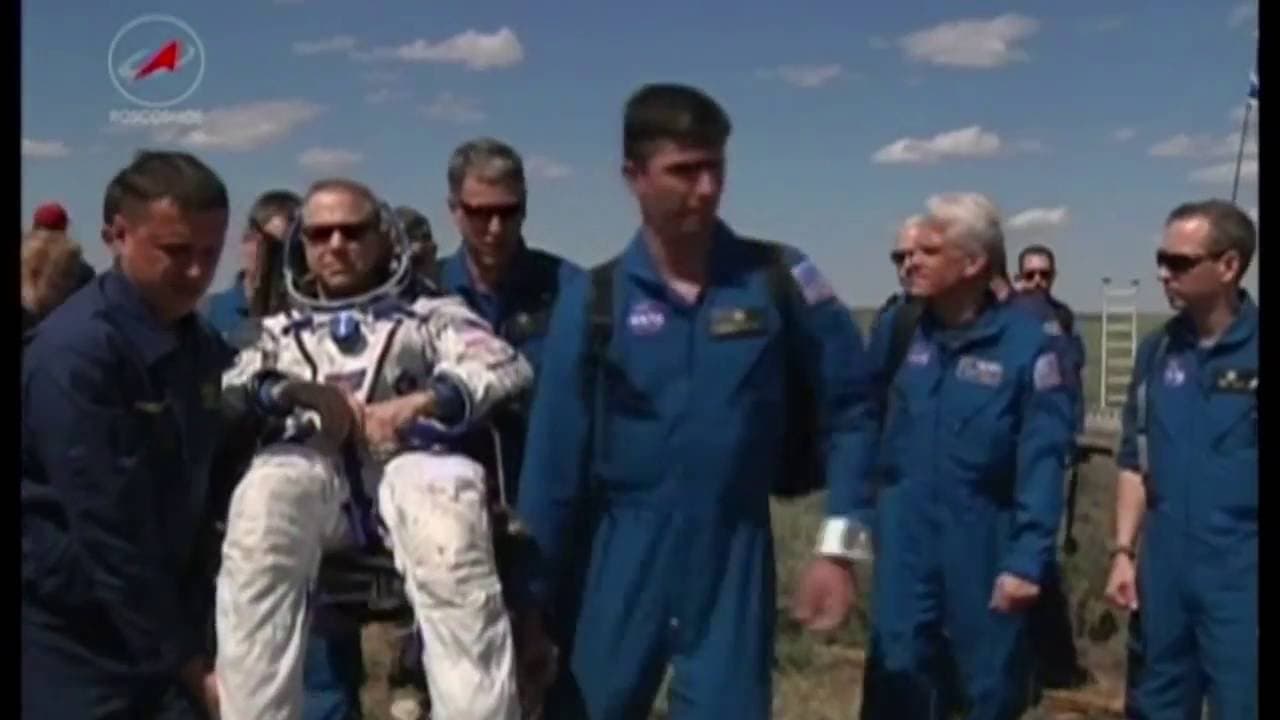
- 🥳 Astronauts from Expedition 47 safely returned to Earth after spending 186 days on the International Space Station.
- 👾 NASA is preparing for the next space mission to the International Space Station with the qualification training of the upcoming crew members.
- 👶 NASA will be conducting a crucial test for its new Space Launch System rocket on June 28th, 2016.
- 🌊 Langley Research Center is simulating water impact tests to prepare for the landing of the Orion spacecraft in various sea conditions.
- 🎟️ The upper dome of a Boeing Starliner spacecraft has arrived at NASA's Kennedy Space Center, which will be part of the development process for commercial crew missions.
Install to Summarize YouTube Videos and Get Transcripts
Explore YouTube Video Summarizer or Get YouTube Transcript Extractor
Questions & Answers
Q: How did NASA discover the youngest fully formed exoplanet?
The planet was discovered using NASA's Kepler Space Telescope and the W. M. Keck Observatory on Mauna Kea, Hawaii.
Q: How old is the newly discovered exoplanet compared to Earth?
The newfound exoplanet is only 5 to 10 million years old, while Earth is around 4.5 billion years old.
Q: Did the astronauts from Expedition 47 safely return to Earth?
Yes, Tim Kopra, Yuri Malenchenko, and Tim Peake, who spent 186 days on the International Space Station, landed safely in Kazakhstan on June 18th, 2016.
Q: Which astronauts are scheduled to launch for a four-month mission to the International Space Station?
NASA's Kate Rubins, Roscosmos' Anatoly Ivanishin, and the Japan Aerospace Exploration Agency's Takuya Onishi are set to launch on July 6th, 2016.
Summary & Key Takeaways
-
NASA astronomers have detected the youngest fully formed exoplanet using the Kepler Space Telescope and Keck Observatory.
-
The newfound planet is slightly larger than Neptune and completes an orbit around its star every five days.
-
This "newborn" planet is only 5 to 10 million years old, significantly younger than Earth.
Read in Other Languages (beta)
Share This Summary 📚
Summarize YouTube Videos and Get Video Transcripts with 1-Click
Try YouTube Summary with ChatGPT & Claude or YouTube Transcript Generator
Explore More Summaries from NASA 📚

Summarize YouTube Videos and Get Video Transcripts with 1-Click
Try YouTube Summary with ChatGPT & Claude or YouTube Transcript Generator