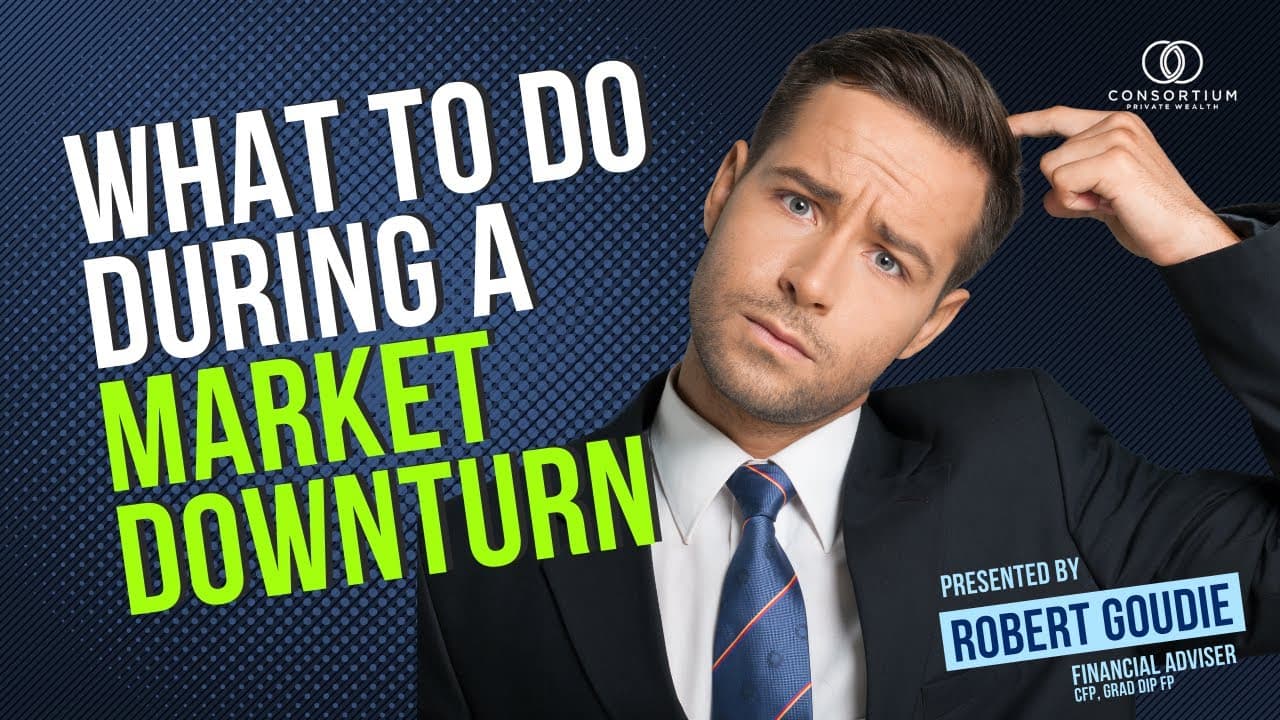
What should you do during a market downturn?
TL;DR
Market volatility is normal, and corrections and crashes are common occurrences. It's important to understand that short-term market movements are driven by fear and greed, while long-term market performance is influenced by increasing revenue and profit.
Transcript
g'day and welcome to this week's video my name is rob gowdy from consorting private wealth and this week i thought i'd put together a a quick presentation on market volatility and yeah what we should do during market downturns what causes them how we react and yeah what we do when we're listening to the media and and looking at our portfolios so it... Read More
Key Insights
- ❓ Corrections and crashes are regular occurrences in the market, happening approximately every two years.
- 🔉 The media often amplifies market volatility for better viewership, increasing anxiety among investors.
- 😄 Understanding and focusing on the long-term strategies of the businesses you invest in can provide confidence and ease anxieties during market downturns.
- 👀 Looking at share prices alone without understanding the underlying business's fundamentals does not provide valuable insight.
- 🥺 Holding onto long-term investment strategies, avoiding emotional selling, and selectively buying during market dips can lead to better investment outcomes.
- ✳️ Market volatility does not equate to risk; it is a normal part of market fluctuations.
- 🥹 Holding adequate cash reserves can prevent the need to sell profitable assets during market downturns.
- 🍉 Comparing the performance of businesses to term deposits over the long term demonstrates the potential for higher returns in the market.
Install to Summarize YouTube Videos and Get Transcripts
Explore YouTube Video Summarizer or Get YouTube Transcript Extractor
Questions & Answers
Q: Why do market corrections and crashes happen?
Corrections and crashes can be caused by geopolitical risks, overvaluation of markets, and investors' fear or greed. However, the specific reason for a crash is not crucial, as they are normal and will continue to occur.
Q: What should I do when the market corrects or crashes?
Selling when the market is down due to emotional investing is the worst option. Instead, it is advisable to hold onto long-term investment strategies. For those with cash reserves, buying high-quality businesses at lower prices can be a good option.
Q: How can I avoid becoming overly anxious about market movements?
Checking your portfolio too often can be psychologically exhausting and lead to unnecessary stress. Instead, focus on understanding the businesses you invest in by reading their presentations, CEO letters, and other relevant information.
Q: What is the significance of long-term investing?
It is essential to remember that investment time frames extend beyond retirement age. By considering life expectancy, which often reaches the 90s, investors can understand the significance of a long-term approach and not be swayed by short-term market fluctuations.
Summary & Key Takeaways
-
Market volatility and corrections happen frequently, with a technical correction occurring when the market declines by 10% or more.
-
The media often amplifies market volatility, which can cause anxiety and potentially lead to poor investment decisions.
-
Understanding the businesses you invest in and their long-term strategies can provide confidence and help you make rational investment decisions.
Read in Other Languages (beta)
Share This Summary 📚
Summarize YouTube Videos and Get Video Transcripts with 1-Click
Try YouTube Summary with ChatGPT & Claude or YouTube Transcript Generator
Explore More Summaries from Investor Motivation 📚





Summarize YouTube Videos and Get Video Transcripts with 1-Click
Try YouTube Summary with ChatGPT & Claude or YouTube Transcript Generator