Spanish vs. Portuguese - QUICK tricks to help you switch!
TL;DR
Learn 10 tricks to switch from Spanish to Portuguese.
Transcript
if you speak spanish and think you will be effortlessly able to switch to portuguese i've got news for you it ain't that easy yes the two languages have a lot in common but there are some major differences that trip up my spanish speaking students all the time so in this video i'm going to show you 10 quick tricks that are going to help you switch ... Read More
Key Insights
- Switching from Spanish to Portuguese isn't as easy as it seems; specific tricks can help avoid common mistakes.
- Replacing common Spanish filler words with their Portuguese equivalents can significantly improve language fluency.
- Understanding the differences in present continuous tense usage between Spanish and Portuguese is crucial for effective communication.
- Spanish verb endings often differ from Portuguese, requiring learners to adapt their conjugation habits.
- Portuguese pronunciation involves unique sounds and letter usage, such as the 'g' and 'e' combination, which differs from Spanish.
- Writing in Portuguese requires attention to detail, such as using 'e' instead of 'y' for the word 'and'.
- The future tense in Portuguese is simpler than in Spanish, often omitting extra letters that are unnecessary.
- Many Spanish words with double 'l' change to 'ch' in Portuguese, requiring learners to adjust their spelling habits.
Install to Summarize YouTube Videos and Get Transcripts
Explore YouTube Video Summarizer or Get YouTube Transcript Extractor
Questions & Answers
Q: What is the main purpose of the video?
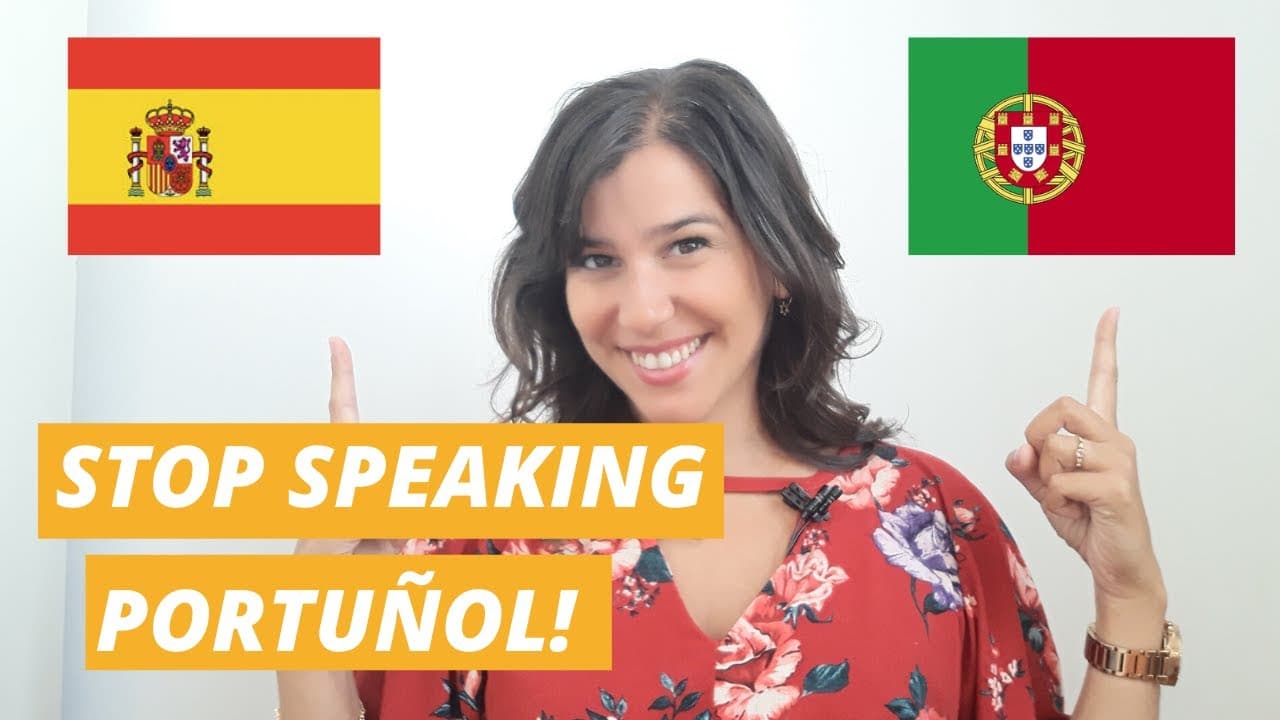
The main purpose of the video is to help Spanish speakers transition to Portuguese by providing ten quick tricks that address common language differences. These tricks focus on vocabulary, grammar, and pronunciation, aiming to prevent the mix of Spanish and Portuguese, known as 'Portuñol'.
Q: What are some key vocabulary differences between Spanish and Portuguese?
Key vocabulary differences include replacing Spanish filler words like 'pero' with Portuguese equivalents such as 'mash' and 'desh'. Additionally, the word 'and' is written as 'e' in Portuguese instead of the Spanish 'y'. These changes help Spanish speakers sound more Portuguese.
Q: How do the present continuous tenses differ in Spanish and Portuguese?
In Spanish, the present continuous tense is formed using the structure 'estoy hablando'. In Portuguese, Brazilians use a similar structure, 'está falando', but in Portugal, the tense is formed by conjugating 'estar' and adding the infinitive of the action, making it distinct from Spanish.
Q: What are some pronunciation tips for Portuguese learners?
Pronunciation tips include understanding that the 'g' sound before 'e' or 'i' in Portuguese is a 'z' sound, unlike the 'h' sound in Spanish. Additionally, the 'e' at the end of words in European Portuguese is a closed sound, and learners should avoid the Spanish pronunciation.
Q: How does the future tense differ between Spanish and Portuguese?
The future tense in Portuguese is simpler than in Spanish. Learners should remove the extra 'a' present in Spanish verbs, making the Portuguese construction more straightforward. This adjustment helps avoid the common mistake of speaking 'Portuñol'.
Q: What are some common spelling differences between Spanish and Portuguese?
Common spelling differences include dropping the 'i' in words like 'fiesta' (Spanish) to 'festa' (Portuguese). Also, Spanish words with double 'l', such as 'llover', become 'chover' in Portuguese, requiring learners to adapt their spelling habits for accurate communication.
Q: What resources does the video offer for further learning?
The video offers a free pronunciation guide and Portuguese lesson for beginners, accessible via provided links. These resources aim to enhance learners' pronunciation skills and overall language proficiency, helping them speak Portuguese like a pro and avoid common mistakes.
Q: How does the video address the issue of 'Portuñol'?
The video addresses 'Portuñol' by educating Spanish speakers on the critical differences between Spanish and Portuguese. By learning specific language tricks and pronunciation tips, learners can avoid mixing the two languages and speak Portuguese more accurately and confidently.
Summary & Key Takeaways
-
The video provides ten quick tricks to help Spanish speakers transition to Portuguese by highlighting key differences in vocabulary, grammar, and pronunciation. It emphasizes the importance of adapting to Portuguese-specific language rules to avoid common errors.
-
Pronunciation tips, such as the 'g' sound in front of 'e' or 'i', and writing differences like using 'e' instead of 'y', are discussed to help learners sound more Portuguese. The video also offers resources for improving pronunciation and understanding fast Portuguese.
-
The video aims to prevent 'Portuñol', a mix of Spanish and Portuguese, by educating learners on critical distinctions between the languages. It encourages viewers to practice these tricks and offers additional resources for further learning.
Read in Other Languages (beta)
Share This Summary 📚
Summarize YouTube Videos and Get Video Transcripts with 1-Click
Try YouTube Summary with ChatGPT & Claude or YouTube Transcript Generator
Explore More Summaries from Talk the Streets 📚


![Practice Portuguese with Mixologist Fábio Guerreiro! [English & Portuguese Subtitles] thumbnail](/_next/image?url=https%3A%2F%2Fi.ytimg.com%2Fvi%2F1-T2PNWuiWY%2Fhqdefault.jpg&w=750&q=75)
Summarize YouTube Videos and Get Video Transcripts with 1-Click
Try YouTube Summary with ChatGPT & Claude or YouTube Transcript Generator