Fed Raises Interest Rates... What Happens Now?
TL;DR
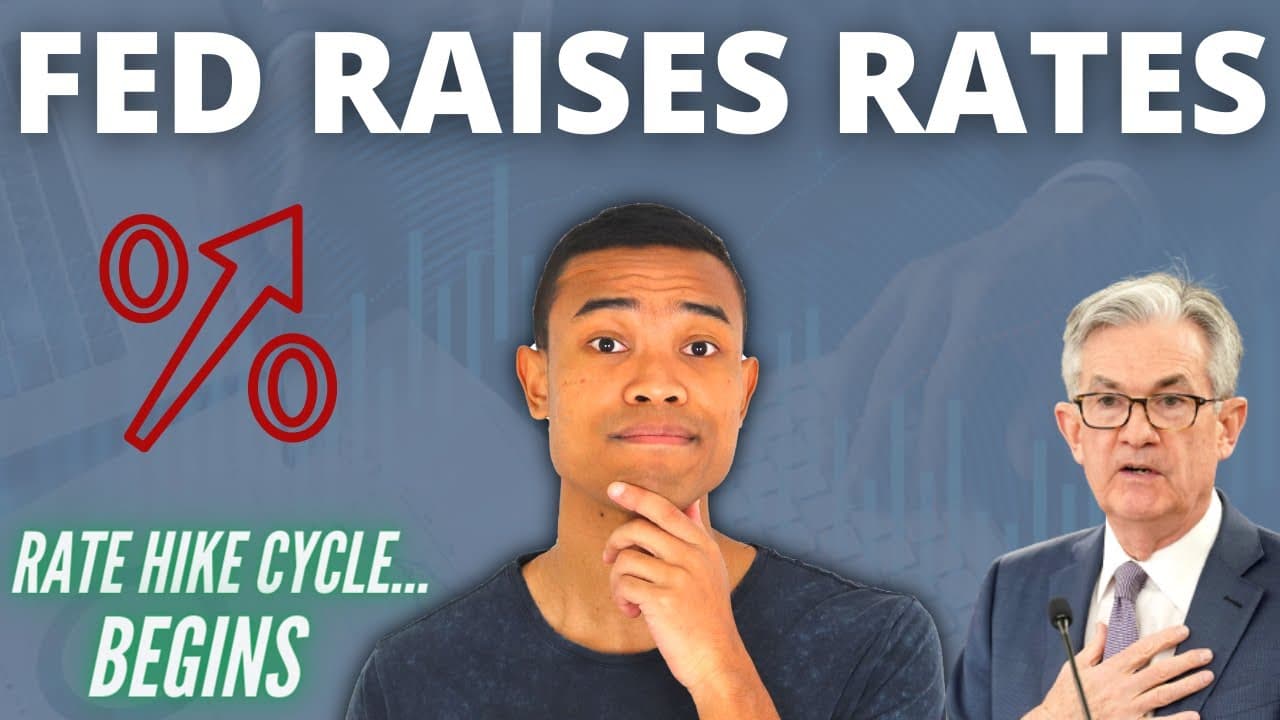
The Federal Reserve has increased interest rates for the first time since 2018 in an effort to curb high inflation. The rate hike is aimed at reducing spending by raising borrowing costs, but there are uncertainties regarding its impact on the market and potential recession risks.
Transcript
so by now you've read the headlines the federal reserve has lifted the interest rates this is their first rate rise of the cycle the first one since 2018. and you might be wondering why have they looked to raise rates what are they aiming to do and how will this help to curtail the inflation what are the potential implications for market as well as... Read More
Key Insights
- ✋ Inflation has reached record highs due to supply chain issues and lockdowns.
- 🤨 The Federal Reserve's decision to raise interest rates aims to curtail spending and bring down persistent inflation.
- ☠️ The dot plot suggests a gradual increase in rates to reach a neutral rate of 2.5-3%.
- 🤨 Achieving a soft landing is crucial, as raising rates too quickly could lead to a recession.
- ❓ The market initially reacted strongly but later experienced a rally, although uncertainties about a potential recession persist.
- 💝 The timing and success of sticking the soft landing is uncertain, with debates on whether it has been done at the right time or too late.
- 🤩 The economy's ability to navigate this period and achieve sustainable inflation levels is a key concern for investors, analysts, and economists.
- ☠️ The Federal Reserve's rate hike is the first of many, indicating an ongoing cycle with future rate increases.
Install to Summarize YouTube Videos and Get Transcripts
Explore YouTube Video Summarizer or Get YouTube Transcript Extractor
Questions & Answers
Q: Why did the Federal Reserve raise interest rates?
The rate hike was implemented to address high inflation levels caused by supply chain issues and lockdown restrictions. By increasing borrowing costs, the Federal Reserve aims to reduce spending and bring down inflation to a sustainable level.
Q: How many rate hikes are expected in the coming years?
According to the Federal Reserve's dot plot, six rate hikes are forecasted for 2022, followed by four more in 2023. This gradual increase is intended to reach a neutral rate of 2.5-3%.
Q: What are the potential implications of the rate hike on the market?
The market initially reacted strongly to the rate hike but later saw a significant rally. However, uncertainties remain, including concerns about a potential recession and the ability to achieve a soft landing with controlled inflation.
Q: How do rate hikes affect the economy?
Rate hikes increase the cost of borrowing, which is passed on by banks to customers. This reduces the amount of available capital for spending, leading to lower economic growth. The aim is to control inflation, but the challenge lies in achieving a soft landing without causing a recession.
Summary & Key Takeaways
-
Inflation has reached record highs due to supply chain bottlenecks and lockdowns, leading to the Federal Reserve's decision to raise interest rates.
-
The rate hike is a response to persistent inflation and aims to curtail spending by increasing borrowing costs.
-
The Federal Reserve's dot plot indicates a forecast of six rate hikes in 2022 and four more in 2023 to reach a neutral rate of 2.5-3%.
Read in Other Languages (beta)
Share This Summary 📚
Summarize YouTube Videos and Get Video Transcripts with 1-Click
Try YouTube Summary with ChatGPT & Claude or YouTube Transcript Generator
Explore More Summaries from ASX Investor 📚




Summarize YouTube Videos and Get Video Transcripts with 1-Click
Try YouTube Summary with ChatGPT & Claude or YouTube Transcript Generator