How To Make Faster And Better Business Decisions
TL;DR
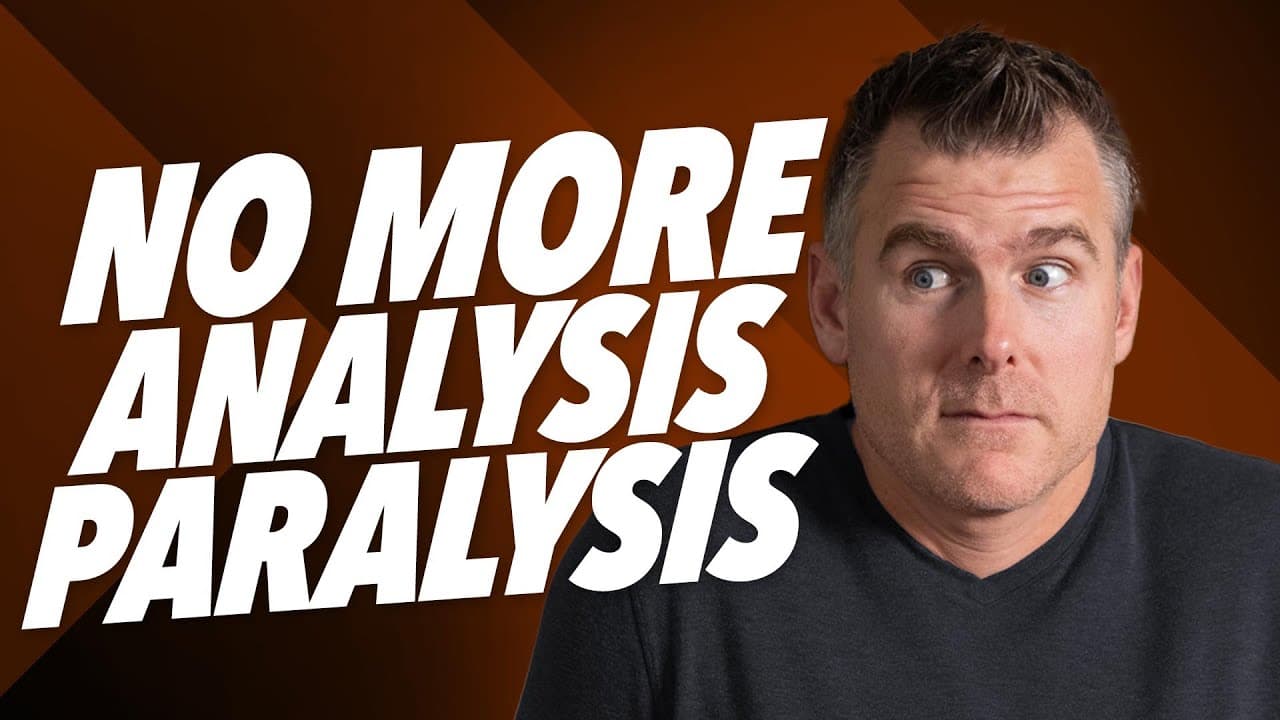
Learn to make faster, better business decisions using proven frameworks.
Transcript
- You'll drag your feet, you'll see opportunity. Somebody will email you and say, hey, I wanna be your partner and I wanna promote, I've got 100 customers ready for you to go, and you're gonna be slow to respond. (upbeat music) Today I wanna talk to you about how to avoid missed opportunities. Literally the amount of times that people drag their fe... Read More
Key Insights
- Effective decision-making is crucial for business growth, as delays can lead to missed opportunities and stagnation.
- Jeff Bezos' Type 1 and Type 2 decision framework helps distinguish between reversible and irreversible decisions.
- Fear often stems from false beliefs; understanding this can help mitigate decision-making anxiety.
- Evaluating the potential upside and downside of decisions aids in making informed, strategic choices.
- Delegating responsibilities can alleviate decision-making pressure and promote business growth.
- Separating marketing, sales, and fulfillment roles prevents bottlenecks and fosters efficient operations.
- Identifying activities that cause stress or fear allows for strategic delegation and improved focus on growth.
- Future living involves managing emotions rather than time, enabling better decision-making and productivity.
Install to Summarize YouTube Videos and Get Transcripts
Explore YouTube Video Summarizer or Get YouTube Transcript Extractor
Questions & Answers
Q: What is the significance of Jeff Bezos' decision-making framework?
Jeff Bezos' decision-making framework, which categorizes decisions into Type 1 and Type 2, is significant because it helps business leaders differentiate between irreversible and reversible decisions. This distinction allows for faster decision-making by reducing the time spent on decisions that can be easily reversed, thus promoting agility and growth.
Q: How can understanding fear improve decision-making?
Understanding fear as 'false evidence appearing real' can improve decision-making by helping individuals recognize that their fears are often based on unfounded beliefs. By identifying and challenging these beliefs, decision-makers can reduce anxiety and make more rational, confident decisions, leading to better outcomes for their businesses.
Q: Why is it important to evaluate the upside and downside of decisions?
Evaluating the upside and downside of decisions is important because it provides a clear understanding of the potential risks and rewards involved. This analysis helps decision-makers assess whether the potential benefits outweigh the risks, enabling them to make informed, strategic choices that align with their business goals and risk tolerance.
Q: What role does delegation play in decision-making?
Delegation plays a crucial role in decision-making by distributing responsibilities among team members, which reduces the pressure on a single individual. This approach allows leaders to focus on high-priority decisions while empowering others to handle routine tasks, leading to increased efficiency, faster decision-making, and overall business growth.
Q: How does separating roles in marketing, sales, and fulfillment benefit a business?
Separating roles in marketing, sales, and fulfillment benefits a business by preventing bottlenecks and ensuring that each function operates at full capacity. This separation allows each department to push for growth without being hindered by the limitations or workload of other departments, resulting in more efficient operations and improved business performance.
Q: What is the concept of future living in decision-making?
The concept of future living in decision-making involves managing emotions rather than time. By envisioning a future state and aligning actions to achieve it, individuals can maintain focus and motivation. This approach helps reduce stress, improve emotional management, and enhance decision-making, ultimately leading to better outcomes in both personal and professional contexts.
Q: How can identifying stress-inducing activities improve decision-making?
Identifying stress-inducing activities can improve decision-making by allowing individuals to delegate or manage these tasks more effectively. By reducing the emotional burden associated with these activities, decision-makers can focus on strategic priorities, make clearer decisions, and enhance their overall productivity and well-being.
Q: What is the impact of decision fatigue on business growth?
Decision fatigue can negatively impact business growth by slowing down the decision-making process and leading to suboptimal choices. When leaders are overwhelmed by constant decision-making, they may experience reduced cognitive function and increased stress, hindering their ability to make effective, timely decisions that drive business success.
Summary & Key Takeaways
-
The video emphasizes the importance of quick decision-making in business to avoid missed opportunities. It introduces Jeff Bezos' Type 1 and Type 2 decision framework, which helps distinguish between reversible and irreversible decisions, aiding in faster decision-making.
-
Fear is often based on false beliefs, and understanding this can help overcome decision-making anxiety. The video also discusses evaluating the potential upside and downside of decisions, which aids in making informed, strategic choices.
-
Delegating responsibilities can alleviate decision-making pressure and promote business growth. By separating marketing, sales, and fulfillment roles, businesses can prevent bottlenecks and foster efficient operations, leading to increased productivity and growth.
Read in Other Languages (beta)
Share This Summary 📚
Summarize YouTube Videos and Get Video Transcripts with 1-Click
Try YouTube Summary with ChatGPT & Claude or YouTube Transcript Generator
Explore More Summaries from Dan Martell 📚




Summarize YouTube Videos and Get Video Transcripts with 1-Click
Try YouTube Summary with ChatGPT & Claude or YouTube Transcript Generator