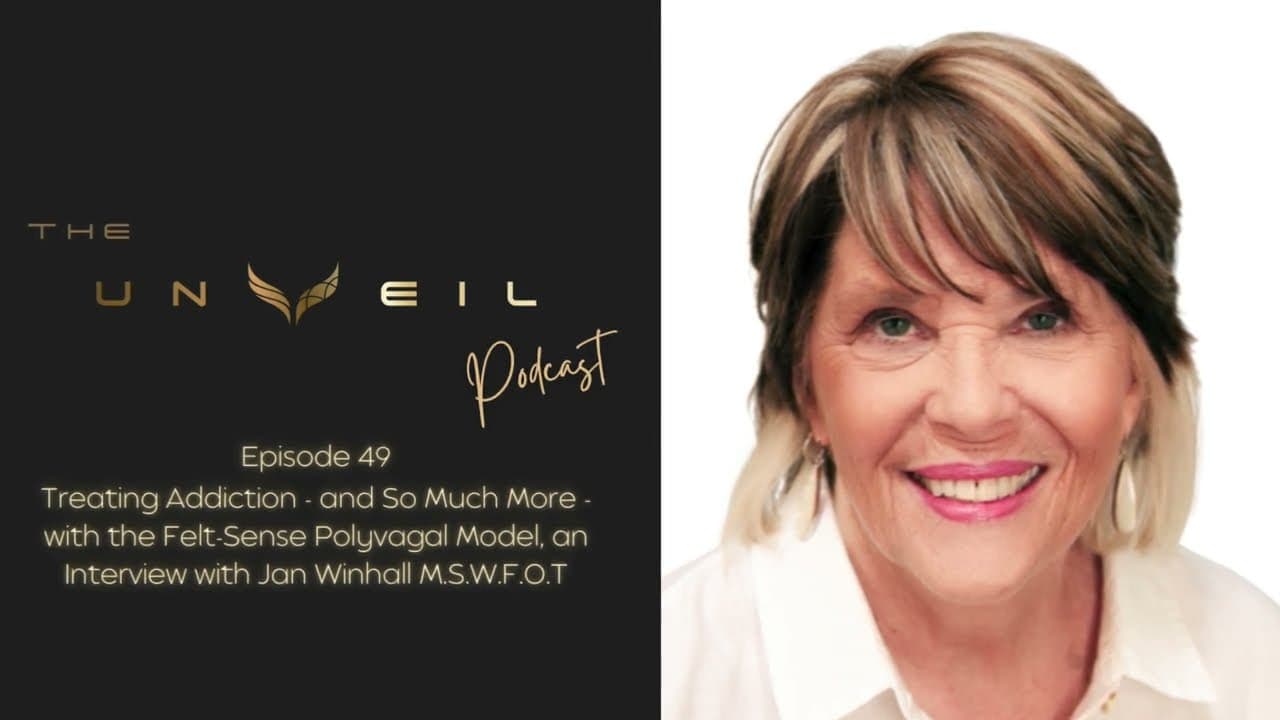
Treating Addiction, & Much More, Using the Felt Sense Polyvagal Model - with Jan Winhall, Ep #49
TL;DR
Psychotherapist Jan Winhall discusses her Feltsense Polybagon Model, which explains how trauma and addiction impact the autonomic nervous system. The model emphasizes the importance of understanding the body's responses to trauma and using intentional self-care to regulate the nervous system.
Transcript
on today's episode of the young Veil podcast I sit down and have an immensely valuable chat with Jan winhall Jan is an author teacher and psychotherapist she is an adjunct lecturer in the Department of Social Work University of Toronto Jan is director of focusing on Borden a Psychotherapy and Training Center she's partnered with the polyvagal Insti... Read More
Key Insights
- 😟 Trauma and addiction can dysregulate the autonomic nervous system, leading to maladaptive responses and addictive behaviors.
- 😟 The Feltsense Polybagon Model emphasizes the importance of understanding the body's responses to trauma and addiction and using intentional self-care to regulate the nervous system.
- 😟 The model recognizes the different branches of the autonomic nervous system, including flock (social engagement), fight/flight, freeze, and collapse, and their contributions to addictive behaviors.
- 😟 Practicing self-care, seeking social connection, and engaging in therapeutic techniques such as focusing or somatic experiencing can help regulate the nervous system and reduce addictive behaviors.
Install to Summarize YouTube Videos and Get Transcripts
Explore YouTube Video Summarizer or Get YouTube Transcript Extractor
Questions & Answers
Q: What is the Feltsense Polybagon Model?
The Feltsense Polybagon Model is a framework developed by Jan Winhall that explores the relationship between trauma, addiction, and the autonomic nervous system. It emphasizes the importance of understanding the body's responses to trauma and addiction and using intentional self-care to regulate the nervous system.
Q: How does the model explain the impact of trauma and addiction on the autonomic nervous system?
The model recognizes that trauma and addiction can dysregulate the autonomic nervous system, leading to various responses such as fight/flight, freeze, and collapse. These responses may become maladaptive and addictive as individuals seek relief and regulation through self-harming behaviors or substance use.
Q: How can individuals use this model to regulate their nervous system and reduce addictive behaviors?
The model encourages individuals to become aware of their internal state and to practice self-care strategies that promote safety and regulation. This may include engaging in activities that promote a sense of groundedness, seeking social connection, and using therapeutic techniques such as focusing or somatic experiencing.
Q: Can this model be applied to individuals with different types of addiction?
Yes, the model can be applied to individuals with various types of addiction, as it focuses on the underlying mechanisms and responses of the autonomic nervous system. Whether it is substance addiction, behavioral addiction, or complex trauma-related addiction, understanding the body's responses and implementing self-regulation techniques can be beneficial for individuals dealing with any type of addiction.
Key Insights:
- Trauma and addiction can dysregulate the autonomic nervous system, leading to maladaptive responses and addictive behaviors.
- The Feltsense Polybagon Model emphasizes the importance of understanding the body's responses to trauma and addiction and using intentional self-care to regulate the nervous system.
- The model recognizes the different branches of the autonomic nervous system, including flock (social engagement), fight/flight, freeze, and collapse, and their contributions to addictive behaviors.
- Practicing self-care, seeking social connection, and engaging in therapeutic techniques such as focusing or somatic experiencing can help regulate the nervous system and reduce addictive behaviors.
- Awareness of one's internal state and intentional grounding practices are key elements in using the model to regulate the nervous system and create a sense of safety in the face of trauma and addiction.
Summary & Key Takeaways
-
Jan Winhall, a psychotherapist and author, shares her Feltsense Polybagon Model, which explores the connection between trauma, addiction, and the autonomic nervous system.
-
The model emphasizes the importance of recognizing the body's responses to trauma and addiction and using intentional practices to regulate the nervous system.
-
Winhall discusses the different branches of the autonomic nervous system, including flock (social engagement), fight/flight, freeze, and collapse, and how they contribute to addictive behaviors.
-
The model encourages individuals to identify their internal state, practice self-care, and create a sense of safety in order to regulate their nervous system and reduce addictive behaviors.
Read in Other Languages (beta)
Share This Summary 📚
Summarize YouTube Videos and Get Video Transcripts with 1-Click
Try YouTube Summary with ChatGPT & Claude or YouTube Transcript Generator