Is civility dead?
TL;DR
Civility is essential for healthy discourse, transcending mere politeness.
Transcript
you're tuned in to the Andrew Lon show I wanted to Pivot to another issue here and this is one not connected to any news of the day not connected to politics but well I shouldn't say not connected to politics not directly connected to politics and political news but I think it underlies a lot of the problems we see in our political system uh one of... Read More
Key Insights
- 🫡 Civility involves more than just polite behavior; it is rooted in genuine respect and understanding for different perspectives.
- 🥺 The societal divide highlighted by cancel culture hinders effective communication, leading to increased hostility and isolation.
- 💢 Historical exploration of civility reveals how foundational principles have persisted across cultures and eras despite changing etiquette.
- 🤗 Individuals have the power to influence social norms by encouraging open dialogue and meaningful interactions within their communities.
- 🏛️ Hudson argues that defining ourselves through civility can help build trust and repair damaged relationships in society.
- 🫷 The push for politeness can sometimes suppress authentic engagement, as it may prioritize appearances over substance in discussions.
- 🫡 Engaging in community-building initiatives can significantly contribute to the revival of civility and respect in public discourse.
Install to Summarize YouTube Videos and Get Transcripts
Explore YouTube Video Summarizer or Get YouTube Transcript Extractor
Questions & Answers
Q: What is the main argument of Alexander Hudson's book regarding civility?
Alexander Hudson argues that civility goes beyond politeness. While politeness often involves surface-level manners, true civility requires a genuine respect for others. Hudson emphasizes that civility is about fostering meaningful discussions and relationships, even when stakes are high, rather than conforming to superficial standards of etiquette.
Q: How does the concept of civility differ across cultures, according to Hudson’s research?
Hudson's research indicates that while specific manners and etiquette can vary significantly across cultures and history, the underlying principles of civility—such as respect and restraint—are universal. These timeless principles facilitate cooperation and understanding among people, regardless of cultural background, and can be seen in historical texts that emphasize the importance of civil discourse.
Q: What personal experiences led Hudson to explore the topic of civility?
Hudson recounts being raised in a family attuned to social norms by her mother, which instilled in her a desire to understand the "why" behind these norms. Her experiences in politics, where she observed both hostile and superficially polite environments, highlighted the disconnect between outward manners and true respect for others, motivating her exploration of civility.
Q: According to Hudson, how can individuals contribute to restoring civility in society?
Hudson asserts that individuals play a crucial role in restoring civility by engaging in their communities, fostering relationships, and exercising hospitality. By choosing to initiate honest and respectful discussions, even in informal settings like porches or coffee shops, individuals can break down barriers, build trust, and counteract the divisiveness pervading larger political contexts.
Q: Why does Hudson believe that the norms of politeness can be problematic?
Hudson argues that an overemphasis on politeness can lead to superficial interactions that mask hypocrisy and insincerity. When politeness becomes the primary focus, genuine respect and substantive engagement can suffer, resulting in a society that avoids difficult conversations rather than addressing them with authenticity and honesty.
Q: What role does Hudson suggest hospitality plays in civility?
Hudson suggests that hospitality is a vital expression of civility, as it creates environments where open discussions can flourish. By welcoming others into our spaces—whether literal or metaphorical—we cultivate trust and understanding, enabling us to navigate differences and disagreements in a respectful and constructive manner.
Q: How does Hudson relate her insights on civility to contemporary political discourse?
Hudson connects her insights to the current political landscape by emphasizing that the animosity seen in politics mirrors a broader societal issue. The need for genuine civility is crucial for bridging the divides created by cancel culture and polarized discussions. Hudson advocates for personal accountability in cultivating civility, rather than blaming public leaders for the issues at hand.
Summary & Key Takeaways
-
The content discusses the significance of civility in political and social discourse, highlighting the rift in communication between differing political and social groups, exacerbated by cancel culture and politeness without respect.
-
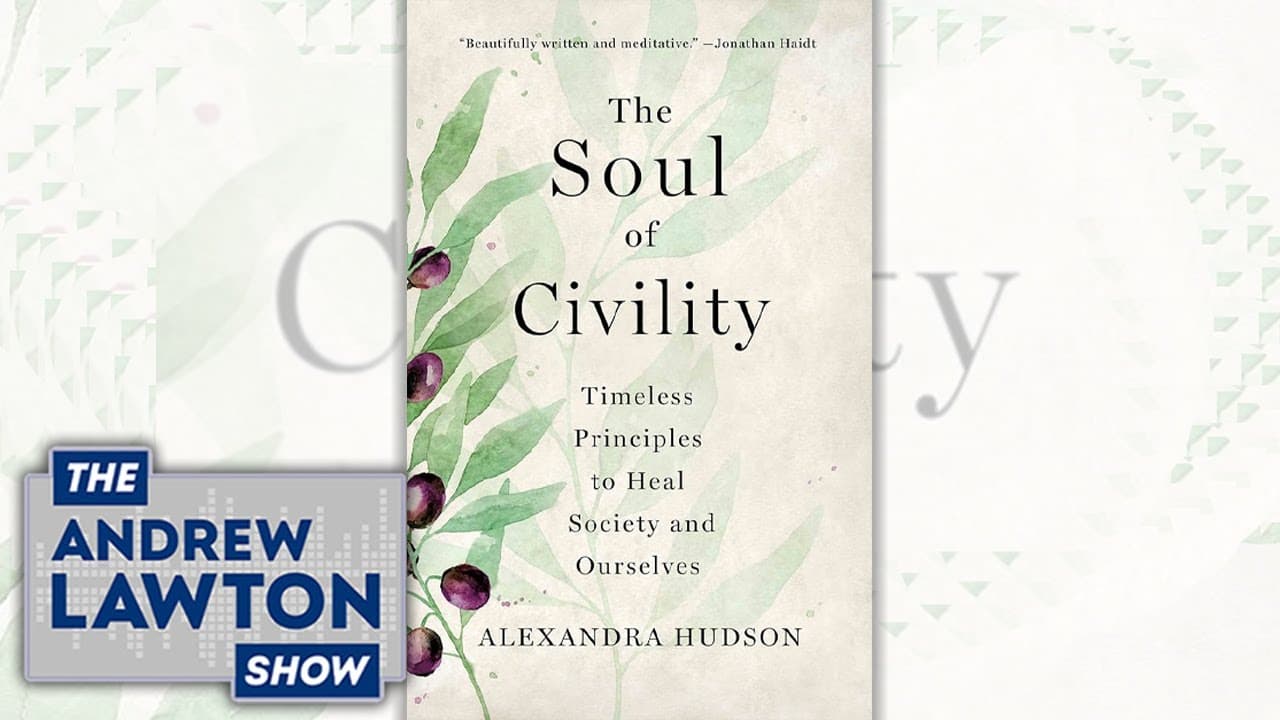
Alexander Hudson's book, "The Soul of Civility," argues for a distinction between civility and politeness, emphasizing that true civility involves genuine respect for others rather than mere adherence to social norms or manners.
-
Hudson shares personal experiences from her political work and insights on fostering community and trust through meaningful relationships and dialogue, encouraging individuals to take responsibility for restoring civility in society.
Read in Other Languages (beta)
Share This Summary 📚
Summarize YouTube Videos and Get Video Transcripts with 1-Click
Try YouTube Summary with ChatGPT & Claude or YouTube Transcript Generator
Explore More Summaries from True North 📚






Summarize YouTube Videos and Get Video Transcripts with 1-Click
Try YouTube Summary with ChatGPT & Claude or YouTube Transcript Generator