America's Double Game With Pakistan Explained By Expert Sarjan Shah
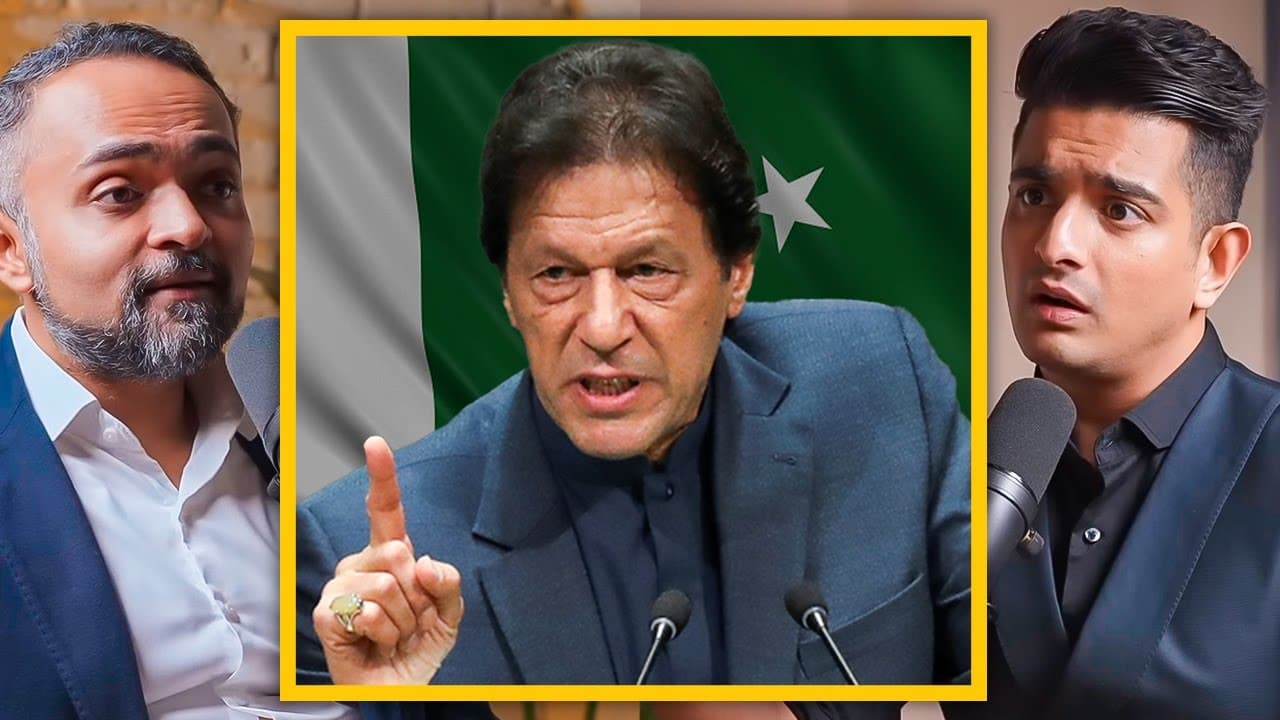
TL;DR
A detailed exploration of US-Pakistan relations and its historical impact on Afghanistan and Bangladesh.
Transcript
The Narrative I have got about Pakistan until this point is that uh up till the time of the cargil war they were heavily kind of wink wink supported by America over all those years in order to build a strong opponent against the rising power of India so what could we have done to take on America back in the 1970s yeah I mean uh okay so there's a lo... Read More
Key Insights
- 🔄 The US utilized Pakistan strategically during the Cold War to counter India, altering regional dynamics significantly.
- 🍉 The aftermath of the Afghan-Soviet War fostered long-term ramifications, creating a complex relationship filled with mutual dependency and mistrust.
- 🇵🇰 The post-9/11 era deepened the US-Pakistan partnership, but also highlighted the challenges of managing extremist factions within Pakistan.
- 🍻 Internal instability in Pakistan today links back to decades of US policies that inadvertently fostered militant ideologies.
- 😮 Extremism poses increasing risks to Pakistan’s governance, with the rise of groups like the Pakistani Taliban threatening state control.
- 📡 Imran Khan's political ascent indicates a broader acceptance of Islamist ideologies within Pakistan's political framework, signaling potential shifts in governance.
- 💠 The relationship between historical realities and conspiracy theories shapes the interpretation of political events in Bangladesh and Pakistan.
Install to Summarize YouTube Videos and Get Transcripts
Explore YouTube Video Summarizer or Get YouTube Transcript Extractor
Questions & Answers
Q: How did the Cold War shape US-Pakistan relations?
The Cold War significantly influenced US-Pakistan relations, as the US viewed Pakistan as a strategic ally against the Soviet Union and India's socialist leanings. This alliance resulted in substantial military and economic support for Pakistan, which allowed it to establish itself as a regional power and counterbalance India during the decades following independence.
Q: What was the role of Pakistan in the Afghan-Soviet War?
Pakistan played a critical role in the Afghan-Soviet War by supporting the Mujahideen fighters against the Soviet invasion with funding and training, facilitated by the United States. This collaboration contributed to the eventual withdrawal of Soviet troops from Afghanistan, while also laying the groundwork for future challenges, including the rise of the Taliban.
Q: How did Imran Khan's leadership impact Pakistan's political landscape?
Imran Khan's leadership marked a notable shift in Pakistan’s political dynamics, as he represented a political wing sympathetic to Islamist ideologies. His connections with the Pakistani Taliban signified rising extremist influence in politics, thereby altering the landscape for governance and posing risks to the secular political structure traditionally upheld in Pakistan.
Q: What consequences did US policies have for Pakistan's internal security?
US policies, particularly in Afghanistan, have led to complex consequences for Pakistan's internal security, with militant groups like the Pakistani Taliban gaining strength. The ongoing support for extremism during the Afghan conflict has resulted in increased violence and instability in regions like Khyber Pakhtunkhwa, challenging state authority and governance.
Q: Why is the relationship between the US and Pakistan described as a "double game"?
The term "double game" refers to Pakistan's ability to simultaneously assist US military operations in Afghanistan while harboring and supporting Islamist extremist groups. This duplicity has complicated the US-Pakistan relationship, as American policymakers grappled with the necessity of relying on Pakistan while acknowledging its role in undermining stability in Afghanistan.
Q: How did the fall of Sheikh Hasina relate to US influence in Bangladesh?
While there are conspiracy theories about US involvement in Sheikh Hasina’s political downfalls, it is suggested that local factors, including her authoritarian governance style and disconnect with public sentiment, played a more significant role. Any US influence seems minimal compared to the historical evidence of deeper engagement with Pakistan.
Summary & Key Takeaways
-
The historical context of US-Pakistan relations showcases how America leveraged Pakistan as a counterbalance to India during the Cold War, providing substantial military and economic aid, which facilitated Pakistan's initial economic success.
-
The narrative shifts post-9/11, as Pakistan became vital for the US in Afghanistan, leading to a complex partnership that allowed them to play a double game by supporting both US operations and extremist groups.
-
Pakistan now faces internal challenges, with the rise of extremist ideologies posing a threat, as illustrated by the political situation under Imran Khan and the prevalence of the Pakistani Taliban influencing governance.
Read in Other Languages (beta)
Share This Summary 📚
Summarize YouTube Videos and Get Video Transcripts with 1-Click
Try YouTube Summary with ChatGPT & Claude or YouTube Transcript Generator
Explore More Summaries from TRS Clips 📚





Summarize YouTube Videos and Get Video Transcripts with 1-Click
Try YouTube Summary with ChatGPT & Claude or YouTube Transcript Generator