6 Animals That Love to Steal
TL;DR
Animals have evolved to steal resources from others as a survival strategy, such as dewdrop spiders stealing food from other spiders' webs or macaques stealing from humans.
Transcript
[INTRO ♪] Surviving on this planet is tough. That’s why animals have evolved so many diverse adaptations for hunting, gathering, hoarding, and otherwise getting hold of the resources they need for themselves and their families. But there are also animals that cheat the system. They wait for others to do all that hard work and then just steal their ... Read More
Key Insights
- ❓ Kleptoparasitism is a strategy where animals steal resources from others.
- 🕷️ Dewdrop spiders have evolved from predatory spiders to specialized thieves.
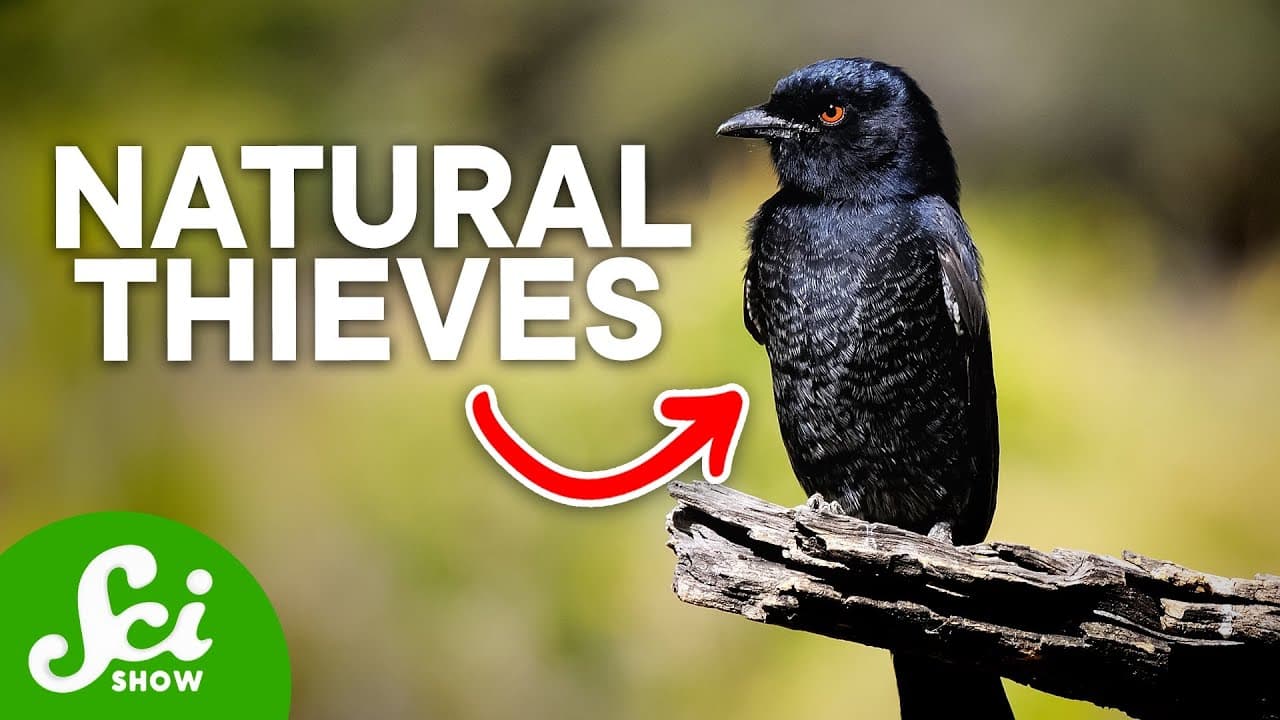
- 😋 Drongos use deception and mimicry to steal food from other animals.
- 🐝 Cuckoo bees have evolved to parasitize other bees' nests and steal their food.
- 😋 Snails and Brazilian flower flies have adapted to steal food from other species.
- 😋 Long-tailed macaques in Bali have learned to steal from humans and barter for food.
Install to Summarize YouTube Videos and Get Transcripts
Explore YouTube Video Summarizer or Get YouTube Transcript Extractor
Questions & Answers
Q: How do dewdrop spiders steal food from other spiders' webs?
Dewdrop spiders wait on other spiders' webs for the vibrations of prey being caught and wrapped up in silk. When the host spider is not looking, they make their move and steal the free, gift-wrapped meals.
Q: How do fork-tailed drongos deceive other animals to steal their food?
Fork-tailed drongos mimic the alarm calls of other species to trick animals into dropping their food and running away. They have learned to make more than 50 different calls, making their deception highly effective.
Q: How do cuckoo bees steal food from other bees?
Cuckoo bees lay their eggs in other bees' nests and their larvae kill the host bee's babies. They have thick exoskeletons and other adaptations that allow them to steal the host bee's food without getting caught.
Q: How do snails steal food from tube worms?
Snails crawl up to the head of a tube worm and grab food directly from its mouth. They strategically target worms in autumn when food is scarce, and stealing from worms allows the snails to grow up to 18 times faster.
Summary & Key Takeaways
-
Dewdrop spiders have evolved specialized thieving techniques to steal prey from other spiders' webs, using their long legs to crawl stealthily across webs for free meals.
-
Fork-tailed drongos in southern Africa have learned to lie and mimic the alarm calls of other species to scare animals into dropping their food, so they can steal it.
-
Cuckoo bees lay their eggs in other bees' nests, killing the host bee's babies and stealing their food to ensure their own survival.
-
Snails steal food directly from tube worms' mouths in the ocean, strategically targeting them when plankton is scarce.
-
Brazilian flower flies lay their eggs on sundew plants, allowing their larvae to steal captured insects as food while being protected from digestion.
Read in Other Languages (beta)
Share This Summary 📚
Summarize YouTube Videos and Get Video Transcripts with 1-Click
Try YouTube Summary with ChatGPT & Claude or YouTube Transcript Generator
Explore More Summaries from SciShow 📚
Summarize YouTube Videos and Get Video Transcripts with 1-Click
Try YouTube Summary with ChatGPT & Claude or YouTube Transcript Generator