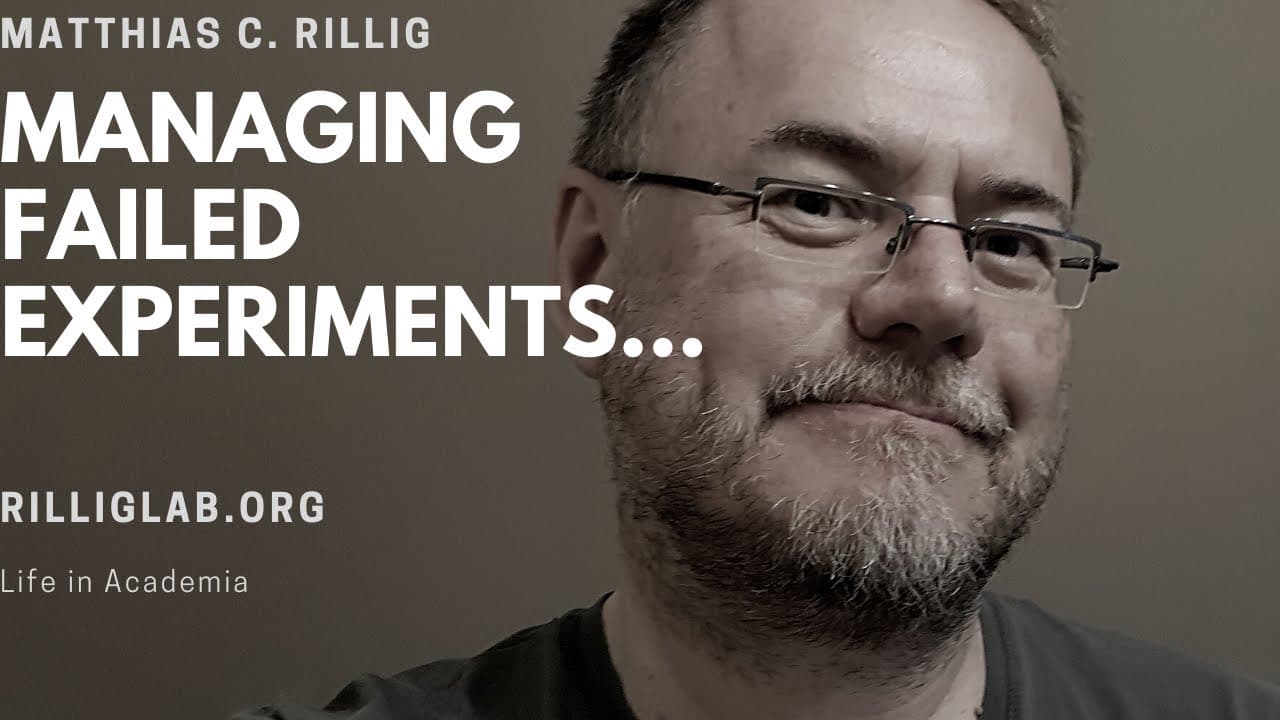
Managing failed experiments: good and bad failures. #PhD #PhDstudent #postdoc #experiments #failure
TL;DR
Failure should not be stigmatized, as it is an essential part of the experimental process and can lead to valuable insights.
Transcript
hey so let's talk about failure and experiments this is not talked about very often because when you read papers or when you go to a talk to listen to somebody's research results what you hear about is the stuff that worked what you may not realize that very often behind all the stuff or underneath all the stuff that has worked out in the end that ... Read More
Key Insights
- ❓ Failure is an integral part of the experimental process and should be embraced rather than stigmatized.
- 💦 Good failures involve trying out new ideas and learning from the results, helping researchers focus on what might work.
- 🥺 Observing unexpected outcomes in failed experiments can lead to new research directions and funding opportunities.
- 🦡 Bad failures can be avoided by careful planning, seeking input from experienced colleagues, and conducting thorough experimental designs.
- 🥺 External factors beyond researchers' control can lead to failures, but spreading risks and considering alternative approaches can minimize the impact.
- 🏃 Researchers should strive to have multiple projects running in parallel to mitigate the setbacks caused by failures.
- 🥺 Identifying intermediate milestones and salvaging valuable data from failed experiments can still lead to meaningful publications.
Install to Summarize YouTube Videos and Get Transcripts
Explore YouTube Video Summarizer or Get YouTube Transcript Extractor
Questions & Answers
Q: How can failure be beneficial in the experimental process?
Failure allows researchers to learn from their mistakes and discover new approaches or ideas that could lead to success in future experiments. It helps in refining and improving research methodologies.
Q: How can researchers avoid bad failures?
Researchers can avoid bad failures by ensuring they have a well-thought-out experimental design, consulting with experienced mentors or colleagues, and considering different perspectives outside their usual circle. Regular meetings or discussions can help identify and rectify any potential flaws.
Q: What can researchers do when experiments fail due to external factors beyond their control?
In cases where experiments fail due to external factors like equipment failure or environmental issues, researchers should spread their risk by working on multiple projects simultaneously. They can also look for potential milestones or intermediate results that can still contribute to publications or further analysis.
Q: How can failure contribute to funding opportunities?
By carefully observing failed experiments, researchers can uncover unexpected observations or angles that may lead to new research ideas. These ideas can then be formulated into research proposals, increasing the chances of securing funding.
Summary & Key Takeaways
-
Failure is often overlooked in academic research, but it is crucial for learning and making progress.
-
Good failures involve trying out new ideas and learning from the results, allowing researchers to focus on what might work.
-
Observing unexpected outcomes in failed experiments can lead to new research ideas and funding opportunities.
Read in Other Languages (beta)
Share This Summary 📚
Summarize YouTube Videos and Get Video Transcripts with 1-Click
Try YouTube Summary with ChatGPT & Claude or YouTube Transcript Generator
Explore More Summaries from Life in academia 📚




Summarize YouTube Videos and Get Video Transcripts with 1-Click
Try YouTube Summary with ChatGPT & Claude or YouTube Transcript Generator