How Does Structural Racism Manifest in Society?
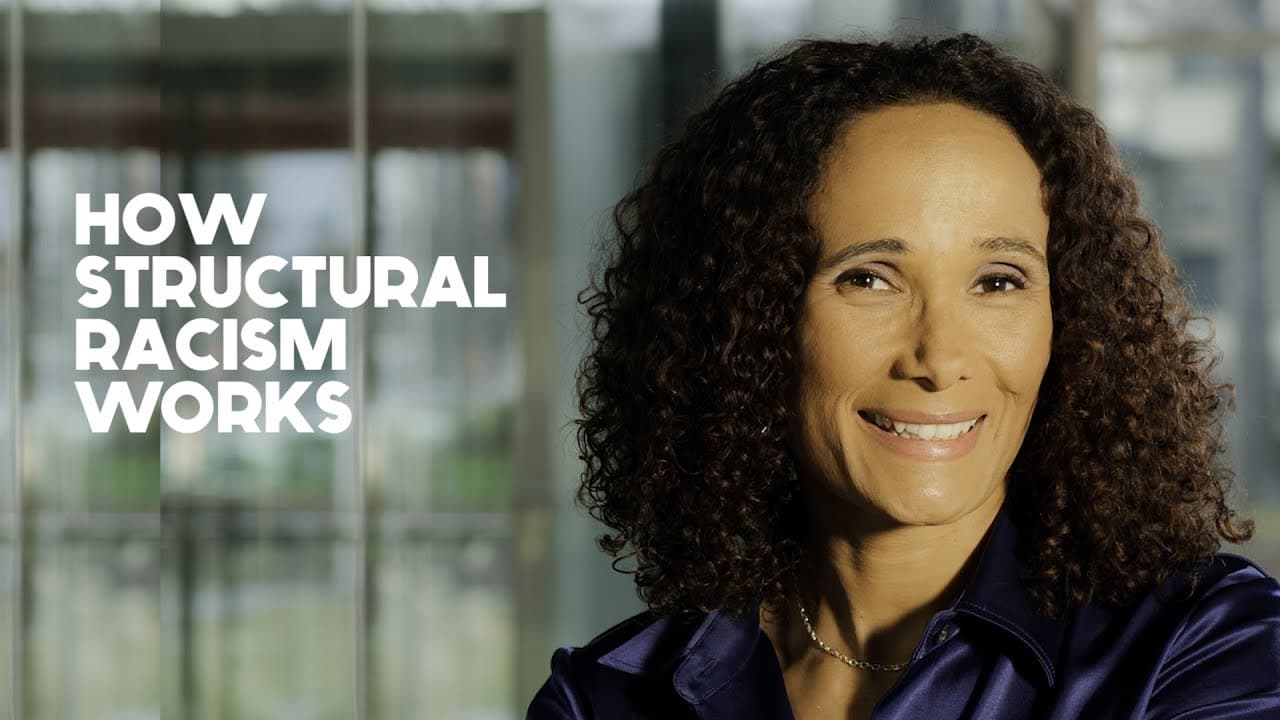
TL;DR
Structural racism is ingrained across all societal facets, resulting in systemic racial disparities in employment, education, housing, and the justice system. Colorblind ideology falsely promotes the idea that ignoring race leads to equality, obscuring ongoing discrimination and hindering policies designed to address these inequities.
Transcript
every aspect of life jobs employment wealth discrimination and education criminal justice media housing health mental health insurance agencies loans banking every aspect of life that we can think about has significant forms of elements of structural racism or shall we say evidence of racial disparity that's operating there's been a pretty explicit... Read More
Key Insights
- 👨⚖️ Structural racism permeates every aspect of society, perpetuating racial disparities in employment, wealth, education, criminal justice, and more.
- 🙈 Colorblind ideology denies the existence of structural racism and promotes the idea that ignoring race is the path to equality.
- 🖤 Public perception of racial equality is often skewed, with a significant gap between white and black respondents' views on progress and the persistence of racial disparities.
- 😀 Policies aimed at addressing structural discrimination, such as affirmative action, face opposition from colorblind ideology proponents.
- 🖐️ Housing policies, such as redlining and discrimination, have played a significant role in perpetuating racial disparities and maintaining segregated communities.
- 😒 The criminal justice system exhibits racial biases, with racial profiling, excessive use of force, and discrimination contributing to unequal treatment.
- 🎓 Education funding tied to property taxes exacerbates racial disparities and hampers equality in access to quality education.
Install to Summarize YouTube Videos and Get Transcripts
Explore YouTube Video Summarizer or Get YouTube Transcript Extractor
Questions & Answers
Q: What is the difference between structural racism and colorblind ideology?
Structural racism refers to the systemic inequalities and disadvantages faced by people of color across different areas of life, while colorblind ideology advocates for ignoring race to achieve equality, denying the existence of racial disparities.
Q: How does colorblind ideology hinder efforts to address structural racism?
Colorblind ideology rejects policies designed to address past discrimination, such as affirmative action, and assumes that racial hierarchies do not exist. This hinders progress towards racial equality by ignoring the need for targeted interventions.
Q: What are some strategies employed by colorblind ideology to downplay racial disparities?
Colorblind ideology often portrays racial disparities as isolated incidents or anomalies, blames individual behavior for inequality, and demonizes victims or marginalized communities to maintain the illusion of a fair and equal society.
Q: Why is public perception of racial equality important in addressing structural racism?
Public perception plays a vital role in policy implementation and societal change. Despite overwhelming evidence of structural racism, a significant percentage of white respondents believe racial equality has already been achieved, hindering efforts to combat systemic discrimination.
Key Insights:
- Structural racism permeates every aspect of society, perpetuating racial disparities in employment, wealth, education, criminal justice, and more.
- Colorblind ideology denies the existence of structural racism and promotes the idea that ignoring race is the path to equality.
- Public perception of racial equality is often skewed, with a significant gap between white and black respondents' views on progress and the persistence of racial disparities.
- Policies aimed at addressing structural discrimination, such as affirmative action, face opposition from colorblind ideology proponents.
- Housing policies, such as redlining and discrimination, have played a significant role in perpetuating racial disparities and maintaining segregated communities.
- The criminal justice system exhibits racial biases, with racial profiling, excessive use of force, and discrimination contributing to unequal treatment.
- Education funding tied to property taxes exacerbates racial disparities and hampers equality in access to quality education.
- Efforts to combat structural racism require emotional engagement and a comprehensive understanding of the interconnectedness of various domains.
Summary & Key Takeaways
-
Structural racism is the normalization and legitimization of racial disparities in various domains, including employment, education, housing, and criminal justice.
-
Colorblind ideology argues that racial equality can only be achieved by ignoring race altogether, which undermines efforts to address past and present discrimination.
-
Colorblind ideology relies on the belief that racial hierarchies do not exist and rejects policies aimed at correcting structural discrimination.
Read in Other Languages (beta)
Share This Summary 📚
Summarize YouTube Videos and Get Video Transcripts with 1-Click
Try YouTube Summary with ChatGPT & Claude or YouTube Transcript Generator