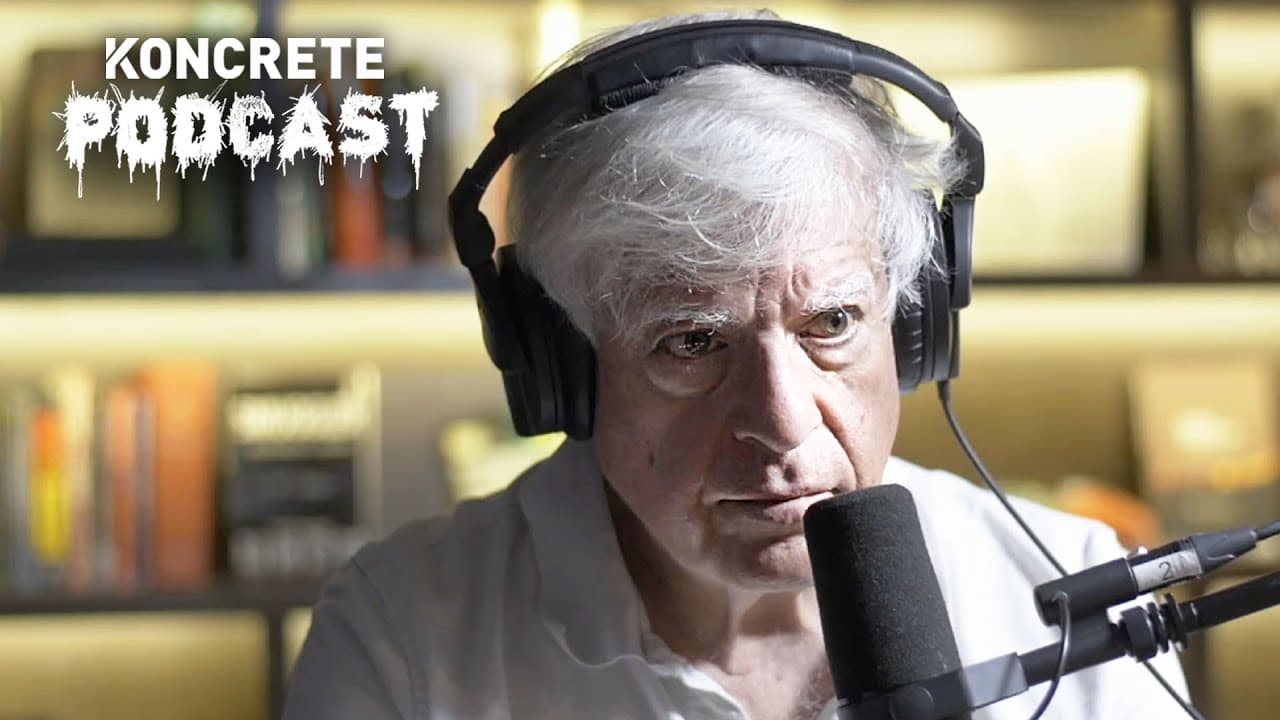
Exiled From Russia: Embedded Journalist Reveals Putin's Most Unsettling Secrets | David Satter
TL;DR
A journalist recounts his expulsion from Russia and insights into the Ukraine conflict.
Transcript
foreign how you became the first American journalist to be exiled from Russia well that that took place in 2013 um and basically I had gone to Ukraine before of course there was no war at that time uh I went to Kiev to renew my Visa this is a standard bureaucratic procedure I had all the necessary documents and uh uh the the rule is the same for ev... Read More
Key Insights
- 🇷🇺 The journalist’s expulsion from Russia underscores the dangerous climate for independent reporting against authoritarian regimes.
- ❓ Understanding local history and language is paramount for effective journalism, especially in politically sensitive areas.
- 🌍 The U.S. must balance military support with diplomatic strategies to navigate the complexities of international conflicts, such as the Ukraine crisis.
- 🛟 Sanctioning oligarchs serves not only to financially cripple them but also to challenge the corruption that supports oppressive regimes.
- 🎖️ The possibility of regime change in Russia hinges on widespread discontent within the military and the general populace, reflecting on historical precedent.
- 🌐 The Ukraine conflict reveals the interconnectedness of global politics and the need for a unified response to aggression by authoritarian states.
- 💁 The strategic necessity of NATO's expansion is rooted in historical experiences of past Soviet oppression, which informs current security policies in Eastern Europe.
Install to Summarize YouTube Videos and Get Transcripts
Explore YouTube Video Summarizer or Get YouTube Transcript Extractor
Questions & Answers
Q: What led to your expulsion from Russia in 2013?
In 2013, I was expelled from Russia after a long history of confrontations with the Russian authorities. A diplomat in Kiev informed me that my presence in Russia was deemed "undesirable" due to my reporting, which was critical of the Russian government.
Q: How did your early experiences in Moscow shape your journalism?
My early experiences in Moscow, particularly the intense scrutiny from the KGB and the oppressive environment, taught me the importance of understanding the underlying political dynamics and motivated me to strengthen my grasp of the Russian language for better communication and reporting.
Q: How does the situation in Ukraine reflect historical tensions with Russia?
The situation in Ukraine highlights historical tensions rooted in Russia's imperial past. The invasion by Russia in 2014 was a continuation of aggressive policies aimed at reasserting control over countries that were once part of the Soviet Union, reflecting a long-standing conflict of influence.
Q: What do you think about the U.S. response to the Ukraine conflict?
The U.S. has a critical role in the Ukraine conflict. While direct military intervention carries risks, providing military and financial support to Ukraine is essential in countering Russian aggression and supporting global democratic values.
Q: Why is sanctioning Russian oligarchs significant?
Sanctioning Russian oligarchs is significant because it disrupts their financial power and sends a strong message that wealth acquired through oppressive means will not be tolerated. It can destabilize the economy, affecting the elite's support for Putin.
Q: Do you believe regime change in Russia is possible?
Regime change in Russia is feasible, largely depending on internal pressures. If the situation deteriorates for the Russian people and military ranks, they might be motivated to remove Putin, as seen historically in other countries.
Q: How can the U.S. improve its foreign policy approach?
The U.S. can enhance its foreign policy by focusing on expertise and understanding the cultures it engages with. Instead of imposing views, building genuine partnerships and fostering democratic values can prove more successful.
Summary & Key Takeaways
-
The journalist discusses his expulsion from Russia in 2013, citing government hostility towards his reporting that highlighted issues with Russian leadership. His forced exit marks a significant moment in his career after decades of reporting on Russia.
-
He shares experiences from his early days as a journalist in Moscow, detailing the intense surveillance he faced and recounting encounters with government officials during the Cold War, which shaped his understanding of the region.
-
The conversation dives deep into the complexities of the current Ukraine conflict, examining the U.S. involvement, the impact of sanctions on Russian oligarchs, and the potential outcomes of regime change in Russia.
Read in Other Languages (beta)
Share This Summary 📚
Summarize YouTube Videos and Get Video Transcripts with 1-Click
Try YouTube Summary with ChatGPT & Claude or YouTube Transcript Generator
Explore More Summaries from Danny Jones Podcast 📚
Summarize YouTube Videos and Get Video Transcripts with 1-Click
Try YouTube Summary with ChatGPT & Claude or YouTube Transcript Generator